
Language becomes more vivid when we understand both grammar and the creative power of words. The base form of a verb is the simplest form of a verb, such as run, write, grow, or shine, and it helps us build clear and correct sentences. At the same time, similes make language more expressive by comparing one thing with another using words such as like or as. A well-chosen comparison can turn an ordinary sentence into an image that readers can easily remember.
Nature gives us some of the strongest images for these comparisons, especially trees, which can represent strength, growth, resilience, wisdom, patience, and human emotion. A tree may stand firmly through storms, grow slowly toward the sunlight, or lose its leaves while preparing for a new season. These qualities make trees excellent subjects for nature similes and figurative language examples. By understanding the base form of a verb alongside creative comparisons, writers can make their sentences both grammatically accurate and emotionally powerful.
What Is a Simile?
A simile is a figure of speech that compares two different things using words such as like or as. Similes help readers create a mental picture and understand an idea through something familiar.
Example: She stood as firmly as a tree in a powerful storm.
Here, the person’s strength is compared with the firmness of a tree.
1. As Strong as an Oak Tree
Meaning: This simile describes someone or something that is extremely strong, stable, and dependable.
Usage Insight: Use it when describing physical strength, emotional courage, or a person who remains dependable during difficult situations.
Examples:
- He remained as strong as an oak tree when everything around him seemed uncertain.
- Her determination was as strong as an ancient oak standing through countless storms.
2. Like Roots Holding the Earth
Meaning: This comparison represents stability, connection, and a strong foundation.
Usage Insight: It works especially well when writing about family, relationships, beliefs, or personal values that keep someone grounded.
Examples:
- Her family supported her like roots holding the earth beneath a towering tree.
- His principles held him steady like roots gripping the soil.
3. As Tall as a Tree Reaching for the Sky
Meaning: This simile expresses great height, ambition, or a desire to achieve something greater.
Usage Insight: Use it in creative descriptions when discussing people, buildings, dreams, or goals.
Examples:
- His dreams stretched as high as a tree reaching for the sky.
- The young athlete stood tall and confident, like a tree growing toward sunlight.
4. Like Leaves Dancing in the Wind
Meaning: This comparison suggests graceful, lively, or unpredictable movement.
Usage Insight: It is useful in poems, stories, and descriptive writing when you want to make movement feel natural and visual.
Examples:
- The children moved across the playground like leaves dancing in the wind.
- Her hands moved like leaves dancing gently beneath an autumn breeze.
5. As Patient as an Ancient Tree
Meaning: This simile describes someone who can wait calmly without becoming frustrated.
Usage Insight: It works well for characters who show wisdom, maturity, or quiet endurance.
Examples:
- The old teacher was as patient as an ancient tree.
- She waited for the right opportunity with the patience of a tree watching seasons change.
6. Like a Tree Growing After Rain
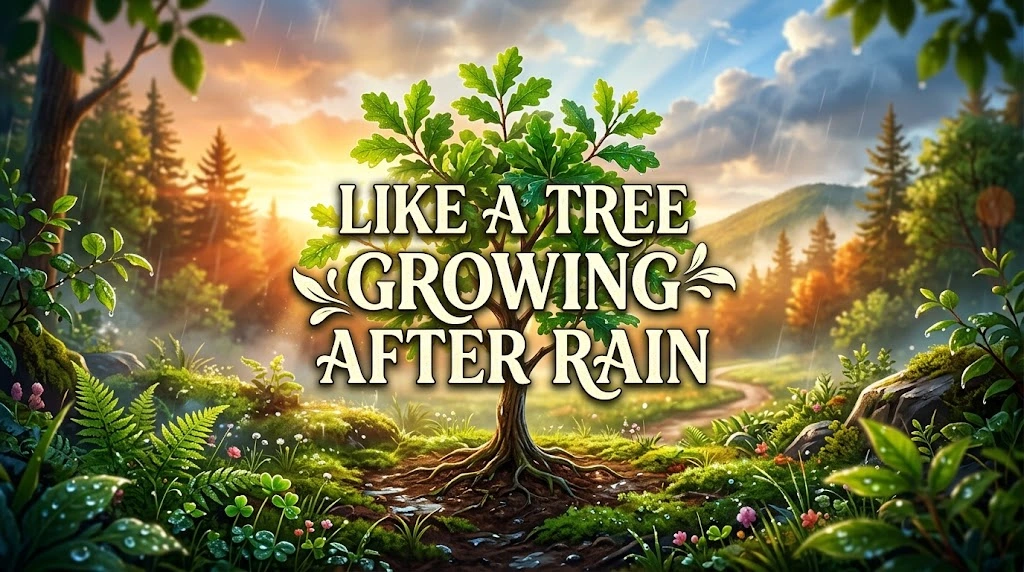
Meaning: This comparison represents renewal, recovery, and positive growth after hardship.
Usage Insight: Use it when describing personal development, recovery from failure, or a fresh beginning.
Examples:
- After years of struggle, his confidence returned like a tree growing after rain.
- Her creativity flourished like a young tree after a long-awaited storm.
7. As Calm as a Forest at Dawn
Meaning: This simile describes deep peace, quietness, and emotional calm.
Usage Insight: It is particularly effective in poems, reflective essays, and descriptions of peaceful environments.
Examples:
- After the argument ended, the room became as calm as a forest at dawn.
- His mind felt as calm as a forest waking beneath the morning light.
8. Like Branches Reaching Toward Light
Meaning: This comparison represents hope, ambition, learning, and the desire to improve.
Usage Insight: Use it when discussing education, personal growth, dreams, or someone’s search for a better future.
Examples:
- Her curiosity stretched like branches reaching toward light.
- The students pursued knowledge like branches reaching for the morning sun.
9. As Resilient as a Tree in a Storm
Meaning: This simile describes someone who survives pressure, difficulties, or setbacks without giving up.
Usage Insight: It is especially powerful in motivational writing and descriptions of courageous characters.
Examples:
- He was as resilient as a tree in a storm, bending without breaking.
- Her spirit remained as resilient as a tree facing fierce winter winds.
10. Like Falling Leaves Carrying Old Memories
Meaning: This simile connects movement with memories, change, and the passing of time.
Usage Insight: Use it for emotional writing about childhood, relationships, nostalgia, or important life changes.
Examples:
- Old memories returned like falling leaves carried by the autumn wind.
- The photographs brought back moments like leaves drifting from a familiar tree.
11. As Wise as a Tree That Has Seen Many Seasons
Meaning: This comparison suggests experience, knowledge, patience, and wisdom gained over time.
Usage Insight: It works well when describing older people, mentors, grandparents, or characters who have experienced many challenges.
Examples:
- Her grandmother was as wise as a tree that had witnessed countless seasons.
- The mentor spoke with the quiet wisdom of a tree that had survived many winters.
12. Like a Sapling Becoming a Mighty Tree
Meaning: This simile represents gradual development from a small beginning into something strong and successful.
Usage Insight: It is ideal for writing about children, careers, skills, relationships, businesses, and personal growth.
Examples:
- His small idea developed like a sapling becoming a mighty tree.
- With practice, her talent grew like a young sapling reaching maturity.
13. As Gentle as Leaves Touching Water
Meaning: This comparison conveys softness, delicacy, and peaceful movement.
Usage Insight: Use it for gentle voices, movements, emotions, or moments that need a soft and poetic quality.
Examples:
- Her voice was as gentle as leaves touching still water.
- He placed the letter on the table as gently as a leaf settling on a pond.
14. Like a Tree Losing Leaves in Autumn
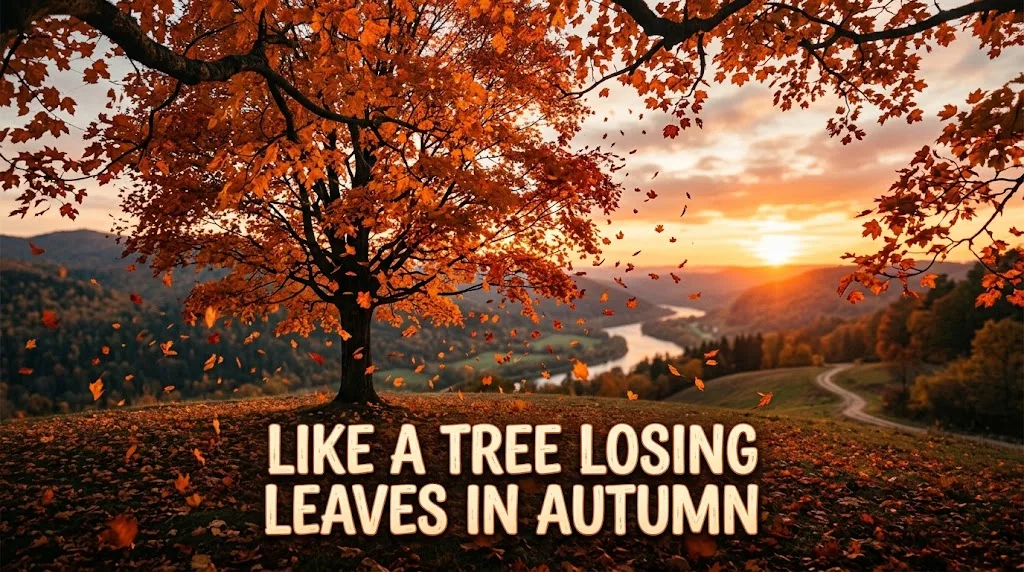
Meaning: This simile represents letting go, change, transformation, or accepting the natural end of something.
Usage Insight: It works especially well in reflective writing about relationships, personal growth, endings, and new beginnings.
Examples:
- She let go of her old fears like a tree losing leaves in autumn.
- He accepted the changes in his life like a tree releasing its leaves.
15. As Hopeful as a New Leaf in Spring
Meaning: This simile expresses optimism, renewal, fresh opportunities, and the possibility of a better future.
Usage Insight: It is excellent for inspirational writing, poems, stories, and descriptions of positive change.
Examples:
- After starting over, she felt as hopeful as a new leaf in spring.
- The young writer approached every blank page with hope like a fresh leaf opening toward sunlight.
How to Use Similes Effectively in Writing
Similes become most effective when they make an idea clearer rather than simply adding decoration. Whether you are writing an essay, poem, story, song, or creative description, choose comparisons that naturally match the emotion or subject.
1. Use Familiar Images
Choose images that readers can easily understand. Trees, sunlight, rain, rivers, stars, and seasons are useful because they create immediate mental pictures.
2. Match the Simile to the Emotion
A peaceful forest can represent calmness, while a tree surviving a storm can represent courage or resilience. Make sure the comparison supports the feeling you want to communicate.
3. Avoid Overusing Comparisons
Too many similes can make writing feel crowded. Select the strongest comparison and allow it to have an impact.
4. Combine Similes With Strong Verbs
A strong verb can make a simile even more vivid. For example:
- The branches reached like eager hands.
- The leaves fluttered like tiny green birds.
- The roots gripped the earth like determined fingers.
The base form of a verb is especially useful when discussing grammar. Words such as reach, flutter, and grip are base forms, while their forms can change according to tense and sentence structure.
5. Use Similes in Poems
Poetry benefits from short, memorable comparisons. A line such as “Her hope was like a new leaf after winter” can communicate an emotional idea without requiring a long explanation.
6. Use Similes in Stories
In fiction, similes can reveal character and atmosphere. Instead of simply saying that a character is nervous, you can write that his thoughts raced like birds startled from a tree.
7. Use Similes in Essays
Academic writing should remain clear and controlled. Similes are most appropriate when they clarify an abstract concept rather than replacing evidence or precise explanation.
8. Use Similes in Songs
Songs often depend on memorable images and emotional comparisons. Nature similes can make lyrics feel universal because readers and listeners already understand images such as rain, trees, oceans, and sunlight.
9. Use Similes in Creative Descriptions
When describing a setting, character, or emotion, compare it with something visually familiar. This helps readers experience the scene instead of merely receiving information about it.
Frequently Asked Questions
What is the base form of a verb?
The base form of a verb is the simplest form of a verb without tense or subject changes. Examples include run, walk, write, grow, sing, and think. It is also commonly used after modal verbs such as can, may, and should.
What is a simile according to H1?
A simile is a comparison between two different things using words such as like or as. For example, “He is as strong as an oak tree” compares a person’s strength with the strength of an oak tree.
What is the difference between a simile and a metaphor?
A simile makes a comparison using like or as, while a metaphor directly states that one thing is another. For example, “She is as graceful as a swan” is a simile, while “She is a swan” is a metaphor.
Can similes be used in academic writing?
Yes, but they should be used carefully. In academic writing, similes can make complex or abstract ideas easier to understand, but evidence, accuracy, and direct explanation should remain the priority.
Why are nature similes useful in creative writing?
Nature similes provide familiar and powerful images. Trees, rivers, flowers, storms, sunlight, and seasons can represent ideas such as growth, strength, change, hope, loneliness, and resilience.
Conclusion
Understanding the base form of a verb gives writers a strong grammatical foundation, while understanding similes gives them greater creative freedom. A sentence can be grammatically correct and still feel ordinary, but a carefully chosen comparison can make that same sentence vivid and memorable. Nature offers endless inspiration because trees, leaves, roots, branches, storms, and seasons reflect many experiences of human life. They can represent strength when they survive a storm, growth when they reach toward sunlight, and wisdom when they stand through countless seasons. The best similes do more than compare two things; they help readers see, feel, and understand an idea more deeply. Whether you are writing a poem, story, essay, song, or everyday description, thoughtful comparisons can add clarity, imagery, and emotional depth to your language. By combining accurate grammar with creative figurative language examples, you can make your writing both precise and powerful. Like a strong tree rooted in good soil, effective writing grows from a solid foundation and reaches toward new possibilities.