
Love is one of the deepest emotions people experience, yet describing it with ordinary words can sometimes feel impossible. A carefully chosen simile can turn that difficult feeling into an image readers can see, feel, and remember. Similes are an important part of figurative language because they compare one thing with another using words such as “like” or “as.” They help writers express emotions in a more vivid, personal, and creative way. Nature gives us especially powerful images for describing love, and trees can represent strength, growth, resilience, wisdom, and the lasting emotions that connect people.
A tree with deep roots can remind us of a relationship built on trust, while new leaves can symbolize love that continues to grow. From romantic poetry to everyday messages, similes can make descriptions of love warmer, more meaningful, and more memorable. In this guide, you will discover similes to describe love that can inspire poems, stories, essays, songs, cards, and other creative writing.
What Is a Simile?
A simile is a figure of speech that compares two different things using words such as “like” or “as.” The comparison helps readers understand an idea or emotion by connecting it to something familiar.
Example:
Her love was like a warm fire on a winter night.
This simile compares love to a comforting fire, suggesting warmth, safety, and emotional closeness.
The following similes to describe love combine emotional imagery with familiar experiences and nature-inspired comparisons. Each one includes its meaning, an explanation of when to use it, and two natural examples.
1. Love Is Like a Tree With Deep Roots
Simile: Love is like a tree with deep roots.
Meaning: This comparison suggests that genuine love becomes strong and stable over time. Like a deeply rooted tree, lasting love can withstand difficulties without easily falling apart.
Usage Insight: This is especially effective when writing about long-term relationships, marriage, family love, or friendships built on trust.
Examples:
- Their love was like a tree with deep roots, growing stronger through every difficult season.
- After years together, their relationship felt like a tree with deep roots holding firmly to the earth.
2. Love Is Like Sunlight Through the Leaves
Simile: Love is like sunlight through the leaves.
Meaning: This simile presents love as gentle, warm, comforting, and capable of bringing brightness into ordinary moments.
Usage Insight: Use it in romantic poems, heartfelt messages, or descriptions of the quiet happiness that someone brings into your life.
Examples:
- Her presence was like sunlight through the leaves, softening even his hardest days.
- His love felt like sunlight through the leaves, warm enough to make everything seem brighter.
3. Love Is as Steady as a Mountain
Simile: Love is as steady as a mountain.
Meaning: It describes love that is dependable, strong, and emotionally secure.
Usage Insight: This comparison works well when describing commitment, loyalty, or someone who remains present during challenging times.
Examples:
- Her love was as steady as a mountain, even when life became uncertain.
- I trusted his affection because it was as steady as a mountain beneath a changing sky.
4. Love Flows Like a River
Simile: Love flows like a river.
Meaning: This comparison suggests that love is naturally moving, changing, and capable of continuing through different stages of life.
Usage Insight: It works particularly well in poetry and reflective writing when describing relationships that evolve naturally over time.
Examples:
- Their affection flowed like a river, finding its way through every challenge.
- Love between them moved like a river, sometimes quiet and sometimes powerful.
5. Love Is Like a Flower Opening at Dawn
Simile: Love is like a flower opening at dawn.
Meaning: This simile describes love as something that gradually reveals its beauty and becomes stronger as trust develops.
Usage Insight: Use this comparison when writing about new romance, emotional discovery, or the early stages of a relationship.
Examples:
- Her feelings unfolded like a flower opening at dawn, slowly revealing their beauty.
- Their new romance felt like a flower opening at dawn, delicate but full of promise.
6. Love Is as Warm as a Summer Evening
Simile: Love is as warm as a summer evening.
Meaning: This comparison presents love as comforting, peaceful, welcoming, and pleasant.
Usage Insight: It is useful for romantic descriptions that focus on emotional comfort rather than intense passion.
Examples:
- Being beside her felt as warm as a summer evening after a long, difficult day.
- Their friendship was as warm as a summer evening, full of laughter and quiet understanding.
7. Love Is Like a Lantern in the Dark
Simile: Love is like a lantern in the dark.
Meaning: This simile suggests that love provides hope, guidance, comfort, or emotional support during difficult periods.
Usage Insight: This comparison works beautifully in writing about people who support one another during grief, uncertainty, fear, or hardship.
Examples:
- His kindness was like a lantern in the dark when she felt completely lost.
- Their love became like a lantern in the dark, giving them hope when the future seemed uncertain.
8. Love Is as Gentle as a Spring Breeze
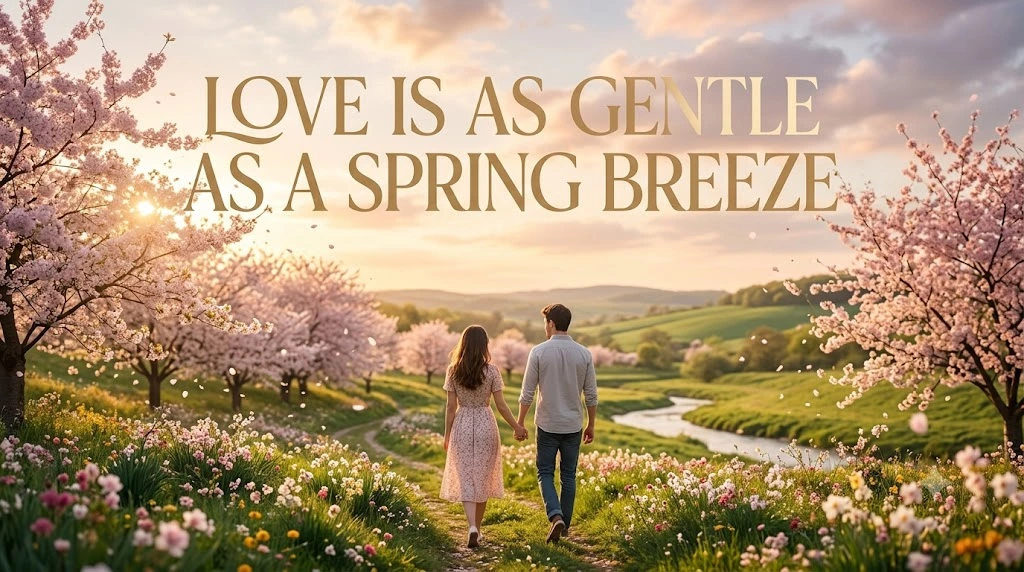
Simile: Love is as gentle as a spring breeze.
Meaning: This comparison describes love as tender, peaceful, caring, and soothing.
Usage Insight: Use it for soft romantic poetry, affectionate messages, or descriptions of quiet emotional closeness.
Examples:
- Her affection was as gentle as a spring breeze, never demanding but always present.
- His touch felt as gentle as a spring breeze moving through the garden.
9. Love Clings Like Ivy to an Old Wall
Simile: Love clings like ivy to an old wall.
Meaning: This comparison suggests love that remains attached despite age, difficulties, or changing circumstances.
Usage Insight: It is particularly effective for describing enduring relationships, memories, or affection that survives difficult experiences.
Examples:
- Their childhood friendship stayed like ivy on an old wall, growing with them through the years.
- Her memories of him clung like ivy to an old wall, refusing to disappear with time.
10. Love Is Like Rain on Dry Earth
Simile: Love is like rain on dry earth.
Meaning: This simile presents love as nourishing, refreshing, and capable of bringing life back to someone who feels emotionally empty.
Usage Insight: It works well when describing healing relationships, renewed hope, or affection that arrives after a painful period.
Examples:
- Her kindness felt like rain on dry earth after months of loneliness.
- Their reunion was like rain on dry earth, restoring a happiness they thought they had lost.
11. Love Is as Bright as a Starry Sky
Simile: Love is as bright as a starry sky.
Meaning: This comparison describes love as beautiful, inspiring, hopeful, and capable of filling life with wonder.
Usage Insight: Use it in romantic poetry, love letters, wedding writing, or descriptions of overwhelming happiness.
Examples:
- His love was as bright as a starry sky, filling her life with unexpected wonder.
- Their happiness looked as bright as a starry sky on a clear summer night.
12. Love Is Like a Hearth That Never Goes Cold
Simile: Love is like a hearth that never goes cold.
Meaning: This simile represents lasting warmth, security, loyalty, and affection that remains strong over time.
Usage Insight: It works particularly well for family love, lifelong partnerships, and relationships that provide a sense of home.
Examples:
- Her family’s love was like a hearth that never went cold, welcoming her whenever she returned.
- Their marriage became like a hearth that never went cold, even after many years together.
13. Love Is Like a Seed Growing Through Stone
Simile: Love is like a seed growing through stone.
Meaning: This powerful comparison suggests that genuine love can survive obstacles and find a way to grow despite difficult circumstances.
Usage Insight: Use it when describing relationships that have overcome distance, disagreement, hardship, or other challenges.
Examples:
- Their relationship survived like a seed growing through stone, stronger because of every obstacle.
- Her affection continued like a seed growing through stone, even when circumstances seemed impossible.
14. Love Is as Deep as an Ancient Forest
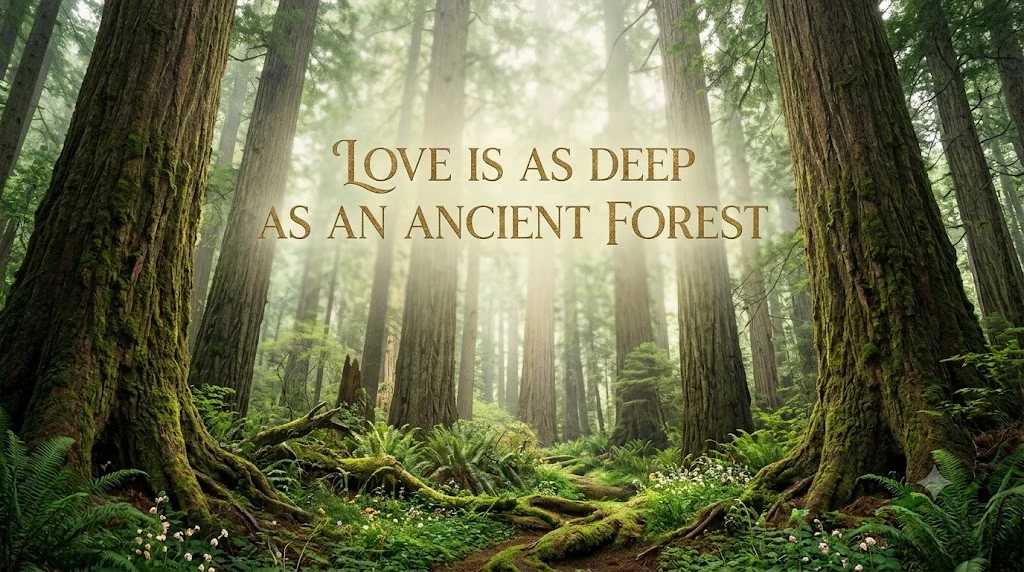
Simile: Love is as deep as an ancient forest.
Meaning: This simile presents love as mysterious, profound, layered, and rich with history and emotion.
Usage Insight: It is ideal for literary writing, romantic poetry, and descriptions of mature love that has developed through many shared experiences.
Examples:
- His love for his family was as deep as an ancient forest, shaped by generations of memories.
- What they shared felt as deep as an ancient forest, filled with stories only they understood.
15. Love Is Like a Tree That Grows Through Every Season
Simile: Love is like a tree that grows through every season.
Meaning: This comparison shows that real love can change and mature while remaining alive through both joyful and difficult periods.
Usage Insight: This is one of the strongest nature similes for describing long-lasting love, marriage, family bonds, and relationships that mature with time.
Examples:
- Their marriage was like a tree that grows through every season, changing without losing its roots.
- True friendship is like a tree that grows through every season, surviving both sunshine and storms.
How to Use Similes Effectively in Writing
Knowing beautiful similes to describe love is useful, but choosing the right comparison for your message is even more important. The best simile should strengthen the emotion rather than make the sentence feel forced.
1. Use Similes in Poems
Poetry gives you room to explore emotion through imagery. Compare love with natural things such as flowers, rivers, trees, sunlight, rain, stars, or seasons.
For example:
Your love is like sunlight through the leaves, turning ordinary moments golden.
The image communicates warmth without explaining the emotion directly.
2. Use Similes in Stories
Similes can reveal how characters experience love. Rather than simply saying that a character feels safe, show what that safety feels like.
For example:
Her presence was like a lantern in the dark, guiding him through his uncertainty.
This creates an emotional picture while also revealing the character’s feelings.
3. Use Similes in Love Letters and Messages
A romantic message becomes more personal when it uses a comparison that matches the relationship.
Instead of writing:
I love you very much.
You could write:
Your love is like a tree with deep roots, giving me strength and a place to feel at home.
The comparison adds personality and emotional depth.
4. Use Similes in Songs
Songs depend on memorable images. A strong simile can make an emotional line easier to remember and sing.
Love can be compared to:
- A river that keeps flowing
- A fire that stays warm
- A flower opening
- Rain falling on dry ground
- A tree growing through seasons
Choose an image that matches the mood of the song.
5. Use Similes in Essays
Similes can also appear in academic or analytical writing when they clarify an abstract concept. However, they should support your main point instead of replacing evidence.
For example:
Strong family relationships can function like roots beneath a tree, providing stability as individuals grow.
This comparison helps readers understand the role of emotional support.
6. Match the Simile to the Emotion
Not every love simile should sound romantic and cheerful. Love can be comforting, passionate, painful, protective, hopeful, or enduring.
Choose imagery according to the feeling you want to communicate.
7. Avoid Overusing Comparisons
A paragraph filled with similes can lose its impact. One original and carefully chosen comparison is often stronger than several unrelated ones.
8. Choose Images Readers Understand
Nature similes are effective because readers usually understand what trees, flowers, rivers, sunlight, rain, and mountains represent. Familiar imagery makes emotional comparisons accessible.
Similes in Literature and the Power of Comparison
Similes in literature have long helped writers express ideas that are difficult to communicate literally. Love is particularly suitable for figurative language because it involves complicated emotions that cannot always be captured with a simple definition.
A writer can compare love to a tree to communicate stability and growth. A river can represent movement and change, while sunlight can suggest warmth and happiness. Rain may symbolize healing, and a flower can represent new affection or emotional transformation.
These figurative language examples show why comparisons are so powerful. Instead of simply telling readers what a character feels, a writer can give them an image that allows them to experience the emotion indirectly.
The strongest similes to describe love usually connect an abstract feeling with something concrete. This makes the emotion easier to visualize while giving the writing a more memorable voice.
Simile vs. Metaphor: Understanding the Difference
Similes and metaphors are both forms of figurative language, but they create comparisons in different ways.
A simile uses words such as “like” or “as.”
Her love was like a warm fire.
A metaphor makes the comparison directly.
Her love was a warm fire.
Both sentences communicate warmth and comfort, but the simile signals the comparison explicitly.
Understanding this distinction is especially useful for students learning literary devices and for writers who want to vary their style.
FAQs About Similes to Describe Love
1. What are good similes to describe love?
Some effective similes include “love is like a tree with deep roots,” “love flows like a river,” “love is like a lantern in the dark,” and “love is like rain on dry earth.” Each comparison highlights a different quality of love.
2. How can I describe love using a simile?
Think about the specific quality of love you want to communicate. For example, compare lasting love to a deeply rooted tree, comforting love to a warm fire, or hopeful love to a flower opening at dawn.
3. What is the difference between a simile and a metaphor?
A simile uses “like” or “as” to make a comparison, while a metaphor makes the comparison directly. For example, “Her love is like sunlight” is a simile, while “Her love is sunlight” is a metaphor.
4. Can similes about love be used in academic writing?
Yes. Similes can clarify abstract ideas in essays and educational writing, provided they support the explanation and do not replace evidence or precise reasoning.
5. Why are nature similes effective for describing love?
Nature offers familiar images that naturally communicate qualities such as growth, strength, warmth, renewal, endurance, and change. Trees, flowers, rivers, sunlight, rain, and mountains can therefore make descriptions of love more vivid and emotionally meaningful.
Conclusion
The best similes to describe love do more than decorate a sentence—they give an invisible emotion a shape, color, movement, and feeling that readers can understand. A deeply rooted tree can show lasting commitment, a flowing river can represent love that changes without disappearing, and sunlight can capture the warmth someone brings into another person’s life. These nature similes demonstrate how figurative language can transform simple descriptions into powerful emotional images. Whether you are writing a poem, love letter, short story, song, essay, or personal message, the right comparison can make your words feel more sincere and memorable. Similes also help readers connect abstract emotions with familiar experiences, making complicated feelings easier to visualize. With thoughtful comparisons, writers can add clarity, imagery, warmth, and emotional depth without making their language complicated. Like a tree that continues growing through changing seasons, meaningful love can develop, endure, and become stronger with time—and a well-chosen simile can help your readers feel that journey through every word.