
Imagine a student looking at a sentence and wondering how to make it more colorful and meaningful. A simple comparison can turn an ordinary sentence into a vivid picture, and that is exactly what a simile does. Similes are an important part of figurative language because they help readers understand an idea by connecting it to something familiar. They usually use words such as “like” or “as” to create clear and memorable comparisons.
Nature provides some of the best inspiration for these comparisons, especially trees, which can represent strength, growth, resilience, wisdom, and human emotion. A tall tree standing through storms can remind us of someone who remains strong during difficult times. In literature, poetry, and everyday communication, similes help writers express feelings and descriptions in ways that feel more alive. This similes worksheet with answer gives learners useful practice while also showing how creative comparisons can improve their writing.
What Is a Simile?
A simile is a figure of speech that compares two different things using words such as “like” or “as.” The comparison helps readers imagine an idea, object, person, or feeling more clearly.
Example:
The old tree stood as strong as a mountain during the storm.
Here, the tree is compared to a mountain to emphasize its strength and stability.
The following examples can be used as a simple similes worksheet with answer for students, teachers, writers, and anyone learning figurative language. Each comparison includes its meaning, a usage insight, and two natural example sentences.
1. As Strong as an Ancient Oak
Simile: As strong as an ancient oak.
Meaning: This comparison describes someone or something that is extremely strong, stable, and able to withstand difficulties.
Usage Insight: Use this nature simile when describing physical strength, emotional resilience, or someone who remains dependable during challenging situations.
Examples:
- Her determination was as strong as an ancient oak when difficulties appeared.
- The old bridge remained as strong as an ancient oak despite years of heavy use.
2. Like a Tree Reaching for the Sun
Simile: Like a tree reaching for the sun.
Meaning: This simile describes someone who is constantly growing, improving, or reaching toward a goal.
Usage Insight: It works especially well in motivational writing, personal essays, poems, and descriptions of ambition or personal development.
Examples:
- He pursued his dreams like a tree reaching for the sun.
- The young artist kept learning like a tree reaching for the sun after every new experience.
3. As Quiet as a Forest at Dawn
Simile: As quiet as a forest at dawn.
Meaning: It describes a place or moment that is extremely peaceful and almost completely silent.
Usage Insight: This comparison is useful for creating calm imagery in stories, poems, nature descriptions, and reflective writing.
Examples:
- The classroom became as quiet as a forest at dawn before the examination began.
- The village was as quiet as a forest at dawn after the rain stopped.
4. Like Leaves Dancing in the Wind
Simile: Like leaves dancing in the wind.
Meaning: This comparison suggests graceful, lively, or unpredictable movement.
Usage Insight: Use it when describing people, fabric, branches, leaves, or anything moving lightly and naturally.
Examples:
- The children ran across the field like leaves dancing in the wind.
- Her colorful scarf moved like leaves dancing in the wind.
5. As Patient as a Growing Tree
Simile: As patient as a growing tree.
Meaning: This simile describes someone who understands that meaningful results require time and steady effort.
Usage Insight: It is particularly effective in writing about learning, personal growth, success, and perseverance.
Examples:
- The teacher was as patient as a growing tree while helping her students understand the lesson.
- He remained as patient as a growing tree, knowing that success would not happen overnight.
6. Like Roots Holding the Earth
Simile: Like roots holding the earth.
Meaning: It represents stability, connection, support, and a strong foundation.
Usage Insight: This comparison works well when writing about family, friendship, traditions, values, or emotional support.
Examples:
- Her family supported her like roots holding the earth.
- Their friendship kept him steady like roots holding the earth.
7. As Bright as Morning Sunlight
Simile: As bright as morning sunlight.
Meaning: This comparison can describe something cheerful, hopeful, beautiful, or full of energy.
Usage Insight: Use it to create positive imagery when describing smiles, personalities, rooms, ideas, or hopeful moments.
Examples:
- Her smile was as bright as morning sunlight.
- The student’s new idea was as bright as morning sunlight after a difficult week.
8. Like a River Finding Its Way

Simile: Like a river finding its way.
Meaning: This simile describes someone who continues moving forward despite obstacles or uncertainty.
Usage Insight: It is effective in inspirational writing and stories about perseverance, change, discovery, and personal journeys.
Examples:
- She continued toward her goal like a river finding its way through the mountains.
- His career developed like a river finding its way across unfamiliar land.
9. As Gentle as a Spring Breeze
Simile: As gentle as a spring breeze.
Meaning: It describes something soft, kind, peaceful, or soothing.
Usage Insight: This nature simile is useful for describing voices, personalities, movements, weather, and comforting moments.
Examples:
- Her voice was as gentle as a spring breeze.
- The nurse spoke to the frightened child as gently as a spring breeze.
10. Like Thunder Across the Sky
Simile: Like thunder across the sky.
Meaning: This comparison suggests something powerful, loud, sudden, or impossible to ignore.
Usage Insight: It works especially well when describing voices, announcements, emotional reactions, storms, or dramatic events.
Examples:
- His laughter echoed like thunder across the sky.
- The news spread through the town like thunder across the sky.
11. As Steady as a Mountain
Simile: As steady as a mountain.
Meaning: It describes someone or something dependable, calm, firm, and difficult to shake.
Usage Insight: Use this comparison when describing courage, leadership, confidence, emotional strength, or physical stability.
Examples:
- Her confidence remained as steady as a mountain during the competition.
- The coach was as steady as a mountain when the team began to panic.
12. Like a Flower Opening After Rain
Simile: Like a flower opening after rain.
Meaning: This comparison represents renewal, happiness, confidence, or emotional recovery after hardship.
Usage Insight: It is ideal for creative writing about hope, healing, new beginnings, and positive transformation.
Examples:
- His confidence returned like a flower opening after rain.
- The town came alive like a flower opening after rain when spring arrived.
13. As Wise as an Old Forest
Simile: As wise as an old forest.
Meaning: This simile suggests deep wisdom gained through age, experience, observation, and time.
Usage Insight: It works beautifully in character descriptions, nature writing, stories, and literary comparisons involving older or experienced people.
Examples:
- Her grandmother was as wise as an old forest.
- The old storyteller seemed as wise as an old forest, speaking carefully about everything he had witnessed.
14. Like a Seed Waiting for Spring
Simile: Like a seed waiting for spring.
Meaning: It describes hidden potential, patience, hope, or an opportunity that has not yet fully developed.
Usage Insight: This comparison is powerful in essays, poems, motivational writing, and stories about personal development.
Examples:
- His talent remained like a seed waiting for spring until someone gave him an opportunity.
- The young student’s confidence was like a seed waiting for spring.
15. As Resilient as a Tree After a Storm
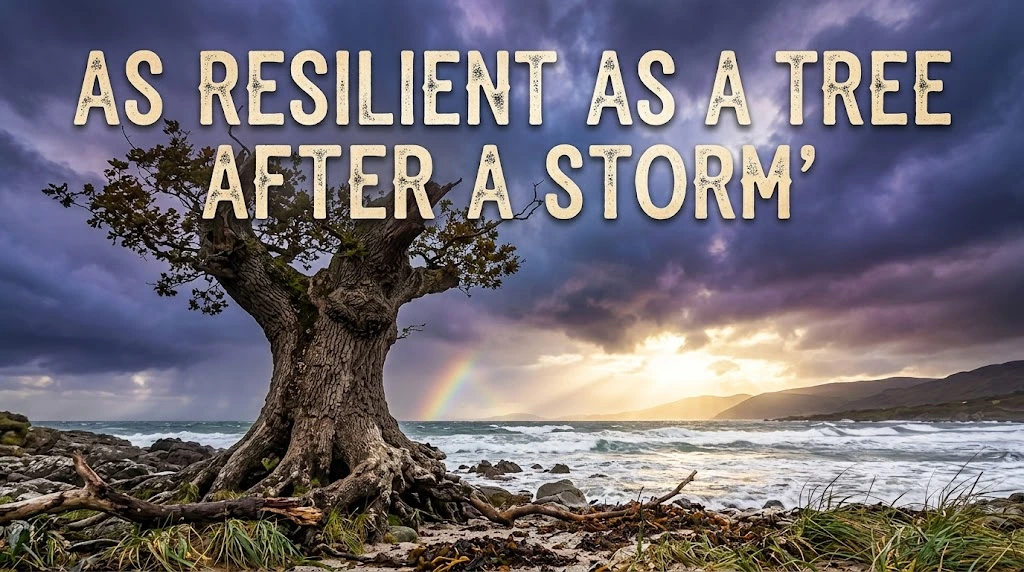
Simile: As resilient as a tree after a storm.
Meaning: This comparison describes someone who recovers from difficulties and continues moving forward.
Usage Insight: Use it when writing about courage, recovery, determination, emotional strength, or overcoming challenges.
Examples:
- She was as resilient as a tree after a storm, rebuilding her confidence one step at a time.
- The community proved as resilient as a tree after a storm when it rebuilt after the disaster.
How to Use Similes Effectively in Writing
Learning a simile is only the beginning. The real skill comes from knowing when and how to use comparisons effectively.
1. Use Similes in Poems
Poetry depends heavily on imagery and emotion. A carefully chosen simile can help readers visualize an emotion or scene without explaining everything directly.
Instead of:
The night was peaceful.
Try:
The night was as quiet as a forest at dawn.
The second sentence creates a stronger mental picture.
2. Use Similes in Stories
Similes can make characters, settings, and actions more vivid. They are particularly helpful when introducing a person or describing an important moment.
For example:
The boy stood as steady as a mountain while everyone else rushed toward the exit.
The comparison immediately gives the reader an impression of his personality.
3. Use Similes in Essays
Academic writing can benefit from comparisons when they clarify a complicated concept. However, similes should support the explanation rather than replace evidence or precise information.
For example:
Learning a new language can be like building a bridge between different cultures.
This comparison makes an abstract idea easier to understand.
4. Use Similes in Songs
Songwriting often relies on emotional imagery. Similes can make lyrics more memorable by connecting feelings to familiar experiences.
A writer might compare hope to sunlight, love to a river, or sadness to an empty room.
5. Use Similes in Creative Descriptions
When describing nature, people, places, or emotions, choose comparisons that match the mood.
For example:
- As gentle as a spring breeze — peaceful
- Like thunder across the sky — powerful
- Like a seed waiting for spring — hopeful
- As steady as a mountain — dependable
6. Avoid Overusing Similes
Too many comparisons can make writing feel crowded. Choose one strong simile instead of several weak ones.
7. Make the Comparison Meaningful
A good simile should add something to the sentence. Ask yourself what quality the comparison highlights: strength, beauty, speed, sadness, confidence, silence, or another characteristic.
8. Choose Familiar Images
Simple images such as trees, rivers, sunlight, flowers, mountains, and storms can make figurative language easier for readers to understand.
Similes in Literature and Figurative Language
Similes have an important place in similes in literature, poetry, storytelling, speeches, and everyday language. Writers use them to transform ordinary descriptions into memorable images.
For example, saying someone is “as steady as a mountain” does more than tell readers that the person is calm. It suggests strength, reliability, and stability.
Nature similes are especially effective because most readers already understand the characteristics of trees, rivers, flowers, mountains, wind, sunlight, and storms. These familiar images allow writers to communicate complex emotions through simple comparisons.
A well-crafted simile can therefore work on several levels. It can create an image, communicate an emotion, establish a mood, and make a sentence easier to remember. That is why similes remain such a useful form of figurative language in both creative and academic contexts.
Similes Worksheet With Answer: Quick Practice
Try completing these sentences before looking at the answers.
- The athlete was as strong as ________.
- The baby slept like ________.
- Her smile was as bright as ________.
- The leaves moved like ________.
- He remained as steady as ________.
Answers
- The athlete was as strong as an ancient oak.
- The baby slept like a peaceful cloud.
- Her smile was as bright as morning sunlight.
- The leaves moved like dancers in the wind.
- He remained as steady as a mountain.
This simple exercise can help students recognize the structure of a simile and understand how comparisons add descriptive power to sentences.
FAQs About Similes
1. What is a simile according to the H1 topic?
A simile is a comparison between two different things using words such as “like” or “as.” A similes worksheet with answer helps students practice identifying, completing, and creating these comparisons.
2. What is the difference between a simile and a metaphor?
A simile directly compares two things using “like” or “as.” A metaphor makes a direct comparison without those words.
Simile:
The child is as busy as a bee.
Metaphor:
The child is a bee.
Both forms of figurative language create comparisons, but they structure those comparisons differently.
3. Why are similes useful in creative writing?
Similes make descriptions more vivid and memorable. They allow writers to connect unfamiliar ideas with familiar images, helping readers visualize characters, settings, actions, and emotions.
4. Can similes be used in academic writing?
Yes. Similes can be useful in academic writing when they clarify complicated ideas or explain abstract concepts. They should be used carefully and should not replace factual evidence or precise explanations.
5. Why are nature similes so popular?
Nature provides familiar and powerful images. Trees can suggest strength and resilience, rivers can represent movement, flowers can symbolize growth, and sunlight can communicate hope. These connections make nature similes easy to understand and emotionally effective.
Conclusion
A strong simile can turn a plain sentence into an image that stays in the reader’s mind. Through comparisons using “like” and “as,” writers can explain difficult ideas, express emotions, and create vivid pictures with surprisingly few words. This similes worksheet with answer provides practical examples that show how figurative language can make everyday writing more expressive and engaging. From an ancient oak representing strength to a seed waiting for spring as a symbol of potential, nature offers endless inspiration for meaningful comparisons. Similes are valuable in poems, stories, songs, essays, classroom exercises, and creative descriptions because they bring clarity, imagery, and emotional depth to language. They also help students understand how writers communicate ideas beyond literal meanings. The more you practice recognizing and creating similes, the easier it becomes to choose comparisons that feel natural and powerful. Whether you are learning figurative language for school or improving your creative writing, a well-chosen simile can make your words grow as beautifully as a tree reaching toward the sun.