
Winter arrives quietly, covering the world in frost, snow, and silver light. Similes about winter help writers turn these familiar scenes into vivid pictures that readers can almost see, hear, and feel. A simile is a type of figurative language that compares two different things using words such as “like” or “as.” These comparisons make ordinary descriptions more expressive and memorable, whether you are writing a poem, story, essay, song, or creative passage. Winter also gives us wonderful images from nature, including frozen lakes, snowy fields, icy winds, and bare trees.
Trees are especially powerful symbols of strength, growth, resilience, wisdom, and human emotion because they continue standing through harsh seasons and changing weather. By connecting winter scenes with familiar objects, feelings, and experiences, writers can create meaningful nature similes that carry deeper ideas. The following figurative language examples will show how simple comparisons can make winter writing more colorful, emotional, and powerful.
What Is a Simile?
A simile is a comparison between two different things using words such as “like” or “as.” Writers use similes to help readers understand an idea by connecting it with something familiar.
Example: The winter wind was as sharp as a needle.
This comparison helps readers imagine how painfully cold and biting the wind feels.
Similes are common in everyday speech, poetry, storytelling, and similes in literature because they add imagery without making a description overly complicated.
1. Winter Snow Was Like a Blanket of White Silk
Meaning: This simile compares freshly fallen snow to a soft white silk blanket. It suggests that the snow looks smooth, delicate, and beautiful as it covers the ground.
Usage Insight: Use this comparison when describing peaceful snowfall, snowy landscapes, or a calm winter morning. It works particularly well in descriptive writing and nature poetry.
Examples:
- Fresh snow covered the garden like a blanket of white silk.
- By sunrise, the entire valley looked wrapped in a blanket of white silk.
2. The Winter Wind Was as Fierce as a Wild Wolf
Meaning: This comparison presents the winter wind as powerful, wild, and difficult to escape.
Usage Insight: This simile works best when you want to emphasize the strength or frightening quality of a winter storm.
Examples:
- The winter wind howled through the trees as fiercely as a wild wolf.
- Outside the cabin, the wind was as fierce as a wild wolf searching through the darkness.
3. Frost Covered the Window Like Tiny Silver Feathers
Meaning: This simile compares frost patterns on glass to delicate silver feathers, highlighting their intricate and beautiful appearance.
Usage Insight: Use it for close-up descriptions of frosty windows, especially in poems, stories, and atmospheric scenes.
Examples:
- Frost covered the bedroom window like tiny silver feathers.
- At dawn, delicate patterns appeared on the glass like tiny silver feathers.
4. The Snowflakes Fell Like Stars from a Silent Sky
Meaning: This simile compares falling snowflakes to stars descending from the sky. It creates a magical and dreamy winter image.
Usage Insight: This is especially effective in imaginative writing, children’s stories, romantic descriptions, and winter poems.
Examples:
- Snowflakes drifted through the darkness like stars from a silent sky.
- As we walked home, the snow fell around us like stars from a silent sky.
5. The Frozen Lake Was as Smooth as Glass
Meaning: This comparison emphasizes how flat, still, and reflective a frozen lake can appear.
Usage Insight: Use this simile when describing winter landscapes, ice skating scenes, or peaceful outdoor settings.
Examples:
- The frozen lake looked as smooth as glass beneath the pale morning sun.
- Across the valley, the ice was as smooth as glass.
6. The Winter Morning Was Like a Whisper
Meaning: This simile compares a quiet winter morning to a whisper. It suggests stillness, softness, and peacefulness.
Usage Insight: It works beautifully when you want to create a calm, gentle atmosphere rather than focus on harsh cold.
Examples:
- The winter morning arrived like a whisper, leaving the village wrapped in silence.
- Dawn spread across the snowy hills like a whisper through the sleeping world.
7. The Bare Trees Stood Like Old Soldiers
Meaning: This simile compares leafless winter trees to experienced soldiers standing firmly after difficult battles. It represents strength, endurance, and resilience.
Usage Insight: This is a strong example of a nature simile because the trees can represent more than their physical appearance. Use it when writing about courage, survival, hardship, or resilience.
Examples:
- The bare trees stood like old soldiers against the freezing wind.
- Along the road, the ancient trees remained upright like old soldiers after a long battle.
8. The Cold Was as Sharp as Broken Glass
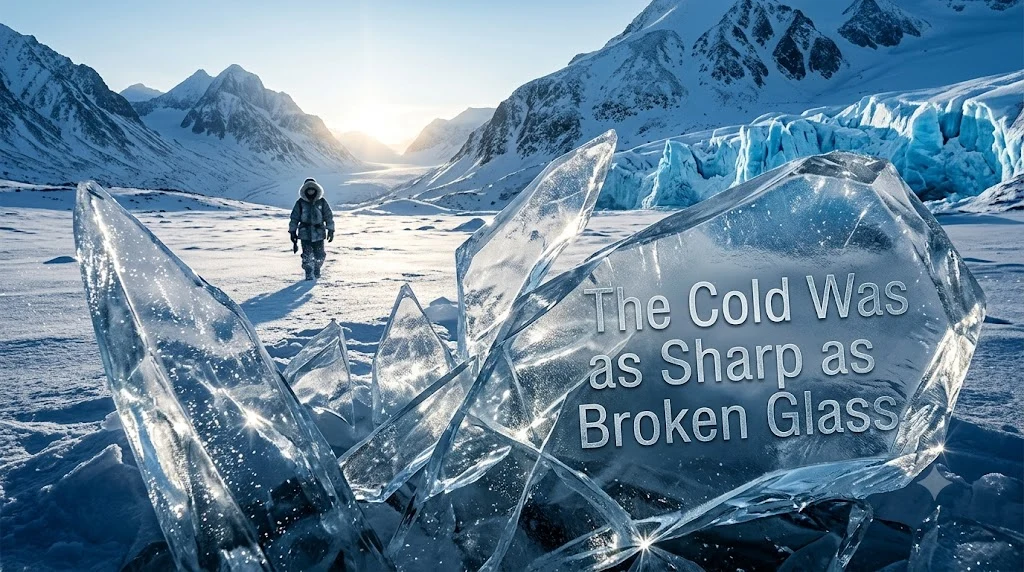
Meaning: This simile compares intense winter cold to broken glass, suggesting that the cold feels sharp, biting, and uncomfortable.
Usage Insight: Use this comparison when describing severe temperatures or a harsh winter atmosphere.
Examples:
- The morning air was as sharp as broken glass against my cheeks.
- Outside the shelter, the cold felt as sharp as broken glass.
9. The Snowy Hills Looked Like Sleeping Giants
Meaning: This simile compares large snow-covered hills or mountains to enormous giants resting beneath a blanket of snow.
Usage Insight: It works particularly well in adventure stories, fantasy writing, landscape descriptions, and imaginative poems.
Examples:
- The snowy mountains rose in the distance like sleeping giants.
- Under the moonlight, the hills looked like sleeping giants guarding the village.
10. Winter Clouds Were Like Heavy Gray Curtains
Meaning: This simile compares thick winter clouds to heavy curtains covering the sky. It suggests darkness, gloom, and an approaching storm.
Usage Insight: Use it when establishing a gloomy atmosphere or preparing readers for rain, snow, or a storm.
Examples:
- Heavy winter clouds hung above the town like gray curtains.
- The afternoon sky closed in like heavy gray curtains before the snow began.
11. The Snow Crunched Like Crushed Sugar Underfoot
Meaning: This comparison focuses on the sound and texture of snow beneath someone’s feet. It helps readers imagine the crisp sound of walking through frozen snow.
Usage Insight: This simile is useful when you want to engage the sense of hearing and make a winter scene feel immediate and realistic.
Examples:
- Fresh snow crunched beneath our boots like crushed sugar.
- Every step sounded like crushed sugar breaking under our feet.
12. The Winter Sun Was Like a Pale Lantern
Meaning: This simile compares the weak winter sun to a pale lantern. It suggests that the sunlight is present but soft, distant, and less powerful than summer sunlight.
Usage Insight: Use this comparison for quiet winter mornings, cloudy afternoons, and reflective landscape descriptions.
Examples:
- The winter sun hung above the rooftops like a pale lantern.
- A pale sun glowed through the clouds like a lonely lantern.
13. The Icicles Hung Like Crystal Daggers
Meaning: This simile compares long, pointed icicles to crystal daggers. It emphasizes their sharp shape, transparency, and dangerous-looking appearance.
Usage Insight: This comparison works well in suspenseful stories, dramatic descriptions, and winter scenes that need a stronger visual image.
Examples:
- Icicles hung from the roof like crystal daggers.
- Along the frozen cabin, rows of icicles glittered like crystal daggers.
14. Winter Silence Was as Deep as an Empty Forest
Meaning: This simile compares the quietness of winter to the deep silence found in an empty forest. It emphasizes isolation and stillness.
Usage Insight: Use this simile when creating a reflective, lonely, mysterious, or peaceful mood.
Examples:
- After the snowfall, the village was as quiet as an empty forest.
- Winter silence settled over the valley as deeply as an empty forest.
15. The Snow Melted Like a Forgotten Dream
Meaning: This poetic simile compares melting snow to a forgotten dream, suggesting that winter is temporary and disappears gradually.
Usage Insight: This comparison is ideal for reflective writing because it can symbolize change, passing time, memory, or the end of a difficult season.
Examples:
- By early spring, the last patches of snow vanished like a forgotten dream.
- The winter landscape disappeared like a forgotten dream beneath the warmth of the sun.
Why Similes About Winter Make Writing More Powerful
Winter naturally gives writers a rich collection of images, but simply saying “it was cold” does not always create a strong picture. A well-chosen simile gives readers something familiar to connect with.
For example:
- Plain: The wind was cold.
- With a simile: The wind was as sharp as a needle.
The second sentence gives the reader a stronger physical impression. The reader can imagine the cold touching the skin and almost feel its sharpness.
This is why comparisons are so important in creative writing. They transform simple facts into sensory experiences.
Winter similes can describe:
- Snow and ice
- Cold temperatures
- Winter winds
- Frozen landscapes
- Bare trees
- Frost
- Winter sunlight
- Snowstorms
- Quiet mornings
- Dark clouds
- Seasonal change
- Feelings of loneliness or peace
They can also connect winter’s natural imagery with human experiences such as courage, sadness, hope, patience, endurance, and renewal.
How to Use Similes Effectively in Writing
Using similes effectively is not simply about adding the words “like” or “as” to a sentence. The comparison should make the description clearer, stronger, or more emotionally meaningful.
1. Use Similes in Poems
Poetry depends heavily on imagery and emotion. A winter simile can help create a beautiful mental picture in only a few words.
Instead of writing:
Snow covered the trees.
You might write:
Snow covered the trees like soft feathers.
The comparison immediately makes the scene more delicate and visual.
2. Use Similes in Stories
Similes can make settings and characters more memorable. During a winter scene, compare the weather to something readers already understand.
For example:
The wind screamed like an angry beast outside the cabin.
This gives the weather a dramatic personality and creates tension.
3. Use Similes in Essays
Similes can also work in academic or explanatory writing, but they should be used carefully. Avoid filling a formal essay with too many decorative comparisons.
A well-placed comparison can help explain an abstract idea or make an introduction more engaging.
4. Use Similes in Songs
Songwriting often depends on emotional imagery. Winter comparisons can represent loneliness, heartbreak, hope, change, or renewal.
For example, winter can symbolize an emotionally difficult period, while spring can represent a fresh beginning.
5. Use Similes in Creative Descriptions
When describing a snowy landscape, think beyond the obvious. Consider color, sound, movement, texture, temperature, and emotion.
Ask yourself:
- What does the snow resemble?
- What does the wind sound like?
- How does the cold feel?
- What do the trees look like?
- What emotion does the landscape create?
- What familiar object could help readers visualize the scene?
6. Choose Comparisons That Fit Your Mood
A peaceful winter scene might use a gentle comparison such as:
The snow fell like soft feathers.
A dangerous storm might require something stronger:
The wind roared like a wounded beast.
The best simile matches the emotional atmosphere of the writing.
7. Avoid Overused Comparisons
Original comparisons can make your writing stand out. Instead of repeatedly describing snow as “white as snow,” look for fresh images that give readers something new to imagine.
8. Make Similes Easy to Understand
A creative comparison should still be clear. If readers have to stop and decode what you mean, the simile may be too complicated.
Strong figurative language examples are imaginative while remaining easy to understand.
Similes About Winter in Literature
Winter has long been useful in literature because it can represent more than weather. Writers often use winter imagery to communicate deeper ideas about human life.
Winter may symbolize:
- Hardship
- Loneliness
- Stillness
- Aging
- Death
- Patience
- Strength
- Resilience
- Transformation
- Hope
- Renewal
Trees are particularly meaningful in these descriptions. A leafless tree standing through a freezing winter can become a symbol of endurance. Its branches may look fragile, yet its roots remain strong beneath the frozen ground.
This makes winter similes in literature especially powerful. A writer can describe a tree as standing “like an old soldier” and create both a physical image and an emotional idea of survival.
Winter Similes and Nature Imagery
Nature is one of the richest sources of comparisons. Snow, ice, wind, clouds, trees, mountains, rivers, and sunlight all offer opportunities for imaginative language.
A writer might compare:
- Snow to silk
- Frost to feathers
- Ice to glass
- Clouds to curtains
- Mountains to giants
- Icicles to crystal
- Wind to wolves
- Trees to soldiers
- Snowflakes to stars
- Winter sunlight to a lantern
These nature similes help readers experience a landscape rather than simply receive information about it.
Similes vs. Metaphors: What Is the Difference?
A simile makes a comparison using words such as “like” or “as.”
Simile: The snow was like a white blanket.
A metaphor makes a direct comparison without using “like” or “as.”
Metaphor: The snow was a white blanket.
Both forms of figurative language can create strong imagery, but they work differently. Similes often make comparisons more explicit, while metaphors can sound more direct and powerful.
FAQs About Similes About Winter
What are some good similes about winter?
Some strong winter similes include “The snow fell like stars from a silent sky,” “The winter wind was as fierce as a wild wolf,” and “The frozen lake was as smooth as glass.” Each comparison creates a clear image of winter.
What is a simile according to this topic?
A winter simile compares a winter-related subject with something familiar using “like” or “as.” For example, “The snow was like a blanket of white silk” compares snow with silk to emphasize its soft, smooth appearance.
What is the difference between a simile and a metaphor?
A simile uses words such as “like” or “as” to make a comparison, while a metaphor makes a direct comparison. For example, “The snow is like a blanket” is a simile, while “The snow is a blanket” is a metaphor.
Can similes be used in academic writing?
Yes. Similes can be useful in academic writing when they clarify a difficult concept or make an explanation easier to understand. However, they should be used selectively and should not replace precise evidence or factual explanation.
Why are similes useful in creative writing?
Similes help writers create vivid imagery, communicate emotions, establish mood, and make descriptions more memorable. They allow readers to connect unfamiliar or abstract ideas with familiar experiences.
Conclusion: Let Winter Similes Bring Your Writing to Life
Similes about winter can transform a simple description of snow, frost, wind, or ice into an image that stays in a reader’s mind. A frozen lake can become glass, snowflakes can become falling stars, and bare trees can stand like old soldiers against the cold. These comparisons do more than decorate sentences; they add clarity, imagery, emotion, and depth to language. They also show why figurative language remains such an important part of poetry, storytelling, essays, songs, and literature. When you choose a comparison carefully, even an ordinary winter morning can become magical, mysterious, peaceful, or powerful. Remember that the strongest similes connect a familiar image with a clear feeling or idea. Whether you are describing winter’s beauty or using its harshness as a symbol of resilience, nature provides endless inspiration. So the next time you write about winter, look beyond the obvious and search for a comparison that allows your readers not only to understand the scene but to truly experience it.