
Summer has a special way of turning ordinary days into bright and memorable moments, and finding the right days of summer similar comparisons can make those moments easier to describe. A simile is a form of figurative language that compares two different things using words such as “like” or “as.” Similes are important because they help readers see, feel, and understand an idea through familiar images and emotions. Nature similes are especially powerful because the natural world gives writers endless comparisons involving sunlight, trees, flowers, rivers, clouds, and warm summer air.
Trees, for example, can symbolize strength, growth, resilience, wisdom, and the many emotions people experience throughout life. When writers connect summer scenes with these natural symbols, simple descriptions can become vivid and meaningful. The best figurative language examples do more than decorate a sentence; they create an image that stays in the reader’s mind. Whether you are writing poetry, stories, songs, essays, or personal reflections, thoughtful comparisons can make the days of summer feel as alive on the page as they do in memory.
What Is a Simile?
A simile is a comparison between two unlike things using words such as “like” or “as.” It helps readers understand an idea by connecting it to something familiar, vivid, or emotionally meaningful.
Example: The summer sun was like a golden lantern hanging above the quiet town.
This comparison makes the sunlight easier to imagine and gives the scene a warm, glowing quality.
1. Summer Days Are Like Golden Pages in a Memory Book
Meaning: This simile compares summer days to golden pages, suggesting that they are precious, bright, and worth remembering.
Usage insight: Use this comparison when writing about childhood summers, vacations, family gatherings, or moments that feel nostalgic.
Examples:
- The days of summer were like golden pages in a memory book that I never wanted to close.
- Each afternoon became another golden page filled with laughter and sunlight.
2. The Summer Sun Was as Bright as a Field of Sunflowers
Meaning: This comparison emphasizes the intense brightness and cheerful energy of the summer sun.
Usage insight: It works especially well in descriptive writing when you want to create a joyful outdoor scene.
Examples:
- The summer sun was as bright as a field of sunflowers stretching toward the sky.
- By noon, the sunlight seemed to fill every corner of the garden.
3. Warm Summer Air Felt Like a Soft Blanket
Meaning: This simile describes warm air as comforting, gentle, and surrounding.
Usage insight: Use it when describing peaceful evenings, lazy afternoons, or relaxing outdoor moments.
Examples:
- Warm summer air wrapped around us like a soft blanket.
- We sat beneath the trees while the gentle air settled over the garden.
4. Summer Leaves Danced Like Green Confetti
Meaning: The comparison makes moving leaves seem playful, colorful, and celebratory.
Usage insight: This is effective for poems and creative descriptions involving breezes, gardens, forests, or parks.
Examples:
- The summer leaves danced like green confetti above our heads.
- A warm breeze sent the branches swaying in a cheerful rhythm.
5. The Afternoon Sky Was Like a Blue Ocean
Meaning: This simile compares the vast summer sky to an endless ocean, highlighting its openness and depth.
Usage insight: Use it to create a sense of freedom, spaciousness, and wonder.
Examples:
- The afternoon sky stretched above us like a blue ocean without a shore.
- I looked upward and felt as though I could drift forever through that endless blue.
6. Summer Rain Fell Like Silver Threads
Meaning: This comparison presents rainfall as delicate, shining strands descending from the sky.
Usage insight: It works beautifully in poetry and descriptive prose, especially when rain is gentle rather than violent.
Examples:
- Summer rain fell like silver threads across the sleepy village.
- The drops shimmered like tiny strands of glass in the afternoon light.
7. A Summer Evening Was as Calm as a Sleeping Lake
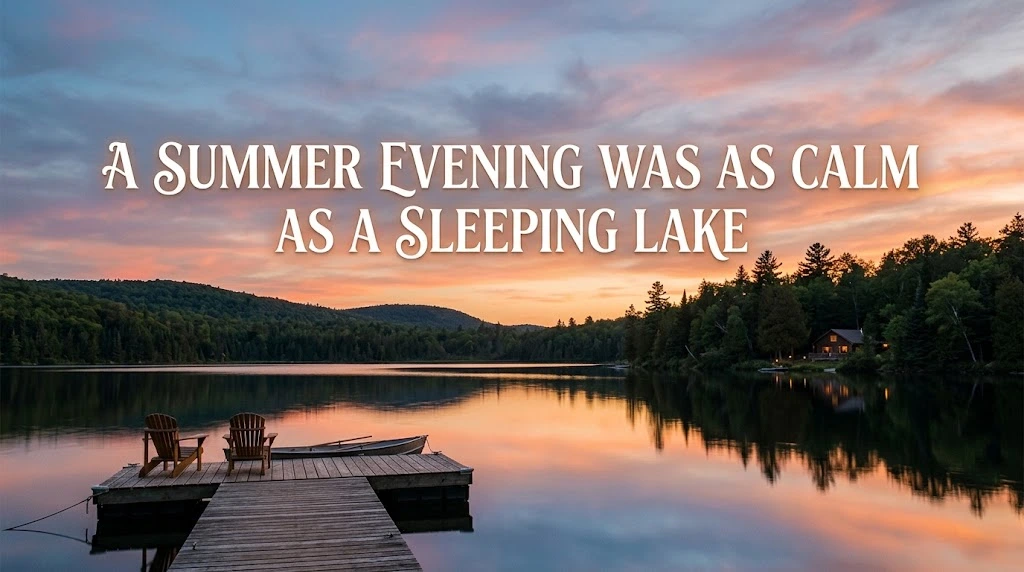
Meaning: This simile communicates stillness, peace, and quietness.
Usage insight: It is ideal for reflective writing about sunsets, nighttime, peaceful gardens, or quiet outdoor settings.
Examples:
- The summer evening was as calm as a sleeping lake.
- As the sun disappeared, the neighborhood settled into a peaceful silence.
8. The Summer Breeze Was Like a Gentle Whisper
Meaning: The comparison gives the breeze a human quality, making it seem soft, quiet, and soothing.
Usage insight: Use this nature simile when you want to create an intimate or peaceful atmosphere.
Examples:
- The summer breeze moved through the trees like a gentle whisper.
- I could hear the leaves rustling softly as the breeze passed through the branches.
9. Summer Flowers Bloomed Like Little Sparks of Joy
Meaning: This simile connects colorful flowers with happiness, energy, and emotional brightness.
Usage insight: It is useful when writing about gardens, nature, happiness, or the beauty of summer.
Examples:
- Summer flowers bloomed like little sparks of joy along the garden path.
- Every bright blossom seemed to bring another touch of happiness to the landscape.
10. The Summer River Shimmered Like a Ribbon of Glass
Meaning: This comparison emphasizes the river’s smooth, reflective, and sparkling appearance.
Usage insight: Use it for scenic descriptions involving rivers, lakes, streams, or sunlight reflecting on water.
Examples:
- The summer river shimmered like a ribbon of glass beneath the afternoon sun.
- We followed the sparkling water until the trail disappeared into the trees.
11. Summer Laughter Was Like Bells in the Wind
Meaning: This simile presents laughter as bright, musical, and free.
Usage insight: It works particularly well when describing children playing, family gatherings, friendships, or joyful celebrations.
Examples:
- Their summer laughter rang like bells in the wind.
- The sound of friends laughing made the quiet backyard feel alive.
12. The Old Tree Stood as Strong as a Summer Mountain
Meaning: This comparison highlights the tree’s strength, stability, and resilience.
Usage insight: Because trees often symbolize endurance and wisdom, this simile is useful when connecting nature with human character.
Examples:
- The old tree stood as strong as a summer mountain beside the farmhouse.
- Its wide branches reminded me that strength can grow quietly over time.
13. A Summer Sunset Spread Like Fire Across the Horizon
Meaning: This comparison describes a sunset as dramatic, glowing, and expansive.
Usage insight: Use it when you want a summer scene to feel powerful, colorful, or emotionally intense.
Examples:
- The summer sunset spread like fire across the horizon.
- Orange and pink light poured over the fields as evening approached.
14. Summer Memories Clung Like Sand to Bare Feet
Meaning: This simile suggests that summer memories remain with us even after the season has ended.
Usage insight: It is especially effective in reflective essays, poems, memoirs, and nostalgic writing.
Examples:
- Summer memories clung to me like sand to bare feet long after vacation ended.
- Even years later, those simple afternoons remained impossible to forget.
15. The Long Summer Days Stretched Like a Road Without an End

Meaning: This comparison presents summer days as unusually long, open, and full of possibilities.
Usage insight: Use it when describing freedom, adventure, childhood, travel, or the feeling that summer will never end.
Examples:
- The long summer days stretched like a road without an end.
- Every morning seemed to promise another adventure before sunset.
How to Use Similes Effectively in Writing
Using similes well is not simply about adding the words “like” or “as.” A strong comparison should make an idea clearer, more emotional, or more memorable.
1. Use Similes in Poems
Poetry depends heavily on imagery and emotion. A comparison such as “the moon was like a silver coin” gives readers a visual image without requiring a long explanation.
Choose comparisons that support the mood of your poem. Soft nature similes can create peaceful feelings, while powerful comparisons can communicate excitement, sadness, or determination.
2. Use Similes in Stories
Similes can make fictional settings and characters more vivid. Instead of simply saying that a character is nervous, you might write that “his hands shook like leaves in a storm.”
This allows readers to experience the character’s emotion rather than simply being told about it.
3. Use Similes in Essays
Academic and explanatory writing should remain clear, but carefully chosen comparisons can sometimes make complicated ideas easier to understand.
For example, a writer explaining personal growth might compare it to “a tree developing stronger roots through changing seasons.” The comparison adds clarity without replacing the main explanation.
4. Use Similes in Songs
Songs often depend on emotional imagery. Similes can help listeners connect an abstract feeling to something they already understand.
A songwriter might compare a memory to sunlight, a relationship to a river, or hope to a growing tree. These images can make lyrics more emotionally accessible.
5. Use Similes in Creative Descriptions
When describing summer landscapes, avoid relying on basic words such as beautiful, hot, or bright repeatedly. Instead, use comparisons that give the reader something to picture.
For instance, “the road shimmered like a sheet of polished metal” is more vivid than simply saying the road was hot.
6. Choose Comparisons That Fit the Mood
A peaceful scene needs a different type of simile than an exciting one. A quiet summer night might be compared to a sleeping lake, while a storm could be described as a roaring beast.
The comparison should strengthen the feeling you want readers to experience.
7. Avoid Overusing Similes
Too many comparisons can make writing feel crowded. Select the strongest image and allow it to work.
One original, meaningful simile is often more effective than several ordinary comparisons placed together.
8. Make Your Comparisons Fresh
Common comparisons can sometimes work, but original images make writing more memorable. Think about unusual connections between summer and nature, emotions, sounds, colors, or movement.
This is particularly helpful when creating your own figurative language examples rather than copying familiar phrases.
Similes in Literature and Creative Language
Similes in literature are powerful because they allow writers to transform ordinary observations into memorable images. Authors often use comparisons to reveal character, establish atmosphere, describe nature, or communicate emotions that are difficult to explain directly.
Nature is especially useful for this purpose. A tree can represent resilience, a river can suggest movement or change, and sunlight can symbolize hope or happiness. These ideas show why nature similes appear so frequently in poetry, fiction, songs, and personal writing.
When you create a comparison, think beyond physical appearance. Ask what the image represents emotionally. A summer tree is not only tall and green; it can also represent patience, growth, endurance, protection, and wisdom.
That deeper meaning makes a simile more than a simple description. It turns an everyday image into a meaningful connection between the natural world and human experience.
FAQs About Days of Summer Similes
1. What are some similes for days of summer?
Some examples include “summer days are like golden pages in a memory book,” “long summer days stretch like a road without an end,” and “summer memories cling like sand to bare feet.” Each comparison gives the season a different emotional or visual quality.
2. What is the difference between a simile and a metaphor?
A simile makes a comparison using words such as like or as, while a metaphor directly describes one thing as another. For example, “The summer sky is like an ocean” is a simile, while “The summer sky is an ocean” is a metaphor.
3. Why are similes useful in creative writing?
Similes make writing more vivid by helping readers imagine an unfamiliar idea through something familiar. They can strengthen imagery, emotion, atmosphere, characterization, and description.
4. Can similes be used in academic writing?
Yes. Similes can be useful in essays and explanatory writing when they clarify a difficult idea or make an abstract concept easier to understand. However, academic writing should use comparisons carefully and avoid excessive decorative language.
5. How can I create my own summer similes?
Start with a summer image such as sunlight, trees, rain, flowers, water, clouds, or warm air. Then ask what that image resembles in appearance, movement, sound, feeling, or meaning. Finally, connect the two ideas with “like” or “as.”
Conclusion
The best days of summer similar comparisons can turn simple seasonal memories into language filled with color, movement, and emotion. Similes give writers a practical way to connect summer’s sunlight, trees, rain, flowers, rivers, and skies with familiar human feelings. They can make a peaceful evening feel more vivid, a childhood memory more personal, and a simple landscape more meaningful. The power of figurative language comes from its ability to help readers experience an idea rather than merely read about it. Trees, in particular, remind us that growth takes time, resilience develops through difficulty, and strength can exist quietly beneath the surface. Whether you are writing a poem, story, song, essay, or creative description, a carefully chosen comparison can add clarity and emotional depth to your words. Keep exploring nature, emotions, and everyday experiences for fresh connections, and your writing will naturally become more expressive. With the right simile, even an ordinary summer day can become an image that readers remember long after the season has passed.