
Darkness has inspired writers, poets, and storytellers for centuries because it can represent mystery, fear, peace, beauty, and the unknown. Similes are one of the easiest and most effective ways to describe darkness with vivid imagery. They help readers picture a scene and connect emotionally with your words. Whether you are writing a novel, poem, essay, or song, strong similes can make ordinary descriptions unforgettable.
Similes are an important part of figurative language because they compare two different things using the words “like” or “as.” Just as darkness can symbolize many emotions, trees are powerful symbols of strength, growth, resilience, wisdom, and human emotion, reminding us that nature often inspires the best comparisons. Nature similes, in particular, create rich mental images that feel both familiar and meaningful. In this guide, you’ll discover powerful similes for dark, their meanings, examples, and practical ways to use them in your own writing.
What Is a Simile?
A simile is a figure of speech that compares one thing with another using the words “like” or “as.” It helps readers imagine ideas more clearly by creating vivid comparisons.
Example:
The night was as dark as a moonless cave.
This comparison instantly helps readers picture complete darkness and feel the mysterious atmosphere.
1. As Dark as a Moonless Night
Meaning
Describes complete darkness where little or no light is visible.
Usage Insight
This simile works perfectly in stories, mysteries, and descriptive writing when you want readers to imagine total darkness.
Examples
- The forest became as dark as a moonless night before we reached the campsite.
- His room was as dark as a moonless night, making it impossible to find the light switch.
2. As Dark as Fresh Ink
Meaning
Refers to something intensely black and rich in colour.
Usage Insight
Ideal for describing hair, skies, clothing, or shadows with elegant detail.
Examples
- Her hair was as dark as fresh ink, shining under the evening light.
- Thick clouds gathered, as dark as fresh ink, before the storm arrived.
3. As Dark as the Deep Ocean
Meaning
Suggests mysterious, endless darkness hidden beneath the surface.
Usage Insight
Excellent for emotional writing and scenes involving uncertainty or danger.
Examples
- His thoughts became as dark as the deep ocean after hearing the news.
- The cave stretched ahead, as dark as the deep ocean.
4. As Dark as a Raven’s Wing
Meaning
Describes smooth, glossy blackness.
Usage Insight
Frequently used in literature to describe hair, feathers, fabrics, and elegant appearances.
Examples
- Her long hair was as dark as a raven’s wing.
- The horse’s coat looked as dark as a raven’s wing after the rain.
5. As Dark as a Shadow at Midnight
Meaning
Represents deep, silent darkness with an eerie feeling.
Usage Insight
Perfect for suspense, thrillers, and Gothic fiction.
Examples
- The abandoned house stood as dark as a shadow at midnight.
- His figure disappeared into an alley as dark as a shadow at midnight.
6. As Dark as Burnt Coal
Meaning
Describes an intensely black appearance.
Usage Insight
Useful in everyday descriptions and creative comparisons involving colour.
Examples
- The fireplace was filled with rocks as dark as burnt coal.
- Smoke rose into the sky, as dark as burnt coal.
7. As Dark as a Forest Before Dawn
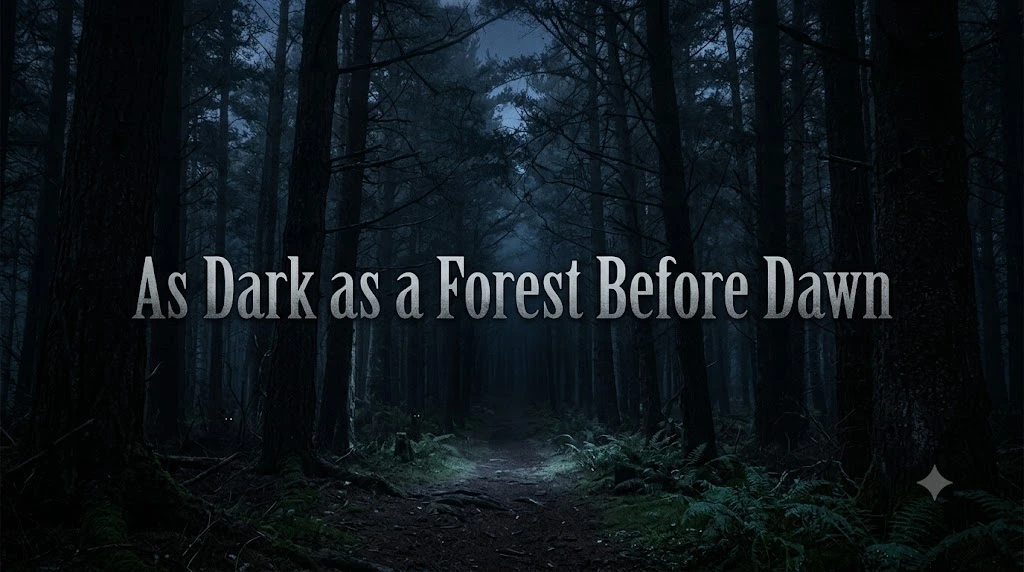
Meaning
Suggests natural darkness mixed with quiet mystery.
Usage Insight
A wonderful nature simile for outdoor scenes and adventure stories.
Examples
- The trail became as dark as a forest before dawn.
- Her dream faded into silence as dark as a forest before dawn.
8. As Dark as an Endless Tunnel
Meaning
Represents darkness with no visible end.
Usage Insight
Works well when describing fear, confusion, or uncertainty.
Examples
- The future seemed as dark as an endless tunnel.
- We entered a passage as dark as an endless tunnel.
9. As Dark as Storm Clouds
Meaning
Suggests approaching danger or sadness.
Usage Insight
Ideal for emotional scenes and weather descriptions.
Examples
- His expression turned as dark as storm clouds.
- The afternoon sky grew as dark as storm clouds.
10. As Dark as Black Velvet
Meaning
Describes smooth, luxurious darkness.
Usage Insight
Often used in poetry and romantic descriptions.
Examples
- The evening sky looked as dark as black velvet.
- The curtains hung as dark as black velvet.
11. As Dark as an Ancient Cave
Meaning
Represents untouched, mysterious darkness.
Usage Insight
Perfect for fantasy writing and historical fiction.
Examples
- The hidden chamber was as dark as an ancient cave.
- Silence filled the hall as dark as an ancient cave.
12. As Dark as the Eclipse
Meaning
Describes sudden, dramatic darkness.
Usage Insight
Useful when portraying powerful moments or unexpected changes.
Examples
- The room fell as dark as the eclipse after the lights failed.
- His mood became as dark as the eclipse.
13. As Dark as Wet Earth After Rain
Meaning
Highlights rich, natural darkness inspired by nature.
Usage Insight
Excellent for landscape descriptions and nature writing.
Examples
- The soil looked as dark as wet earth after rain.
- The tree roots disappeared into ground as dark as wet earth after rain.
14. As Dark as the Space Between Stars
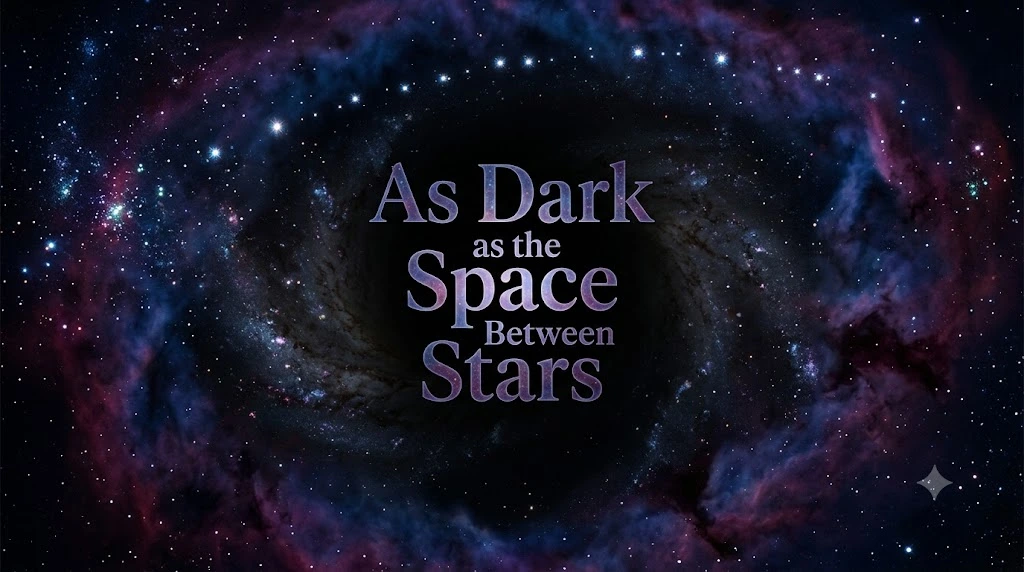
Meaning
Suggests infinite darkness and mystery.
Usage Insight
Ideal for science fiction, philosophy, and imaginative storytelling.
Examples
- The universe stretched as dark as the space between stars.
- His unanswered questions felt as dark as the space between stars.
15. As Dark as Forgotten Secrets
Meaning
Represents emotional darkness, mystery, and hidden truths.
Usage Insight
A powerful figurative comparison for novels, poetry, and dramatic writing.
Examples
- Her silence was as dark as forgotten secrets.
- The old castle held memories as dark as forgotten secrets.
How to Use Similes Effectively in Writing
Strong similes can transform ordinary writing into memorable descriptions. Here are some practical tips for using them effectively:
- Choose comparisons readers recognise. Familiar images make your writing easier to understand.
- Use nature similes to create vivid scenes inspired by forests, oceans, skies, and seasons.
- Avoid overusing similes. A few carefully chosen comparisons have a stronger impact than using them in every sentence.
- Match the mood. Dark similes work best in mysterious, emotional, suspenseful, or dramatic scenes.
- Be original. Fresh figurative language examples make your writing stand out.
- Mix different types of imagery. Combine visual, emotional, and sensory comparisons for greater depth.
- Revise for clarity. Make sure every simile strengthens your message rather than distracting from it.
Whether you’re writing poems, stories, essays, songs, speeches, or creative descriptions, well-crafted similes help readers experience your ideas instead of simply reading them.
FAQs
What are powerful similes for dark?
Powerful similes for dark include comparisons like as dark as a moonless night, as dark as fresh ink, as dark as a raven’s wing, and as dark as the space between stars. They create vivid imagery and emotional depth.
What is the difference between a simile and a metaphor?
A simile compares two things using “like” or “as,” while a metaphor states that one thing is another without using comparison words.
Why are similes useful in creative writing?
Similes help readers visualise scenes, understand emotions, and connect more deeply with characters and settings. They make descriptions more engaging and memorable.
Can similes be used in academic writing?
Yes. While creative similes should be used sparingly, they can make introductions, speeches, presentations, and explanatory writing more engaging when appropriate.
How can I create original similes for dark?
Think about natural objects, emotions, colours, textures, or experiences that share qualities with darkness, then compare them using “like” or “as.” Aim for fresh, meaningful comparisons instead of overused expressions.
Conclusion
Powerful similes for dark bring ordinary descriptions to life by adding vivid imagery, emotional richness, and memorable comparisons. Whether you’re describing a mysterious forest, a stormy sky, hidden emotions, or a quiet night, carefully chosen similes help readers see and feel every scene more clearly. By exploring nature similes, figurative language examples, and creative comparisons, you can make your writing more expressive and engaging. Keep experimenting with original similes, match them to the mood of your work, and remember that the strongest comparisons are those that create lasting images in your readers’ minds. With practice, these powerful similes for dark will become valuable tools for crafting stories, poems, essays, and every form of creative writing.