
A handsome man can catch attention, but the right words can make his appearance unforgettable. Similes for a handsome man help writers turn simple descriptions into vivid images that readers can easily imagine. In figurative language, these comparisons add color, emotion, personality, and depth to ordinary descriptions. Nature is especially useful because trees, flowers, sunlight, oceans, and mountains can express qualities that are difficult to describe directly.
Trees, for example, are powerful symbols of strength, growth, resilience, wisdom, and human emotion, making them excellent sources of inspiration for creative comparisons. Just as a strong tree can stand proudly through changing seasons, a handsome man can be described through images of confidence, grace, warmth, and quiet strength. Whether you are writing a romance, poem, story, essay, or character description, the right simile can transform a basic compliment into something much more expressive.
What Is a Simile?
A simile is a figure of speech that compares two different things using words such as “like” or “as.” It helps readers understand an idea by connecting it to something familiar and vivid.
Example: He was as striking as sunlight breaking through a forest canopy.
This comparison does more than say that the man is handsome; it creates an image of brightness, confidence, and natural appeal.
1. He Was as Handsome as a Sunrise Over the Mountains
Meaning: This simile compares a man’s appearance to a beautiful sunrise, suggesting that his presence is bright, impressive, and naturally captivating.
Usage Insight: Use this comparison in romantic writing, poetry, or character descriptions when you want to emphasize beauty that feels inspiring rather than merely physical.
Examples:
- He walked into the room, as handsome as a sunrise spreading across distant mountains.
- Her first impression of him was unforgettable, like watching dawn paint the sky with gold.
2. His Smile Was Like Sunshine Through the Trees
Meaning: This comparison suggests that his smile is warm, inviting, and capable of making people feel comfortable.
Usage Insight: This works especially well when describing a man’s charm and friendliness alongside his physical attractiveness.
Examples:
- His smile was like sunshine through the trees, gentle enough to brighten everyone’s mood.
- Whenever he smiled, the room seemed warmer and more welcoming.
3. He Was as Striking as a Mountain at Dawn
Meaning: The simile presents the man as impressive, strong, and difficult to overlook.
Usage Insight: Use it when you want to combine handsome features with a sense of confidence, dignity, and strength.
Examples:
- Standing beneath the soft morning light, he was as striking as a mountain at dawn.
- His tall frame and calm expression gave him the presence of a mountain rising above the horizon.
4. His Eyes Were Like Deep Forest Lakes
Meaning: This comparison suggests that his eyes are beautiful, mysterious, calm, and captivating.
Usage Insight: It is ideal for romantic descriptions when the eyes are an important part of a character’s appeal.
Examples:
- His eyes were like deep forest lakes, quiet on the surface but full of mystery.
- She found herself lost in his gaze, as though she were looking into a peaceful woodland lake.
5. He Was as Charming as a Garden in Full Bloom
Meaning: This simile connects his charm and appearance with the beauty and liveliness of a flourishing garden.
Usage Insight: Use it for a softer, more elegant description, particularly in romantic prose or poetic writing.
Examples:
- He was as charming as a garden in full bloom, effortlessly drawing people toward him.
- His easy laughter and graceful manner made him seem like a garden overflowing with color.
6. His Hair Was Like Midnight Silk
Meaning: This comparison emphasizes hair that appears dark, smooth, attractive, and elegant.
Usage Insight: It works best in detailed character descriptions where you want to create a refined visual image.
Examples:
- His dark hair fell across his forehead like midnight silk.
- Under the evening lights, his hair looked smooth and black as a quiet night sky.
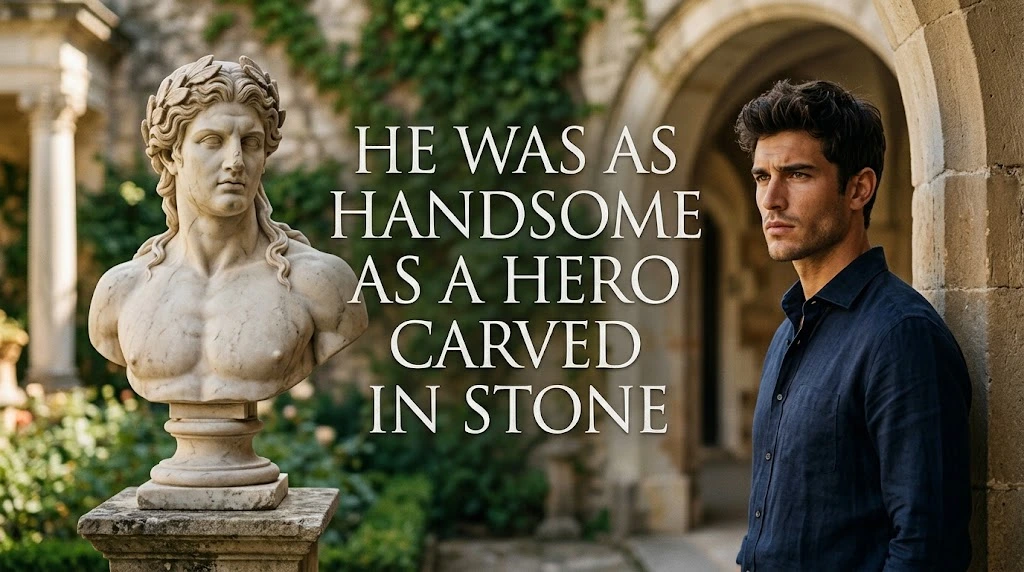
7. He Was as Handsome as a Hero Carved in Stone
Meaning: This simile suggests classical beauty, strong features, confidence, and an almost timeless appearance.
Usage Insight: Use it when describing a man with defined facial features or a powerful physical presence.
Examples:
- With his sharp jawline and steady gaze, he was as handsome as a hero carved in stone.
- His sculpted features gave him the appearance of someone from an ancient legend.
8. His Presence Was Like a Calm Ocean
Meaning: This comparison focuses less on physical appearance and more on the peaceful confidence surrounding the man.
Usage Insight: It is useful when describing someone whose attractiveness comes from both appearance and personality.
Examples:
- His presence was like a calm ocean, quiet but impossible to ignore.
- Even in a crowded room, his relaxed confidence created a sense of peace around him.
9. He Was as Radiant as a Golden Autumn Afternoon
Meaning: This simile describes a man whose appearance and personality feel warm, attractive, and naturally bright.
Usage Insight: It works well for romantic and nostalgic writing because autumn imagery adds warmth and emotional richness.
Examples:
- He looked as radiant as a golden autumn afternoon beneath a cloudless sky.
- His warm expression gave him a glow that reminded her of late October sunlight.
10. His Voice Was Like Warm Rain
Meaning: This comparison suggests that his voice is soothing, pleasant, gentle, and emotionally comforting.
Usage Insight: Use it when you want to show that a man’s attractiveness extends beyond his physical features.
Examples:
- His voice was like warm rain, soft enough to make her forget the noise around them.
- Every word he spoke carried the soothing quality of rain falling on a quiet evening.
11. He Was as Confident as an Old Oak Tree
Meaning: The old oak represents strength, stability, maturity, and quiet confidence.
Usage Insight: This is particularly effective when describing a handsome man whose appeal comes from his character as much as his appearance.
Examples:
- He stood as confidently as an old oak tree rooted firmly in the earth.
- His calm posture made him seem strong, dependable, and completely comfortable in his own presence.
12. His Features Were Like a Carefully Painted Portrait
Meaning: This comparison suggests that his facial features are balanced, refined, and visually appealing.
Usage Insight: It works well in sophisticated descriptions where you want to emphasize elegance rather than exaggerated attractiveness.
Examples:
- His features were like a carefully painted portrait, balanced in every detail.
- From his eyes to his defined jawline, his face seemed almost artistically composed.
13. He Was as Alluring as Moonlight on Still Water
Meaning: This simile presents his attractiveness as mysterious, calm, elegant, and quietly captivating.
Usage Insight: Use it in romantic or poetic writing when you want attraction to feel subtle rather than dramatic.
Examples:
- He was as alluring as moonlight on still water, beautiful without demanding attention.
- There was something quietly captivating about him, like silver light moving across a peaceful lake.
14. His Laughter Was Like Birds Singing at Sunrise
Meaning: This comparison makes his laughter sound joyful, natural, refreshing, and uplifting.
Usage Insight: Use this simile when you want to show how a man’s personality enhances his physical attractiveness.
Examples:
- His laughter was like birds singing at sunrise, bright enough to lift everyone’s spirits.
- The sound of his laughter brought a fresh energy to the quiet morning.
15. He Was as Handsome as a Prince from an Old Fairytale
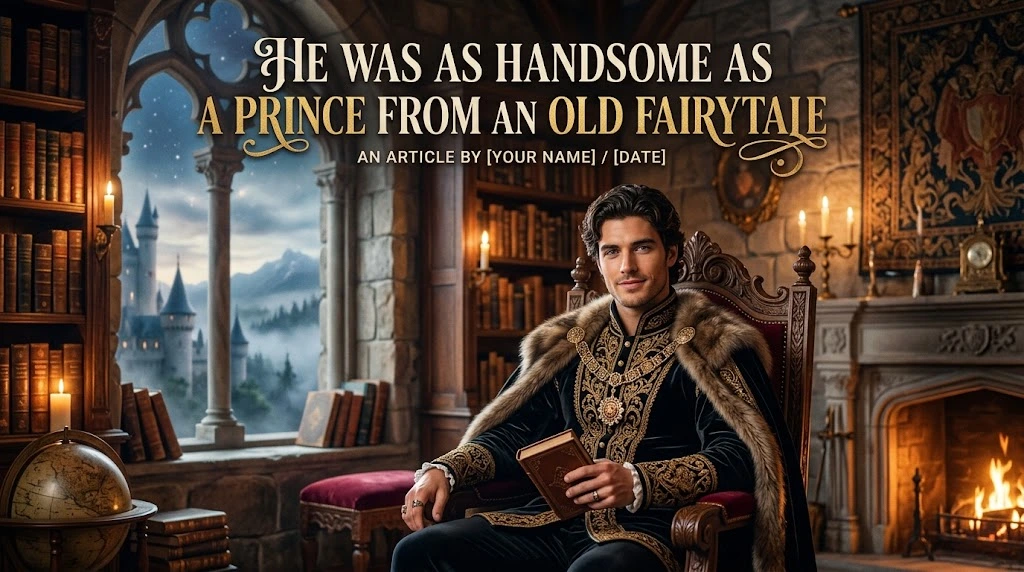
Meaning: This simile creates an image of traditional, almost magical handsomeness while giving the character a romantic quality.
Usage Insight: It is especially suitable for romance novels, fantasy stories, creative descriptions, and playful compliments.
Examples:
- Dressed in his dark coat, he looked as handsome as a prince from an old fairytale.
- For a moment, she wondered if someone had stepped out of a storybook and into the real world.
How to Use Similes Effectively in Writing
Using similes for a handsome man effectively is about more than adding beautiful comparisons. A strong simile should reveal something meaningful about the person you are describing.
1. Match the Simile to the Character
Choose an image that reflects the man’s personality. A mountain can suggest strength, while moonlight can suggest mystery and elegance.
2. Avoid Overusing Comparisons
Too many similes in a single paragraph can make your writing feel crowded. Choose one strong comparison rather than several weak ones.
3. Use Nature for Emotional Depth
Nature similes are especially powerful because readers already understand the feelings associated with sunlight, forests, oceans, flowers, mountains, and trees.
4. Make the Comparison Specific
Instead of simply writing that someone is “like a beautiful flower,” explain what quality connects the two. Is he graceful, vibrant, delicate, confident, or refreshing?
5. Consider the Tone
A romantic story may benefit from moonlight or roses, while a heroic story may work better with mountains, oak trees, or sunlight.
6. Use Similes in Different Forms of Writing
In poems, similes can create rhythm and emotional imagery. In stories, they can make character descriptions more memorable. In essays, carefully chosen comparisons can clarify difficult ideas. In songs, similes can make emotions easier for listeners to visualize. In creative descriptions, they can transform ordinary details into vivid scenes.
7. Keep the Language Natural
The strongest figurative language feels effortless. A comparison should fit naturally into the sentence rather than appearing only because you want to use a simile.
FAQs About Similes for a Handsome Man
What are some good similes for a handsome man?
Some effective examples include “as handsome as a sunrise,” “as striking as a mountain,” “like moonlight on still water,” and “as confident as an old oak tree.” The best choice depends on the quality you want to emphasize.
What is the difference between a simile and a metaphor?
A simile makes a direct comparison using words such as “like” or “as,” while a metaphor states that one thing is another. For example, “He is like a lion” is a simile, while “He is a lion” is a metaphor.
Can I use these similes in creative writing?
Yes. These comparisons can work naturally in poems, novels, short stories, songs, character descriptions, romantic writing, and other creative forms.
Can similes be used in academic writing?
Yes, but they should be used carefully. Academic writing usually prioritizes precision and evidence, so a simile should clarify an idea rather than make the writing unnecessarily decorative.
Why are nature similes effective for describing people?
Nature provides familiar and powerful images. Mountains can represent strength, trees can suggest stability, sunlight can express warmth, and oceans can convey depth or calmness. These associations help readers understand a person’s qualities quickly.
Conclusion
Similes for a handsome man give writers a creative way to move beyond simple words such as “attractive” or “good-looking.”. Images from nature are especially effective because they connect human qualities with familiar sights such as sunrise, forests, mountains, oceans, trees, and moonlight. When used carefully, similes add clarity, vivid imagery, and emotional depth to language while helping readers see a character more clearly in their imagination.
Whether you are writing a romantic story, a poem, an essay, a song, or a personal description, the right comparison can make an ordinary sentence memorable. The most powerful similes do not simply tell readers that a man is handsome; they help readers feel and visualize what makes him remarkable. By choosing original comparisons and matching them to the character’s personality, you can make your writing more expressive, natural, and engaging. Ultimately, a great simile turns description into an experience and allows beauty to live beyond the words on the page.