
War has shaped human history, inspired countless stories, and influenced literature across generations. Writers often struggle to describe the intensity, chaos, courage, and destruction associated with war in a way that feels vivid and meaningful. This is where similes become incredibly valuable. Similes help readers visualize complex emotions and events by comparing one thing to another using words such as “like” or “as.” They are an essential part of figurative language because they make writing more engaging, memorable, and expressive.
Through carefully chosen comparisons, authors can portray fear, bravery, devastation, and resilience with greater clarity. Many similes draw inspiration from nature, everyday experiences, and powerful imagery that readers instantly recognize. Whether you are writing a poem, story, essay, speech, or historical reflection, similes can transform ordinary descriptions into compelling narratives. In this guide, you will discover powerful similes for war that can enrich your writing and help you communicate the realities of conflict with greater impact.
What Is a Simile?
A simile is a figure of speech that compares two different things using the words “like” or “as.” Similes create vivid mental images and help readers understand ideas through familiar comparisons.
Example:
“The battlefield was like a storm-tossed sea.”
This simile compares a battlefield to a turbulent sea, helping readers imagine confusion, movement, and danger.
1. War Is Like a Raging Wildfire
Meaning
This simile emphasizes how war spreads rapidly, consumes everything in its path, and leaves destruction behind.
Usage Insight
Use this comparison when describing the uncontrollable expansion and devastating effects of conflict.
Examples
- The invasion spread across the region like a raging wildfire, consuming towns and villages.
- Rumors of battle moved through the country like a raging wildfire, creating fear everywhere.
2. War Is Like a Thunderstorm Breaking Over the Horizon
Meaning
This simile highlights the sense of approaching danger and uncertainty before conflict begins.
Usage Insight
It works well when describing tension, anticipation, or the buildup to war.
Examples
- The threat of invasion hung over the nation like a thunderstorm breaking over the horizon.
- Citizens watched political tensions rise like a thunderstorm gathering strength before landfall.
3. War Is Like a Hungry Wolf
Meaning
This comparison portrays war as relentless, predatory, and always demanding more sacrifices.
Usage Insight
Use it to emphasize the human and material costs of conflict.
Examples
- The long conflict devoured resources like a hungry wolf stalking its prey.
- War moved through the countryside like a hungry wolf, leaving little untouched.
4. War Is Like a Shattered Mirror
Meaning
This simile reflects how war breaks societies, families, and communities into fragments.
Usage Insight
Ideal for discussing the lasting social and emotional consequences of conflict.
Examples
- After years of fighting, the nation resembled a shattered mirror, broken into countless pieces.
- Trust between neighboring communities fractured like a shattered mirror after the war.
5. War Is Like an Angry Ocean
Meaning
This comparison suggests immense power, unpredictability, and overwhelming force.
Usage Insight
Use it when describing large-scale battles or uncontrollable events.
Examples
- The armies collided like waves in an angry ocean during the decisive battle.
- Conflict surged across the border like an angry ocean crashing against cliffs.
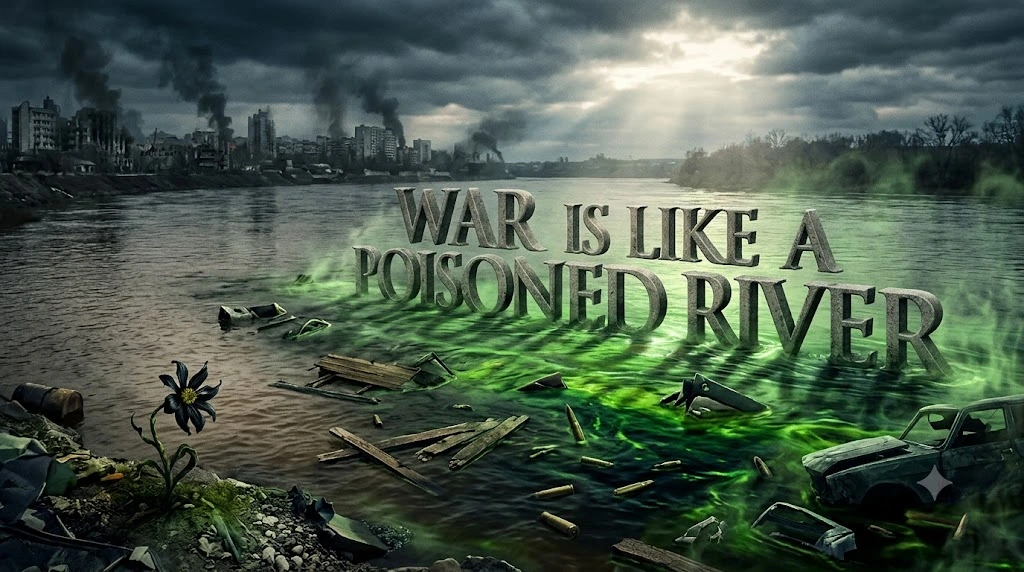
6. War Is Like a Poisoned River
Meaning
This simile illustrates how war contaminates everything it touches, even long after it ends.
Usage Insight
Effective for discussing lasting damage to societies and future generations.
Examples
- The conflict flowed through the region like a poisoned river, affecting every community.
- Hatred spread after the war like a poisoned river moving downstream.
7. War Is Like a Dark Winter
Meaning
This comparison symbolizes hardship, suffering, scarcity, and emotional coldness.
Usage Insight
Use it when describing periods of prolonged struggle or despair.
Examples
- The occupation settled over the country like a dark winter that seemed endless.
- Families endured the conflict like travelers surviving a dark winter.
8. War Is Like a Crushing Avalanche
Meaning
This simile highlights overwhelming force and unstoppable destruction.
Usage Insight
It is particularly useful for describing sudden attacks or military advances.
Examples
- The enemy offensive descended like a crushing avalanche.
- Resistance collapsed under pressure like villages buried beneath a crushing avalanche.
9. War Is Like a Relentless Machine
Meaning
This comparison portrays war as an impersonal force that continues regardless of human suffering.
Usage Insight
Use it to emphasize the systematic and unfeeling nature of conflict.
Examples
- The military campaign moved forward like a relentless machine.
- War consumed lives like a relentless machine that never paused.
10. War Is Like a Tornado Through a Town
Meaning
This simile conveys sudden chaos, confusion, and widespread destruction.
Usage Insight
Excellent for describing the immediate impact of violence.
Examples
- The attack swept through the city like a tornado through a town.
- Fear spread among civilians like debris carried by a tornado through a town.
11. War Is Like a Burning Furnace
Meaning
This comparison emphasizes extreme intensity, suffering, and endurance.
Usage Insight
Use it when focusing on personal struggles during conflict.
Examples
- The soldiers endured conditions like workers trapped inside a burning furnace.
- The battlefield felt like a burning furnace under constant bombardment.
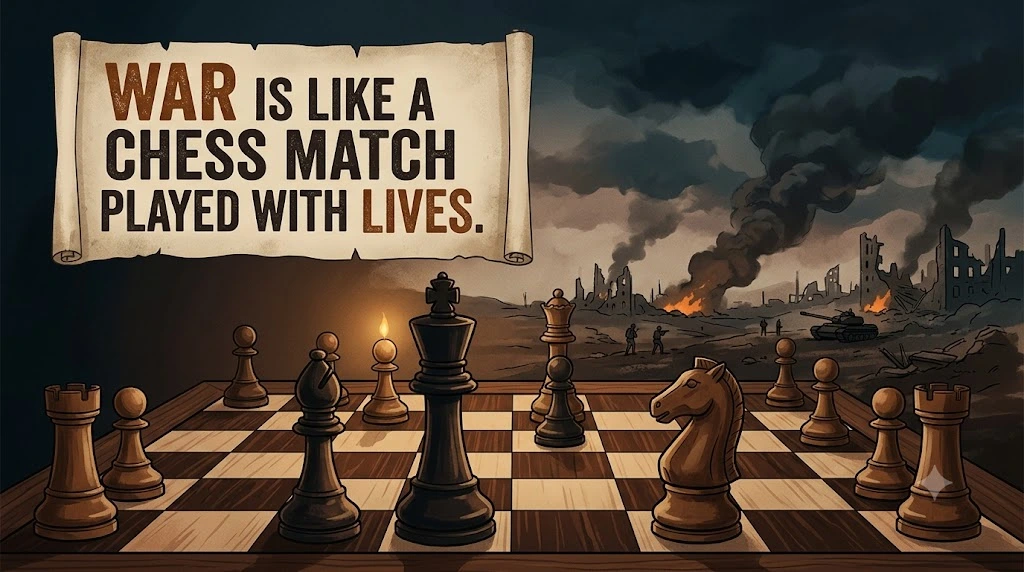
12. War Is Like a Chess Match Played with Lives
Meaning
This simile highlights strategy, planning, and the tragic human cost behind decisions.
Usage Insight
Perfect for analytical or reflective writing about military leadership.
Examples
- The generals approached the campaign like a chess match played with lives.
- Every decision felt like a move in a chess match played with lives.
13. War Is Like a Shadow That Never Sleeps
Meaning
This comparison suggests constant fear and lingering uncertainty.
Usage Insight
Use it to describe the psychological effects of conflict.
Examples
- Anxiety followed the population like a shadow that never sleeps.
- War remained over the region like a shadow that never sleeps.
14. War Is Like a Broken Dam
Meaning
This simile represents unleashed forces that become difficult to control once released.
Usage Insight
Effective when discussing escalating violence.
Examples
- Once negotiations failed, violence spread like water from a broken dam.
- The conflict expanded like a broken dam releasing unstoppable floods.
15. War Is Like a Forest Consumed by Locusts
Meaning
This comparison illustrates widespread devastation and depletion.
Usage Insight
Use it to show how war strips communities of resources and hope.
Examples
- The economy was left barren like a forest consumed by locusts.
- Entire regions suffered like forests consumed by locusts after years of conflict.
How to Use Similes Effectively in Writing
Similes are powerful tools when used thoughtfully. Here are some practical tips for incorporating them into your writing:
Choose Familiar Images
Select comparisons that readers can easily visualize. Familiar imagery creates stronger connections.
Match the Tone
A serious topic like war benefits from powerful and meaningful comparisons rather than humorous ones.
Avoid Overusing Similes
Too many similes can overwhelm readers. Use them strategically for maximum impact.
Use Nature Similes
Natural elements such as storms, oceans, wildfires, and winters often create vivid emotional imagery.
Strengthen Poems and Songs
Similes add rhythm, emotion, and memorable imagery to creative works.
Improve Essays and Speeches
In academic or persuasive writing, similes can clarify complex ideas and make arguments more engaging.
Enhance Storytelling
Writers can use similes to reveal character emotions, build atmosphere, and create unforgettable scenes.
FAQs About Similes for War
What are similes for war?
Similes for war are comparisons that use “like” or “as” to describe conflict, battles, destruction, courage, fear, or other aspects of warfare in a vivid and imaginative way.
What is the difference between a simile and a metaphor?
A simile compares two things using “like” or “as,” while a metaphor directly states that one thing is another without using comparison words.
Why are similes important in war writing?
Similes help readers visualize events, understand emotions, and connect more deeply with descriptions of conflict and human experiences.
Can similes be used in academic writing?
Yes. While academic writing should remain clear and professional, carefully chosen similes can explain complex ideas and improve readability.
How do similes improve creative writing?
Similes create stronger imagery, add emotional depth, and make descriptions more memorable for readers.
Conclusion
Powerful similes for war allow writers to transform abstract ideas into vivid, meaningful images that readers can immediately understand. Whether comparing war to a raging wildfire, a dark winter, a crushing avalanche, or a poisoned river, these figurative language examples add depth, emotion, and clarity to writing. They help communicate the chaos, sacrifice, resilience, and consequences of conflict in ways that plain descriptions often cannot. By using thoughtful comparisons and carefully chosen imagery, writers can create stronger poems, stories, essays, speeches, and literary analyses. Mastering similes for war not only improves descriptive writing but also enables readers to connect more deeply with the human experiences behind every conflict.