
Physical attraction can be difficult to describe with ordinary words because attraction is often felt before it can be explained. Similes make these feelings easier to express by comparing one thing to another using words such as “like” or “as.” In figurative language, similes create vivid pictures that help readers understand beauty, charm, presence, and desire more clearly. They can turn a simple description into something memorable, emotional, and full of imagery. Nature is especially useful for creating powerful comparisons because trees, flowers, oceans, sunlight, and stars naturally suggest beauty and emotion.
Trees, for example, are powerful symbols of strength, growth, resilience, wisdom, and human emotion, making them meaningful sources of inspiration for creative comparisons. When writing about physical attraction, nature similes can make someone’s appearance or presence feel graceful, magnetic, radiant, or unforgettable. Whether you are writing poetry, romance, fiction, songs, or personal descriptions, well-chosen similes can give your language greater depth and emotional appeal.
What Is a Simile?
A simile is a figure of speech that directly compares two different things using words such as “like” or “as.” Similes help readers visualize an idea by connecting it to something familiar or emotionally powerful.
Example: Her smile was like sunlight breaking through the clouds.
This comparison does not mean her smile is literally sunlight; instead, it suggests that her smile feels warm, bright, and uplifting.
1. His Eyes Were Like Stars Shining on a Clear Night
Meaning: This simile suggests that someone’s eyes are exceptionally bright, captivating, and difficult to ignore.
Usage Insight: Use this comparison in romantic stories, poems, or descriptions when you want to emphasize the magnetic quality of someone’s eyes without sounding overly direct.
Examples:
- His eyes were like stars shining on a clear night, drawing her attention whenever he looked her way.
- There was something unforgettable about eyes that sparkled like stars against the darkness.
2. Her Smile Was Like the First Light of Dawn
Meaning: This comparison presents a smile as fresh, radiant, warm, and naturally beautiful.
Usage Insight: It works especially well when describing an attractive person whose expression creates an immediate sense of warmth or happiness.
Examples:
- Her smile was like the first light of dawn, gentle enough to brighten the entire room.
- When she smiled, it felt as though the morning had arrived early.
3. He Was as Striking as a Mountain at Sunrise
Meaning: This simile describes someone whose appearance is powerful, impressive, and impossible to overlook.
Usage Insight: Use it when physical attraction comes from a person’s strong overall presence rather than one particular feature.
Examples:
- He stood at the doorway, as striking as a mountain at sunrise.
- His presence was bold and unforgettable, commanding attention without effort.
4. Her Hair Flowed Like Silk in a Summer Breeze
Meaning: This comparison emphasizes smoothness, softness, movement, and visual elegance.
Usage Insight: It is useful for romantic descriptions where hair contributes strongly to someone’s physical appeal.
Examples:
- Her hair flowed like silk in a summer breeze as she walked along the shore.
- Every movement sent her dark hair drifting behind her like a ribbon in the wind.
5. His Presence Was Like a Magnet in a Crowded Room
Meaning: This simile describes someone who naturally attracts attention and draws people toward them.
Usage Insight: Use it when attraction comes from charisma and presence rather than appearance alone.
Examples:
- His presence was like a magnet in a crowded room, quietly pulling everyone’s attention toward him.
- She noticed him immediately because he seemed to attract attention without trying.
6. Her Beauty Was Like a Rose Blooming After Rain
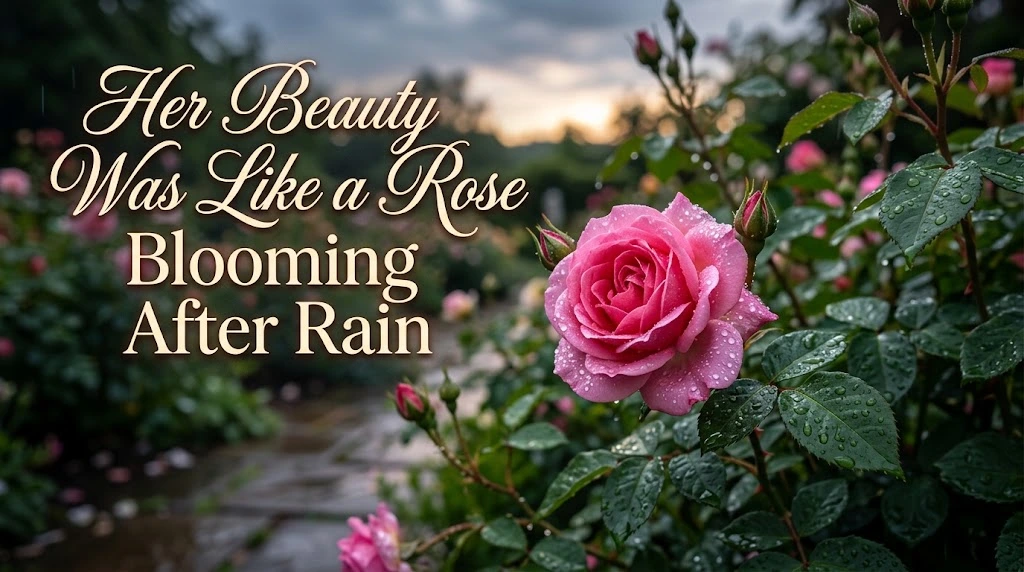
Meaning: This comparison suggests fresh, natural, delicate, and captivating beauty.
Usage Insight: It works well in poetic writing when you want physical beauty to feel organic rather than artificial.
Examples:
- Her beauty was like a rose blooming after rain, fresh and impossible to overlook.
- In the soft morning light, she looked as delicate as a flower after a spring shower.
7. His Smile Was as Warm as Golden Sunlight
Meaning: This simile connects physical attraction with warmth, friendliness, and emotional comfort.
Usage Insight: Use it when someone’s smile makes them more attractive because of the welcoming feeling it creates.
Examples:
- His smile was as warm as golden sunlight falling across an open field.
- A single smile made his already handsome face seem even more inviting.
8. Her Face Was Like a Painting Framed by Nature
Meaning: This comparison presents someone’s face as beautiful, balanced, artistic, and visually captivating.
Usage Insight: It is effective in descriptive prose when you want to create an artistic image of someone’s appearance.
Examples:
- Her face was like a painting framed by nature, with every feature seeming perfectly placed.
- Against the green trees, her features appeared almost dreamlike.
9. He Was as Handsome as an Ancient Oak
Meaning: This simile combines physical attractiveness with strength, dignity, stability, and timeless appeal.
Usage Insight: It is particularly useful for describing a man whose attractiveness comes from both appearance and a strong, grounded presence.
Examples:
- He was as handsome as an ancient oak, tall, steady, and impossible to ignore.
- There was something timeless about his appearance, like an old tree that had weathered countless seasons.
10. Her Voice Was Like Honey Drifting Through Warm Air
Meaning: Although voice is not strictly physical appearance, this comparison shows how someone’s voice can increase physical attraction through softness and sensual warmth.
Usage Insight: Use it when describing attraction that develops through a person’s complete presence rather than appearance alone.
Examples:
- Her voice was like honey drifting through warm air, making every conversation feel intimate.
- The gentle sound of her voice made her presence even more captivating.
11. His Features Were Sharp Like Mountains Against the Sky

Meaning: This simile highlights defined, strong, and noticeable facial features.
Usage Insight: It works well when describing a person with a distinctive appearance, particularly in fiction or character description.
Examples:
- His features were sharp like mountains against the sky, giving his face a striking appearance.
- Strong cheekbones and a defined jaw made his profile unusually memorable.
12. She Was Like a Butterfly Emerging Into Sunlight
Meaning: This comparison suggests graceful beauty, transformation, elegance, and captivating movement.
Usage Insight: Use it when describing someone whose appearance or manner becomes especially attractive as they move, smile, or enter a new setting.
Examples:
- She entered the garden like a butterfly emerging into sunlight.
- Her graceful movements gave her an effortless elegance that caught everyone’s attention.
13. His Eyes Were as Deep as an Ocean at Midnight
Meaning: This simile suggests mysterious, intense, and captivating eyes.
Usage Insight: It is especially effective in romantic and poetic writing when attraction is connected to mystery or emotional intensity.
Examples:
- His eyes were as deep as an ocean at midnight, holding a mystery she could not explain.
- She found herself staring into his dark eyes, fascinated by their quiet intensity.
14. Her Beauty Shone Like the Moon Over Still Water
Meaning: This comparison presents beauty as calm, luminous, elegant, and enchanting.
Usage Insight: Use it for subtle physical attraction when you want your description to feel romantic rather than exaggerated.
Examples:
- Her beauty shone like the moon over still water, quiet but impossible to miss.
- Under the evening sky, her features seemed softly illuminated.
15. His Charm Was Like a Flame Drawing Moths Through the Night
Meaning: This simile portrays powerful attraction that naturally pulls people closer.
Usage Insight: It is best for describing intense charisma or undeniable physical appeal in romantic fiction, poetry, or creative writing.
Examples:
- His charm was like a flame drawing moths through the night; people noticed him without knowing why.
- She tried to ignore his presence, but his magnetic appeal kept drawing her attention back to him.
How to Use Similes Effectively in Writing
Similes for physical attraction are most effective when they add something beyond simply saying that someone is “beautiful” or “handsome.” A strong comparison gives readers an image they can see, feel, and remember.
1. Use Similes in Poems
Poetry benefits from concise, emotional comparisons. A simile can turn physical attraction into an image involving moonlight, flowers, stars, oceans, or sunlight.
Example: Her eyes were like stars scattered across a midnight sky.
2. Use Similes in Stories
In fiction, avoid filling every sentence with figurative language. Choose one strong comparison at an important moment, such as when a character first notices someone attractive.
Instead of repeatedly describing someone’s appearance, let a carefully chosen simile reveal what makes the person memorable.
3. Use Similes in Essays
Academic writing generally requires a more controlled use of figurative language. A simile can be appropriate in reflective, literary, cultural, or creative essays, but it should support the main idea rather than distract from it.
4. Use Similes in Songs
Songs often depend on memorable imagery. Comparisons involving stars, fire, oceans, flowers, and sunlight can communicate attraction quickly while giving lyrics emotional rhythm.
5. Use Similes in Creative Descriptions
When describing physical attraction, focus on the particular quality you want readers to notice. Compare eyes to stars when emphasizing brightness, hair to silk when emphasizing softness, or presence to a magnet when emphasizing charisma.
6. Choose Fresh Comparisons
Common comparisons can work, but original imagery often makes writing more memorable. Think beyond basic descriptions and draw inspiration from nature, weather, landscapes, light, movement, and seasons.
7. Do Not Overuse Similes
Too many comparisons can make writing feel crowded. One carefully chosen simile can often communicate more than several ordinary descriptions.
FAQs About Similes for Physical Attraction
What are good similes for physical attraction?
Good similes include comparisons such as “His eyes were like stars” or “Her smile was like the first light of dawn.” The strongest examples connect physical beauty with a clear image or emotion.
What is the difference between a simile and a metaphor?
A simile makes a comparison using words such as “like” or “as,” while a metaphor makes a direct comparison without those words. For example, “Her smile was like sunlight” is a simile, while “Her smile was sunlight” is a metaphor.
Can similes describe physical attraction in creative writing?
Yes. Similes are especially useful in poetry, romance, fiction, songs, character descriptions, and other creative writing because they transform ordinary descriptions into vivid imagery.
Can I use similes in academic writing?
Yes, but they should be used carefully. In academic writing, similes work best when they clarify an idea or support an interpretation rather than simply decorate the writing.
Why are nature similes effective for describing attraction?
Nature provides familiar and powerful images such as flowers, stars, oceans, sunlight, mountains, and trees. These images carry emotional associations that can make descriptions of beauty and attraction clearer and more memorable.
Conclusion
Similes for physical attraction give writers a creative way to describe beauty, charm, presence, and emotional appeal without relying on repetitive words such as “beautiful” or “handsome.” A well-crafted comparison can make a person’s eyes sparkle like stars, a smile glow like sunlight, or a presence pull attention like a magnet. Nature similes are particularly powerful because readers already understand the emotional qualities associated with flowers, oceans, mountains, moonlight, and trees. Like trees that symbolize strength, growth, resilience, wisdom, and human emotion, strong comparisons can give simple descriptions deeper meaning.
Whether you are writing a poem, romantic story, song, essay, or creative character description, the right simile can transform an ordinary sentence into a memorable image. The key is to choose comparisons that match the emotion, personality, and setting of the person you are describing. When used thoughtfully, similes add clarity, imagery, personality, and emotional depth to language. Ultimately, the best figurative language does more than describe physical attraction—it helps readers experience it through words.