
Imagine standing beneath a tall tree and noticing how it continues to reach toward the sky despite storms, heat, and changing seasons. Similes help writers create this kind of vivid picture by comparing one thing to another using words such as like or as. They are an important part of figurative language because they turn ordinary ideas into memorable images that readers can easily understand. Inspirational similes can make writing about courage, hope, growth, resilience, and success feel more meaningful and emotionally powerful.
Trees are especially useful in nature similes because they represent strength, growth, resilience, wisdom, and the many emotions people experience throughout life. Like a tree that grows from a small seed into something strong and lasting, people can develop through challenges, patience, and determination. In similes in literature, these comparisons often help readers connect abstract emotions and ideas with familiar sights from nature and everyday life. Whether you are writing a poem, essay, story, speech, song, or personal reflection, the right comparison can make your message shine.
What Is a Simile?
A simile is a figure of speech that compares two different things using words such as “like” or “as.” Writers use similes to make descriptions clearer, more colorful, and emotionally engaging.
Example: Her determination was like a deep-rooted tree standing firmly through a storm.
This comparison connects determination with the strength and resilience of a tree, helping readers visualize an abstract quality.
1. Strong as an Oak Tree
Simile: Strong as an oak tree.
Meaning: This simile describes someone or something that possesses remarkable physical, emotional, or mental strength.
Usage: It works particularly well when writing about resilience, courage, leadership, or someone who refuses to give up.
Examples:
- After years of challenges, she remained strong as an oak tree.
- His spirit was strong as an oak tree, even when everything around him seemed uncertain.
2. Hopeful Like Sunrise After a Storm
Simile: Hopeful like sunrise after a storm.
Meaning: This comparison represents hope appearing after a difficult or painful period.
Usage: Use it when describing fresh beginnings, recovery, optimism, or the belief that better days are ahead.
Examples:
- Her heart felt hopeful like sunrise after a storm.
- The new opportunity arrived hopeful like sunrise after a long night of uncertainty.
3. Resilient Like a Tree Bending in the Wind
Simile: Resilient like a tree bending in the wind.
Meaning: This simile suggests the ability to adapt to pressure without breaking.
Usage: It is especially effective for writing about perseverance, personal growth, and overcoming adversity.
Examples:
- He remained resilient like a tree bending in the wind.
- She learned to adapt to every setback, resilient like a tree bending through powerful gusts.
4. Bright as a Star in a Dark Sky
Simile: Bright as a star in a dark sky.
Meaning: This comparison describes someone or something that brings hope, beauty, or encouragement during difficult circumstances.
Usage: It works beautifully in inspirational speeches, poems, personal stories, and descriptions of supportive people.
Examples:
- Her kindness was bright as a star in a dark sky.
- His encouraging words were bright as a star when everyone else had lost confidence.
5. Steady Like a Mountain Beneath the Clouds
Simile: Steady like a mountain beneath the clouds.
Meaning: This simile represents stability, patience, confidence, and emotional strength.
Usage: Use it when describing a person who remains calm and dependable even when circumstances change.
Examples:
- She stayed steady like a mountain beneath the clouds.
- His confidence remained steady like a mountain despite the criticism around him.
6. Growing Like a Seed Reaching for Sunlight
Simile: Growing like a seed reaching for sunlight.
Meaning: This comparison represents learning, improvement, ambition, and personal development.
Usage: It is ideal for writing about students, new beginnings, career progress, self-discovery, and personal transformation.
Examples:
- Her confidence was growing like a seed reaching for sunlight.
- With every new experience, he was growing like a seed reaching toward the morning sun.
7. Courageous Like a River Cutting Through Stone
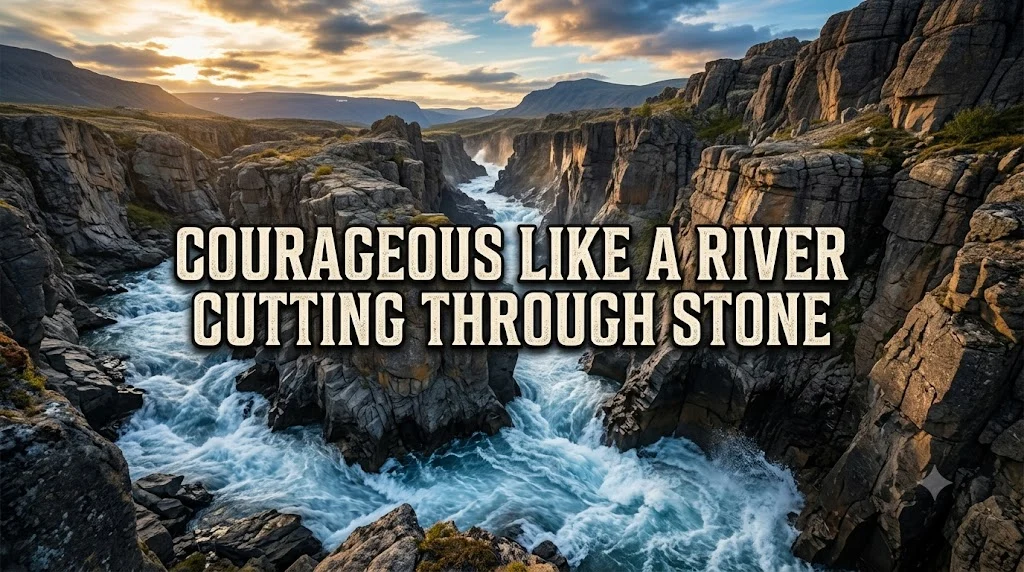
Simile: Courageous like a river cutting through stone.
Meaning: This simile shows determination strong enough to overcome obstacles that initially appear impossible.
Usage: It works best when discussing perseverance, bravery, ambition, or long-term effort.
Examples:
- Her courage was like a river cutting through stone.
- He pursued his dream with a spirit courageous like a river carving its way through rock.
8. Peaceful as a Forest at Dawn
Simile: Peaceful as a forest at dawn.
Meaning: This comparison conveys deep calmness, quiet confidence, and emotional peace.
Usage: It can add a gentle quality to writing about reflection, healing, meditation, nature, or emotional balance.
Examples:
- After making her decision, her mind became peaceful as a forest at dawn.
- The quiet room felt peaceful as a forest waking beneath the first light.
9. Determined Like a River Flowing Toward the Sea
Simile: Determined like a river flowing toward the sea.
Meaning: This simile represents persistence and a clear sense of direction.
Usage: Use it to describe people who continue moving toward their goals regardless of obstacles.
Examples:
- She was determined like a river flowing toward the sea.
- His ambition carried him forward, determined like a river that never forgets its destination.
10. Wise as an Ancient Tree
Simile: Wise as an ancient tree.
Meaning: This comparison connects wisdom with experience, age, patience, and deep understanding.
Usage: It is effective when describing mentors, grandparents, teachers, leaders, or characters who have learned important lessons through life.
Examples:
- Her advice was wise as an ancient tree.
- The old teacher seemed wise as an ancient tree rooted in decades of experience.
11. Free Like a Bird Riding the Wind
Simile: Free like a bird riding the wind.
Meaning: This simile represents independence, confidence, adventure, and freedom from unnecessary limitations.
Usage: It works well in writing about personal liberation, dreams, travel, creativity, and new opportunities.
Examples:
- After leaving her fears behind, she felt free like a bird riding the wind.
- His imagination was free like a bird carried effortlessly across the open sky.
12. Patient as a Tree Waiting for Spring
Simile: Patient as a tree waiting for spring.
Meaning: This comparison expresses the value of waiting calmly for the right moment.
Usage: Use it when writing about patience, healing, delayed success, or trusting the process of growth.
Examples:
- She remained patient as a tree waiting for spring.
- He understood that meaningful success takes time, so he stayed patient as a tree waiting for warmer days.
13. Fearless Like the Sun Rising Every Morning
Simile: Fearless like the sun rising every morning.
Meaning: This simile describes someone who confidently continues forward despite uncertainty or difficulty.
Usage: It is particularly powerful in motivational writing, speeches, poems, and stories about overcoming fear.
Examples:
- She faced each new challenge fearless like the sun rising every morning.
- His determination was fearless like the morning sun breaking through the darkness.
14. Kind Like Rain Nourishing the Earth
Simile: Kind like rain nourishing the earth.
Meaning: This comparison connects kindness with something gentle that gives life, comfort, and renewal.
Usage: It works well for describing compassionate people, helpful actions, friendship, generosity, and emotional support.
Examples:
- Her kindness was like rain nourishing the earth after a dry season.
- His generous nature was kind like gentle rain falling over a thirsty garden.
15. Inspiring Like a Tree Reaching Toward the Sky
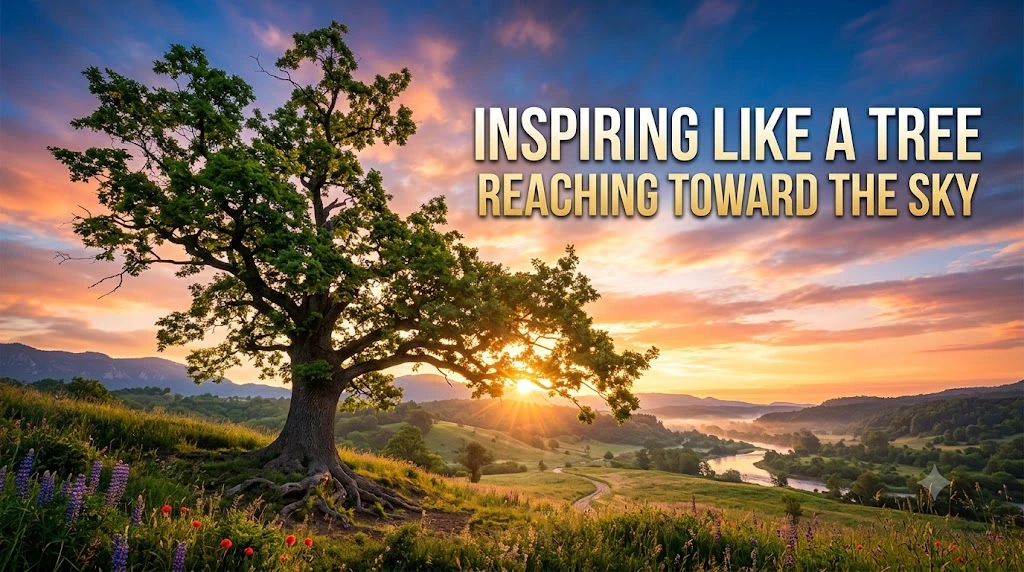
Simile: Inspiring like a tree reaching toward the sky.
Meaning: This simile represents ambition, growth, hope, and the desire to become something greater.
Usage: It is especially effective when describing personal dreams, achievement, leadership, or someone who motivates others through their example.
Examples:
- Her journey was inspiring like a tree reaching toward the sky.
- His determination to improve himself was inspiring like a young tree growing beyond the surrounding branches.
How to Use Similes Effectively in Writing
Knowing inspirational similes is only the first step. The real power comes from using them naturally and purposefully.
1. Use Similes to Make Abstract Ideas Concrete
Words such as hope, courage, wisdom, and confidence describe ideas that readers cannot physically see. A strong comparison gives these concepts a recognizable image.
Instead of writing:
“She had great courage.”
You might write:
“Her courage was like a river cutting through stone.”
The second sentence creates a stronger visual impression.
2. Use Nature Similes for Emotional Writing
Nature provides endless inspiration for comparisons. Trees, rivers, mountains, stars, sunlight, rain, oceans, flowers, and birds can all communicate human qualities.
For example:
“His patience was like a mountain waiting through every season.”
This connects a human quality with something familiar and powerful.
3. Avoid Using Too Many Similes Together
Similes are effective because they attract attention. If every sentence contains one, however, the writing can feel crowded.
Choose the comparison that best supports your central idea and allow it to stand out.
4. Match the Simile to the Emotion
Think carefully about the emotional quality you want to communicate.
- Strength: oak trees, mountains, stone
- Hope: sunrise, stars, spring
- Freedom: birds, wind, open skies
- Growth: seeds, flowers, young trees
- Peace: forests, calm water, dawn
- Determination: rivers, roots, mountains
The right comparison makes the emotion easier to feel.
5. Use Similes in Poems
Poetry depends heavily on imagery and emotion, making similes especially useful.
For example:
“Hope rose like sunlight through the clouds.”
A short comparison can communicate an entire emotional experience.
6. Add Similes to Stories
In fiction, similes can strengthen character descriptions and make settings more vivid.
Instead of:
“The character was nervous.”
Try:
“Her thoughts raced like birds startled from a quiet tree.”
The reader can now visualize the character’s nervousness.
7. Use Comparisons Carefully in Essays
Academic writing generally requires clarity and precision. A carefully chosen simile can make an introduction or explanation memorable, but avoid excessive figurative language when presenting technical information.
8. Bring Speeches to Life
Inspirational speeches can become more memorable when an important idea is connected to a powerful image.
For example:
“Like a tree that survives the storm, we can bend without breaking.”
This gives the audience a simple image that reinforces the message.
9. Strengthen Songs and Creative Descriptions
Songwriters and creative writers can use similes to express complicated emotions in a compact way. A comparison can transform an ordinary line into something personal and memorable.
The key is to choose an image that feels fresh rather than predictable.
Inspirational Similes in Figurative Language
Inspirational similes are one part of a much larger world of figurative language examples. They work alongside metaphors, personification, symbolism, imagery, and other literary devices to make communication more expressive.
For instance, comparing courage to an oak tree does more than describe strength. It can suggest deep roots, endurance, growth, stability, and survival. This is why nature-based comparisons are particularly effective: readers already understand the qualities associated with familiar parts of the natural world.
In similes in literature, writers frequently use comparisons to help readers experience emotions rather than simply being told what a character feels. A carefully selected simile can therefore add both visual imagery and emotional depth.
FAQs About Inspirational Similes
1. What are inspirational similes?
Inspirational similes are comparisons that communicate positive qualities such as hope, courage, strength, growth, resilience, confidence, wisdom, and determination. They generally use like or as to connect an idea with a vivid image.
2. What is the difference between a simile and a metaphor?
A simile makes a comparison using words such as like or as. A metaphor makes a direct comparison without those words.
Simile: Her courage was like a mountain.
Metaphor: Her courage was a mountain.
Both create imagery, but they structure the comparison differently.
3. Why are trees commonly used in inspirational similes?
Trees naturally represent strength, growth, resilience, wisdom, stability, and endurance. Their roots, branches, changing seasons, and ability to survive difficult weather make them powerful symbols for human experiences.
4. Can I use inspirational similes in academic writing?
Yes, but they should be used selectively. A well-placed simile can make an introduction, presentation, reflection, or explanation more engaging, while formal academic arguments should remain clear and evidence-based.
5. Where can I use inspirational similes?
You can use them in poems, short stories, speeches, essays, songs, social media writing, personal reflections, creative descriptions, and motivational content. Choose comparisons that fit the audience and purpose of your writing.
Conclusion
Inspirational similes can transform simple sentences into memorable expressions filled with clarity, imagery, and emotional depth. A person can be described as strong as an oak, hopeful like sunrise, patient as a tree waiting for spring, or determined like a river flowing toward the sea. These comparisons give readers something concrete to picture while helping them understand deeper human qualities. Nature similes are especially powerful because the natural world already carries rich associations with strength, growth, resilience, wisdom, renewal, and freedom. When used thoughtfully, similes can make poems more moving, stories more vivid, essays more engaging, and speeches more memorable. The best comparisons do not simply decorate language; they help readers see and feel an idea in a new way. As you continue exploring figurative language examples and similes in literature, experiment with comparisons drawn from nature, everyday life, and human experience. With the right simile, even an ordinary thought can grow into an inspiring image that stays with your reader long after the sentence ends.