
Yesterday, I stepped outside just before sunrise, expecting to hear the usual sounds of traffic, birds, and people beginning their day. Instead, everything seemed to pause. The street was quiet as a sleeping village, and the soft morning air felt as gentle as a whisper. For a moment, I realized that quietness does not always mean emptiness; sometimes, it can feel peaceful, mysterious, comforting, or even powerful. That is where similes for quiet can make writing come alive. A simple comparison can turn ordinary silence into a vivid picture that readers can almost hear—or feel. Instead of simply saying, “The room was quiet,” you might write, “The room was as quiet as a moonlit forest.” Suddenly, the scene becomes clearer and more emotional. Whether you are writing a poem, story, essay, or creative description, similes help you express quietness in memorable ways. In this guide, you will discover creative and meaningful similes for quiet that can make your writing more descriptive, expressive, and engaging.
- What Are Similes and Metaphors for Quiet?
- What Are Some Similes for Quiet?
- What Are Some Metaphors for Quiet?
- Similes and Metaphors for a Quiet Person
- Similes and Metaphors for a Quiet Place
- Similes and Metaphors for a Quiet Room
- Similes and Metaphors for a Quiet Night
- Similes and Metaphors for Quietness
- Similes and Metaphors for Deep Silence
- Similes and Metaphors for Peaceful Quiet
- Similes and Metaphors for a Quiet Morning
- Similes and Metaphors for a Quiet Forest
- Similes and Metaphors for a Quiet House
- Similes and Metaphors for Quiet Moments
- Similes and Metaphors for Quiet Emotions
- Similes and Metaphors for Quiet Voices
- Similes and Metaphors for Quiet Nature
- Similes and Metaphors for Quiet in Literature
- Creative Similes and Metaphors for Quiet
- How to Use Similes and Metaphors for Quiet in Writing
What Is a Simile?
A simile is a figure of speech that compares two different things using the words “like” or “as.” It helps readers understand an idea by connecting it to something familiar.
Example:
“The room was as quiet as a sleeping forest.”
This simile compares the silence of a room to the peaceful stillness of a forest, creating a vivid image in the reader’s mind.
As Quiet as a Sleeping Forest
Meaning
This simile describes a place that is completely calm, peaceful, and undisturbed.
Usage Insight
Use this simile when describing tranquil settings, nature scenes, or moments of deep stillness.
Examples
- The library was as quiet as a sleeping forest during the examination week.
- After the snowfall, the town became as quiet as a sleeping forest.
As Quiet as Falling Snow
Meaning
Refers to a silence so gentle that it feels soft and almost invisible.
Usage Insight
This works well in descriptive writing that focuses on peaceful winter scenes or calm emotions.
Examples
- Her footsteps were as quiet as falling snow across the wooden floor.
- The morning felt as quiet as falling snow on an empty field.
Like a Feather Drifting Through the Air
Meaning
Describes movement or sound that is barely noticeable.
Usage Insight
Ideal for portraying subtle actions or delicate moments.
Examples
- He entered the room like a feather drifting through the air.
- Her voice faded like a feather drifting through the air.
As Quiet as the Moonlit Desert
Meaning
Represents complete silence in a vast and open environment.
Usage Insight
Use it to emphasize isolation, serenity, or awe-inspiring stillness.
Examples
- The campsite became as quiet as the moonlit desert after midnight.
- The hall stood as quiet as the moonlit desert before the ceremony began.
Like a Secret Kept for Years
Meaning
Suggests silence that is intentional and carefully maintained.
Usage Insight
Perfect for emotional writing involving mystery or hidden feelings.
Examples
- He remained quiet like a secret kept for years.
- The old diary sat on the shelf like a secret kept for years.
As Quiet as a Still Pond at Dawn
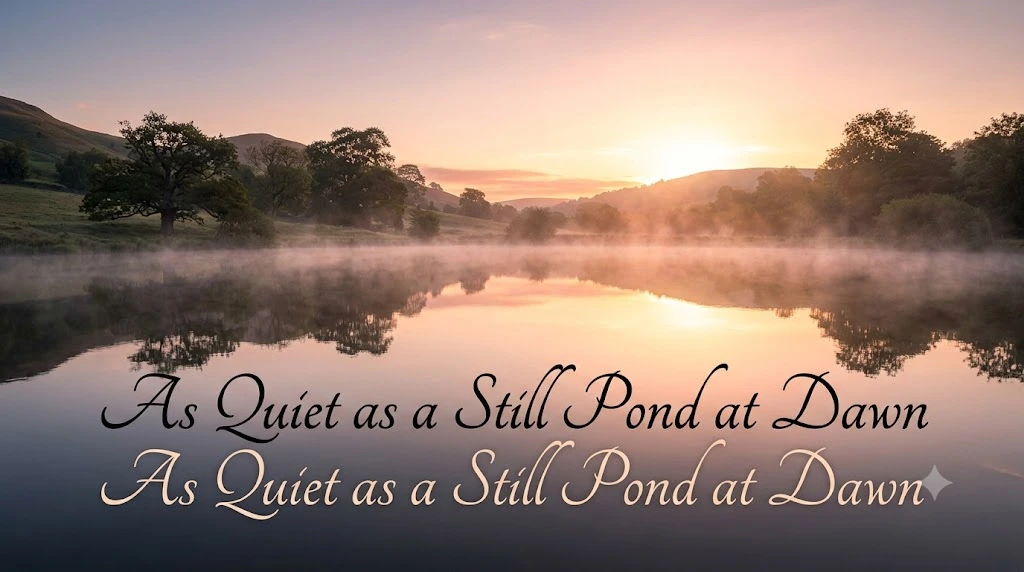
Meaning
Describes peaceful and uninterrupted calmness.
Usage Insight
Excellent for nature writing and reflective passages.
Examples
- Her mind became as quiet as a still pond at dawn.
- The garden looked as quiet as a still pond at dawn.
Like the Pause Between Heartbeats
Meaning
Refers to a brief but noticeable moment of silence.
Usage Insight
Useful in suspenseful or emotional scenes.
Examples
- The crowd fell silent like the pause between heartbeats.
- For a moment, time seemed still like the pause between heartbeats.
As Quiet as a Candle in an Empty Chapel
Meaning
Represents reverent, respectful silence.
Usage Insight
Works beautifully in spiritual, solemn, or reflective contexts.
Examples
- The audience remained as quiet as a candle in an empty chapel.
- The room felt as quiet as a candle in an empty chapel.
Like Shadows at Midnight
Meaning
Describes movement or presence that makes almost no sound.
Usage Insight
Great for mystery stories and atmospheric descriptions.
Examples
- The cats moved like shadows at midnight.
- The guards walked like shadows at midnight through the corridor.
As Quiet as Dew on Morning Grass
Meaning
Represents a gentle and natural form of silence.
Usage Insight
Ideal for peaceful outdoor descriptions and poetry.
Examples
- The countryside was as quiet as dew on morning grass.
- Her arrival was as quiet as dew on morning grass.
Like a Page Waiting to Be Written
Meaning
Suggests a silence full of possibility and anticipation.
Usage Insight
Useful when describing expectation before an important event.
Examples
- The classroom became quiet like a page waiting to be written.
- The theater sat like a page waiting to be written before the performance.
As Quiet as the Stars Above
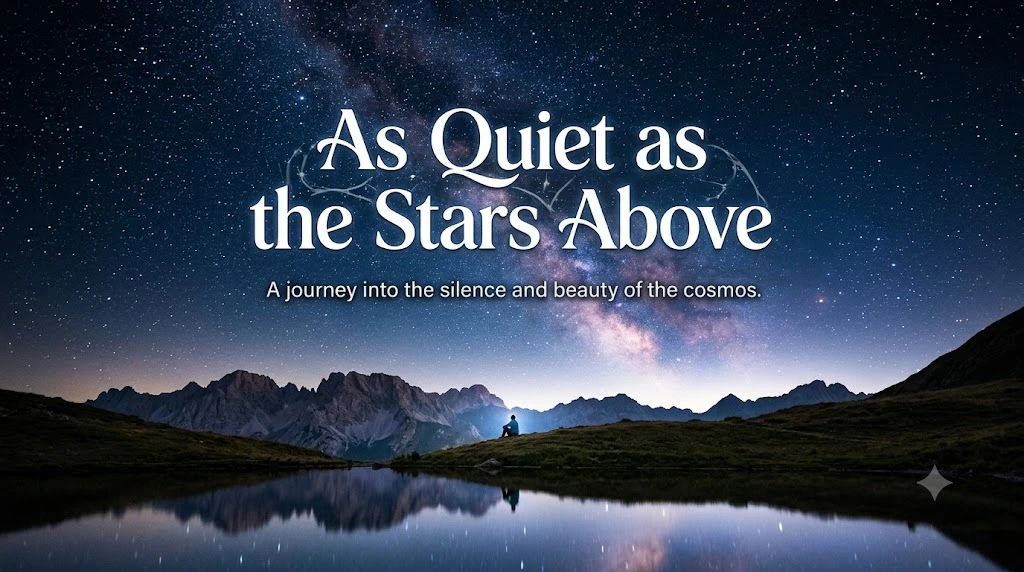
Meaning
Refers to deep, expansive silence.
Usage Insight
Excellent for nighttime imagery and philosophical writing.
Examples
- The valley was as quiet as the stars above.
- His thoughts drifted through a night as quiet as the stars above.
Like a Whisper Lost in the Wind
Meaning
Describes an almost imperceptible sound.
Usage Insight
Works well when emphasizing softness or fading voices.
Examples
- Her answer came like a whisper lost in the wind.
- The distant melody vanished like a whisper lost in the wind.
As Quiet as an Unopened Letter
Meaning
Represents silence that holds mystery or hidden meaning.
Usage Insight
Useful in emotional narratives and symbolic descriptions.
Examples
- The box remained as quiet as an unopened letter.
- Their relationship felt as quiet as an unopened letter.
Like Mist Floating Over a Lake
Meaning
Suggests a soft, peaceful, and gentle silence.
Usage Insight
Perfect for nature-inspired and poetic writing.
Examples
- The morning settled like mist floating over a lake.
- Her presence was like mist floating over a lake, calm and unobtrusive.
As Quiet as a Nest Before Sunrise
Meaning
Describes complete stillness before activity begins.
Usage Insight
Effective for scenes that precede excitement or change.
Examples
- The house was as quiet as a nest before sunrise.
- The office remained as quiet as a nest before sunrise before employees arrived.
How to Use Similes Effectively in Writing
Using similes effectively can make your writing more engaging and memorable. Here are some practical tips:
Choose Familiar Comparisons
Readers connect more easily with images they recognize, such as snow, forests, stars, or lakes.
Match the Mood
Select similes that fit the emotional tone of your writing. Peaceful scenes benefit from gentle comparisons, while suspenseful scenes may require more dramatic imagery.
Avoid Overusing Similes
A few strong similes create impact. Too many comparisons can make writing feel cluttered.
Use Nature Similes
Nature provides endless inspiration for describing quiet, beauty, strength, and emotion.
Create Original Comparisons
Fresh and unique similes capture attention and make your writing stand out.
Enhance Different Writing Forms
- Poems: Add rhythm and imagery.
- Stories: Build atmosphere and character emotions.
- Essays: Clarify ideas and improve engagement.
- Songs: Create memorable lyrics.
- Creative Descriptions: Paint vivid pictures for readers.
FAQs About Similes for Quiet
What are similes for quiet?
Similes for quiet are comparisons that describe silence or calmness using the words “like” or “as.” Examples include as quiet as falling snow and like mist floating over a lake.
Why are similes for quiet useful in writing?
They help readers visualize silence more clearly, making descriptions more vivid, emotional, and engaging.
What is the difference between a simile and a metaphor?
A simile compares two things using “like” or “as,” while a metaphor directly states that one thing is another without using comparison words.
Can similes be used in academic writing?
Yes. While academic writing is generally more formal, carefully chosen similes can help explain complex ideas and improve clarity when appropriate.
Are nature similes effective for describing quiet?
Absolutely. Natural elements such as forests, snow, stars, ponds, and mist often symbolize peace and stillness, making them excellent comparisons for quiet.
Conclusion
Quietness may seem simple at first, but it can carry many different emotions, from peace and comfort to mystery, loneliness, and reflection. Throughout this guide, we have seen how similes for quiet can transform ordinary descriptions into vivid and memorable images. Instead of simply telling readers that a place or person is quiet, a thoughtful comparison allows them to imagine the stillness for themselves. A room can be as quiet as a sleeping forest, a voice can be soft as a falling leaf, and a peaceful morning can feel like a world holding its breath. These comparisons make writing more expressive while helping readers connect emotionally with a scene. Whether you are creating poetry, writing a short story, completing an essay, or adding detail to everyday descriptions, the right simile can make quietness feel alive. The key is to choose comparisons that match the mood you want to create. With creative similes for quiet, even the smallest moment of silence can become powerful, beautiful, and unforgettable.