
Life is full of ups and downs, and writers often search for vivid ways to describe difficult moments. One of the most effective tools for expressing hardship is the simile. Similes help readers understand emotions and experiences by comparing them to something familiar. They are an essential part of figurative language because they create strong mental images and make writing more engaging.
Nature, in particular, provides powerful inspiration for similes because natural elements often reflect human emotions and experiences. Trees symbolize strength, growth, resilience, wisdom, and the ability to endure challenges through changing seasons. Just as a tree can weather storms and continue growing, people often face unfortunate circumstances and find ways to move forward. By using thoughtful similes, writers can transform ordinary descriptions into memorable and emotionally rich expressions.
What Is a Simile?
A simile is a figure of speech that compares two different things using the words “like” or “as.” Similes help readers visualize ideas, emotions, and situations more clearly.
Example:
Her smile was as bright as the morning sun.
This comparison creates a vivid image and makes the description more memorable.
Like a Tree Struck by Lightning
Meaning
Describes someone experiencing a sudden and devastating misfortune.
Usage Insight
This simile works well when portraying unexpected setbacks that dramatically change a situation.
Examples
- After losing the contract, he stood like a tree struck by lightning, stunned and speechless.
- The shocking news hit her like a tree struck by lightning in the middle of a calm forest.
As Unfortunate as a Flower Caught in a Frost
Meaning
Refers to someone whose hopes or plans are damaged before they can fully develop.
Usage Insight
Ideal for describing lost opportunities or interrupted dreams.
Examples
- His ambitions seemed as unfortunate as a flower caught in a frost.
- The project was as unfortunate as a flower caught in a frost before it could bloom.
Like a Boat Lost in a Storm
Meaning
Represents confusion, uncertainty, and misfortune.
Usage Insight
Useful when describing people facing overwhelming challenges.
Examples
- Without guidance, she felt like a boat lost in a storm.
- The company drifted like a boat lost in a storm after the sudden resignation.
As Unfortunate as a Bird with Broken Wings
Meaning
Describes someone unable to achieve their goals because of setbacks.
Usage Insight
Perfect for expressing limitation and disappointment.
Examples
- Injured before the competition, he felt as unfortunate as a bird with broken wings.
- The talented artist seemed as unfortunate as a bird with broken wings after losing her studio.
Like Leaves Scattered by a Strong Wind
Meaning
Suggests chaos and loss of stability.
Usage Insight
Works well in stories involving sudden disruptions.
Examples
- Their plans were like leaves scattered by a strong wind.
- The family felt like leaves scattered by a strong wind after the disaster.
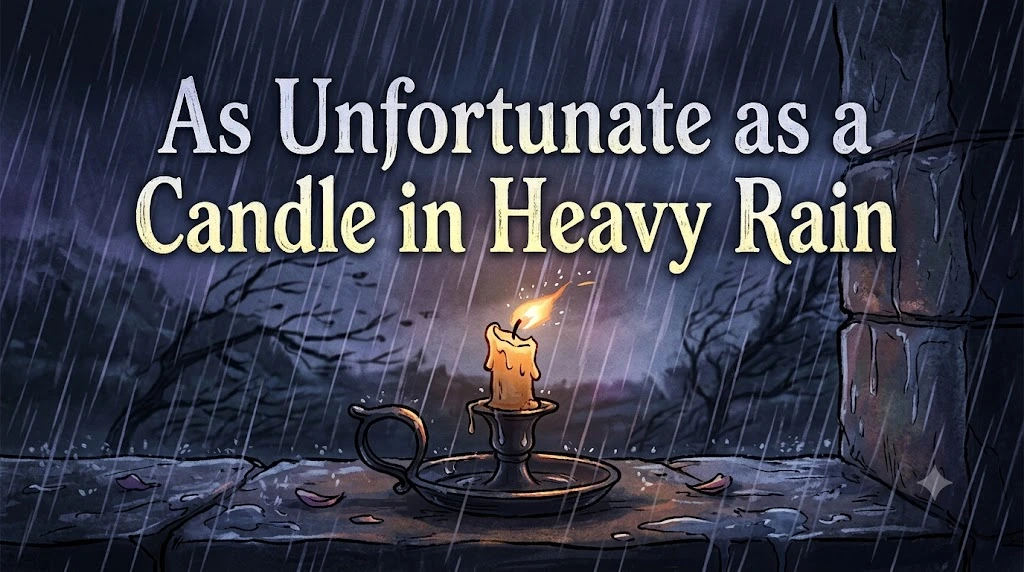
As Unfortunate as a Candle in Heavy Rain
Meaning
Describes someone struggling against overwhelming odds.
Usage Insight
Effective for highlighting vulnerability.
Examples
- His efforts seemed as unfortunate as a candle in heavy rain.
- The small business was as unfortunate as a candle in heavy rain during the economic downturn.
Like a Seed Falling on Bare Rock
Meaning
Represents wasted potential or efforts that cannot succeed.
Usage Insight
Useful for discussing failed opportunities.
Examples
- Without support, her talents felt like a seed falling on bare rock.
- The proposal landed like a seed falling on bare rock among uninterested investors.
As Unfortunate as a River Running Dry
Meaning
Suggests a complete loss of resources, hope, or opportunity.
Usage Insight
Works well in emotional or dramatic writing.
Examples
- His confidence became as unfortunate as a river running dry.
- The town looked as unfortunate as a river running dry after the factory closed.
Like a Deer Trapped in a Snare
Meaning
Describes helplessness and bad luck.
Usage Insight
Excellent for situations where someone feels trapped.
Examples
- She felt like a deer trapped in a snare during the difficult negotiations.
- The young entrepreneur was like a deer trapped in a snare by unexpected debts.
As Unfortunate as a Shadow Without Light
Meaning
Refers to a situation lacking support or hope.
Usage Insight
Useful in poetic and reflective writing.
Examples
- His future seemed as unfortunate as a shadow without light.
- The abandoned project was as unfortunate as a shadow without light.
Like a Tree Losing Its Roots
Meaning
Represents instability, displacement, or loss.
Usage Insight
Effective when discussing major life changes.
Examples
- Moving away from home made her feel like a tree losing its roots.
- After the merger, employees felt like trees losing their roots.
As Unfortunate as a Star Hidden by Clouds

Meaning
Describes talent or potential obscured by circumstances.
Usage Insight
Great for discussing overlooked abilities.
Examples
- Her gifts remained as unfortunate as a star hidden by clouds.
- The athlete’s career became as unfortunate as a star hidden by clouds due to injuries.
Like a Path Blocked by Fallen Trees
Meaning
Suggests obstacles preventing progress.
Usage Insight
Ideal for describing difficult journeys.
Examples
- His career felt like a path blocked by fallen trees.
- The team faced challenges like a path blocked by fallen trees.
As Unfortunate as a Nest Swept Away by Floodwaters
Meaning
Represents sudden loss and disruption.
Usage Insight
Useful for emotionally powerful descriptions.
Examples
- Their savings disappeared, leaving them as unfortunate as a nest swept away by floodwaters.
- The community was as unfortunate as a nest swept away by floodwaters after the storm.
Like a Mountain Covered in Endless Fog
Meaning
Describes uncertainty and inability to see a clear future.
Usage Insight
Excellent for reflective and emotional writing.
Examples
- His future looked like a mountain covered in endless fog.
- The organization moved forward like a mountain covered in endless fog after the leadership crisis.
As Unfortunate as a Fruit Tree in a Drought
Meaning
Represents suffering caused by unfavorable conditions.
Usage Insight
Works particularly well in nature similes and descriptive writing.
Examples
- The struggling business was as unfortunate as a fruit tree in a drought.
- Her creative ambitions felt as unfortunate as a fruit tree in a drought without encouragement.
How to Use Similes Effectively in Writing
Using similes effectively can make your writing more vivid and memorable. Here are some practical tips:
Choose Relatable Comparisons
Select images and situations your audience can easily understand and visualize.
Use Nature for Strong Imagery
Nature similes often create powerful emotional connections because readers are familiar with natural events and landscapes.
Match the Tone
A serious situation should use serious comparisons, while humorous writing can use lighter similes.
Avoid Overusing Similes
Too many comparisons can make writing feel crowded. Use them strategically for maximum impact.
Enhance Different Writing Forms
- Poems: Create emotional depth and symbolism.
- Stories: Strengthen character descriptions and settings.
- Essays: Clarify complex ideas with simple comparisons.
- Songs: Add memorable imagery and emotional resonance.
- Creative Descriptions: Make scenes more vivid and engaging.
FAQs About Similes for Unfortunate Situations
What are similes for unfortunate situations?
Similes for unfortunate situations are comparisons that use “like” or “as” to describe bad luck, hardship, disappointment, or setbacks in a vivid and relatable way.
What is an example of a simile for unfortunate?
An example is: “He felt like a boat lost in a storm.” This comparison highlights confusion and difficulty during a challenging situation.
What is the difference between a simile and a metaphor?
A simile uses words such as like or as to make a comparison, while a metaphor makes a direct comparison without those words.
Are similes useful in academic writing?
Yes. When used appropriately, similes can clarify complex ideas and make explanations easier to understand.
Why are nature similes popular in literature?
Nature provides universal images and symbols that help readers connect emotionally with themes such as struggle, resilience, growth, and loss.
Conclusion
Similes for unfortunate situations help writers express hardship, disappointment, and adversity with greater clarity and emotional impact. By drawing comparisons to nature, everyday experiences, and familiar images, these figurative language examples transform simple descriptions into memorable scenes. Whether you are writing poetry, fiction, essays, songs, or personal reflections, well-crafted similes can add depth, imagery, and meaning to your work. The best similes do more than compare—they help readers feel the emotion behind the words. By incorporating thoughtful comparisons into your writing, you can create stronger connections with your audience and bring even the most difficult experiences vividly to life.