
Imagine a little girl sitting by her classroom window, watching the clouds slowly move across the blue sky. Her teacher asks, “How would you describe those clouds?” She thinks for a moment and says, “They are like fluffy cotton balls!” The whole class smiles because she has just used a simile. This simple comparison helps her classmates picture the clouds in their minds. If you have ever wondered what is a simile for kids, the answer is easier than it may seem.
A simile is a fun way of comparing two different things using words such as “like” or “as.” Kids naturally use similes when they say things like, “My brother runs like a cheetah” or “The ice is as cold as winter.” Learning similes can make reading, writing, storytelling, and speaking much more exciting. They turn ordinary descriptions into colorful pictures made with words. In this guide, we will explore simple explanations, fun examples, and easy ways to help kids understand and use similes with confidence.
- What Is a Simile for Kids Video?
- What Is a Simile? Kids Video Explanation
- How to Explain a Simile to Kids in a Video?
- What Is a Simile for Kids With Examples?
- Simile Examples for Kids Video
- Easy Similes for Kids Video
- Fun Simile Lesson for Kids Video
- How Do You Teach Similes to Kids?
- Similes for Kids With Simple Examples
- What Are Similes for Children?
- Simile and Metaphor for Kids Video
- Simile Examples Every Kid Can Understand
- How to Identify a Simile for Kids?
- What Are Some Easy Similes for Kids?
- Simile Explained Simply for Kids
- Learning Similes Through a Kids Video
- Simple Figurative Language Video for Kids
- Simile Activities and Examples for Kids
- How Can Kids Learn Similes Easily?
- Best Simile Explanation Video for Kids
What Is a Simile?
A simile is a figure of speech that compares two different things using the words “like” or “as.” Similes help readers understand ideas by connecting them to something familiar.
Example:
Her smile was as bright as the sun.
This simile compares a smile to the sun to show how cheerful and radiant it is.
As Busy as a Bee
Meaning
Someone who is constantly active and working hard.
Usage Insight
This simile works well when describing energetic people, students, or characters who are always doing something.
Examples
- Emma was as busy as a bee while preparing for the school fair.
- The kitchen was as busy as a bee’s hive before the holiday dinner.
As Tall as a Tree
Meaning
Extremely tall or towering.
Usage Insight
Use this simile when describing height in a vivid and easy-to-understand way.
Examples
- The basketball player stood as tall as a tree beside his teammates.
- The ancient statue seemed as tall as a tree from a distance.
As Quiet as Falling Snow
Meaning
Very silent and peaceful.
Usage Insight
Perfect for creating calm and gentle scenes in stories and poems.
Examples
- The library was as quiet as falling snow.
- The village became as quiet as falling snow after sunset.
As Bright as a Star
Meaning
Very intelligent, cheerful, or shining.
Usage Insight
This simile works well when praising someone’s personality or abilities.
Examples
- Maya is as bright as a star in mathematics class.
- His smile was as bright as a star during the celebration.
As Strong as an Oak Tree
Meaning
Very strong, steady, and dependable.
Usage Insight
Great for describing physical strength or emotional resilience.
Examples
- Grandpa remained as strong as an oak tree despite his age.
- The hero stood as strong as an oak tree in difficult times.
As Fast as the Wind

Meaning
Extremely quick.
Usage Insight
Ideal for action scenes, sports writing, and exciting descriptions.
Examples
- The runner moved as fast as the wind toward the finish line.
- The horse raced across the field as fast as the wind.
As Gentle as a Breeze
Meaning
Kind, soft, and calm.
Usage Insight
Use this simile when describing caring people or peaceful moments.
Examples
- Her voice was as gentle as a breeze.
- The teacher spoke as gentle as a breeze to the nervous students.
As Colorful as a Rainbow
Meaning
Full of bright colors or variety.
Usage Insight
Excellent for describing artwork, clothing, and nature scenes.
Examples
- The garden looked as colorful as a rainbow in spring.
- The festival decorations were as colorful as a rainbow.
As Brave as a Lion
Meaning
Very courageous and fearless.
Usage Insight
Often used in stories about heroes, leaders, or overcoming challenges.
Examples
- The young firefighter was as brave as a lion.
- She felt as brave as a lion before giving her speech.
As Cool as a Mountain Stream
Meaning
Calm, refreshing, or relaxed.
Usage Insight
Works well when describing someone who stays calm under pressure.
Examples
- He remained as cool as a mountain stream during the competition.
- Her attitude was as cool as a mountain stream.
As Happy as a Bird in Spring
Meaning
Very joyful and carefree.
Usage Insight
Perfect for positive emotions and cheerful characters.
Examples
- Lily was as happy as a bird in spring on the last day of school.
- The children seemed as happy as birds in spring during the picnic.
As Steady as a Tree Root
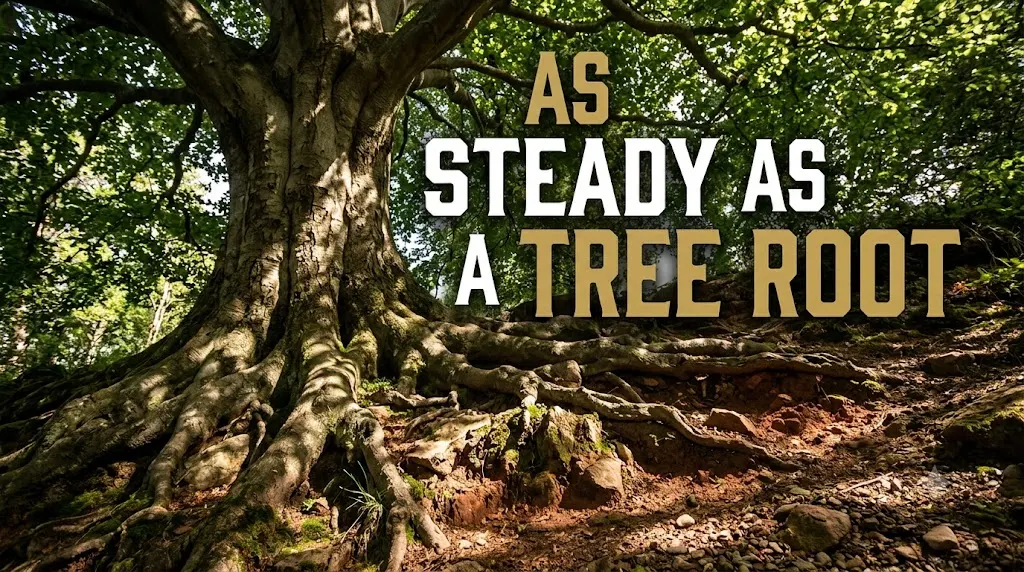
Meaning
Reliable and firmly grounded.
Usage Insight
Use this simile for trustworthy people and stable situations.
Examples
- His support was as steady as a tree root.
- The captain remained as steady as a tree root during the storm.
As Shiny as Morning Dew
Meaning
Very bright, fresh, or sparkling.
Usage Insight
Useful for describing objects, eyes, or beautiful scenery.
Examples
- The diamond was as shiny as morning dew.
- Her eyes sparkled as shiny as morning dew.
As Curious as a Squirrel
Meaning
Very interested in learning or exploring.
Usage Insight
Great for describing children, students, or adventurous characters.
Examples
- The young boy was as curious as a squirrel in the forest.
- She became as curious as a squirrel when she found the old map.
As Peaceful as a Forest at Dawn
Meaning
Exceptionally calm and tranquil.
Usage Insight
Ideal for creating relaxing imagery in descriptive writing.
Examples
- The countryside felt as peaceful as a forest at dawn.
- His mind became as peaceful as a forest at dawn after meditation.
As Wise as an Ancient Tree
Meaning
Very knowledgeable and experienced.
Usage Insight
Perfect for describing mentors, grandparents, or thoughtful characters.
Examples
- The old storyteller was as wise as an ancient tree.
- Her advice sounded as wise as an ancient tree.
How to Use Similes Effectively in Writing
Using similes can make writing more vivid and memorable. Here are some practical tips:
Stories
- Use similes to help readers visualize characters and settings.
- Choose comparisons that match the mood of the scene.
In Poems
- Similes add rhythm, imagery, and emotional depth.
- Nature similes often create beautiful and memorable pictures.
Essays
- Use similes sparingly to explain complex ideas in simple ways.
- Ensure the comparison is relevant and easy to understand.
In Songs
- Similes help create emotional connections and memorable lyrics.
- Compare feelings to familiar objects or experiences.
Creative Descriptions
- Focus on comparisons that appeal to the senses.
- Avoid overused similes and try creating original ones.
FAQs About What Is a Simile for Kids
1. What is a simile for kids?
A simile is a comparison between two different things using the words “like” or “as.” It helps make writing more interesting and descriptive.
2. Why are similes important in figurative language?
Similes help readers create mental images and understand ideas more clearly through comparisons.
3. What is the difference between a simile and a metaphor?
A simile uses “like” or “as” to compare things, while a metaphor directly states that one thing is another.
Simile: “He is as brave as a lion.”
Metaphor: “He is a lion.”
4. Where can similes be found?
Similes appear in literature, poems, songs, speeches, advertisements, and everyday conversations.
5. Can similes be used in academic writing?
Yes, when used appropriately, similes can clarify ideas and make explanations easier to understand.
Conclusion
Understanding what is a simile for kids can open the door to a more creative and enjoyable way of using language. A simile is not just a grammar term; it is a simple tool that helps children describe people, places, feelings, animals, and everyday experiences in a colorful way. By using words such as “like” and “as,” kids can turn a basic sentence into an imaginative picture. Instead of saying, “The boy is fast,” they can say, “The boy runs like a cheetah.” These comparisons make stories more interesting and help young learners express their ideas clearly.
As children practice similes, they also become better at noticing details and thinking creatively. Parents and teachers can encourage this learning through stories, classroom activities, games, and simple writing exercises. The key is to make learning feel natural and fun rather than difficult. Once kids understand how similes work, they can use them confidently in poems, stories, conversations, and school assignments. With regular practice, similes can become one of the easiest and most enjoyable parts of learning figurative language.