
Clouds have fascinated people for centuries because they constantly change shape, color, and mood. Writers often use similes for clouds to create vivid mental images and make descriptions feel more alive. A simile compares one thing to another using the words “like” or “as,” helping readers picture a scene more clearly. This simple figure of speech is one of the most effective tools in figurative language because it adds beauty, emotion, and creativity to everyday writing.
Just as trees symbolize strength, growth, resilience, wisdom, and human emotion, clouds often represent hope, mystery, freedom, peace, change, and even uncertainty. Their endless variety makes them perfect subjects for creative comparisons. Whether you’re writing poetry, stories, essays, or songs, learning new similes can make your language richer and more memorable. In this guide, you’ll discover some of the best similes for clouds, along with meanings, examples, and practical tips for using them naturally.
What Is a Simile?
A simile is a figure of speech that compares two different things using the words “like” or “as.” Similes help readers imagine ideas more vividly by connecting something familiar with something new.
Example:
The clouds floated like soft cotton across the blue sky.
This comparison helps readers instantly picture light, fluffy clouds drifting peacefully overhead.
1. Clouds Like Soft Cotton
Meaning
This simile compares fluffy white clouds to soft cotton because of their light, airy appearance.
Usage Insight
Use this simile when describing peaceful skies, calm weather, or dreamy landscapes.
Examples
- The afternoon clouds drifted like soft cotton across the bright blue sky.
- Tiny clouds floated like soft cotton, making the day feel calm and relaxing.
2. Clouds Like Gentle Blankets
Meaning
The clouds resemble cozy blankets covering the sky with warmth and comfort.
Usage Insight
Perfect for describing overcast days, peaceful evenings, or comforting scenery.
Examples
- Gray clouds spread like gentle blankets over the quiet countryside.
- The morning sky wore clouds like gentle blankets, hiding the bright sun.
3. Clouds Like Floating Ships
Meaning
Large clouds appear to sail across the sky like enormous ships on the sea.
Usage Insight
Ideal for imaginative stories, adventure writing, and descriptive essays.
Examples
- Massive clouds sailed like floating ships above the mountains.
- We watched the clouds drift like floating ships toward the horizon.
4. Clouds Like Whipped Cream
Meaning
Bright white clouds resemble fluffy whipped cream because of their soft texture.
Usage Insight
Great for cheerful descriptions and playful writing.
Examples
- The summer clouds looked like whipped cream piled high in the sky.
- White clouds gathered like whipped cream above the sunny beach.
5. Clouds Like Feathers
Meaning
Thin, delicate clouds resemble feathers because they appear light and graceful.
Usage Insight
Works well in poems and elegant nature descriptions.
Examples
- Wispy clouds floated like feathers in the evening breeze.
- The sunset painted clouds like feathers across the horizon.
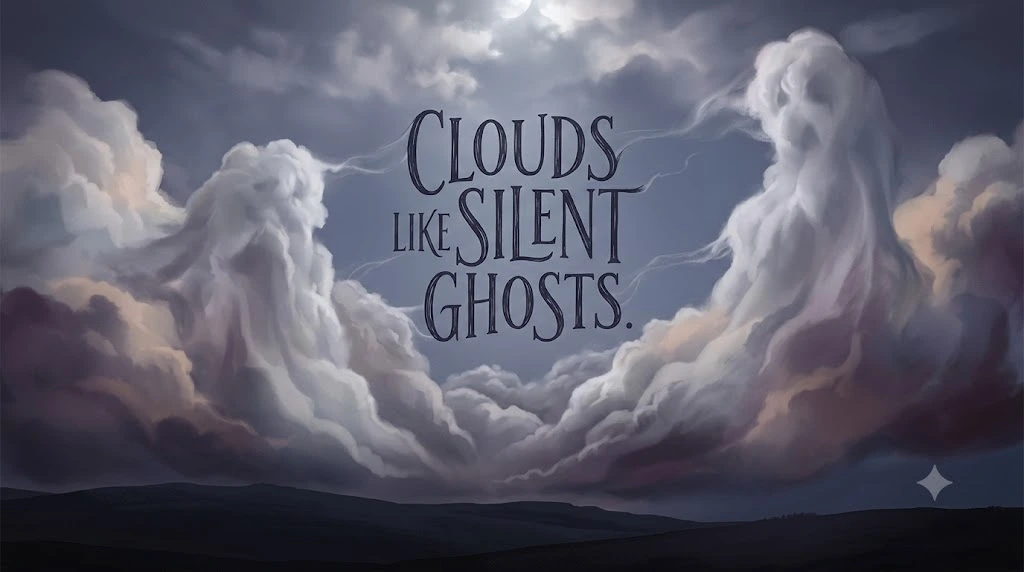
6. Clouds Like Silent Ghosts
Meaning
Clouds move quietly and mysteriously, similar to silent ghosts.
Usage Insight
Excellent for mysterious scenes, suspense, or Halloween-themed writing.
Examples
- Dark clouds drifted like silent ghosts through the moonlit sky.
- The clouds moved like silent ghosts, creating an eerie atmosphere.
7. Clouds Like Giant Pillows
Meaning
Large fluffy clouds resemble enormous pillows because they appear soft and inviting.
Usage Insight
Perfect for children’s stories and comforting imagery.
Examples
- The clouds rested like giant pillows above the valley.
- She imagined sleeping on clouds like giant pillows in the sky.
8. Clouds Like Painted Brushstrokes
Meaning
Colorful clouds resemble artistic brushstrokes across a canvas.
Usage Insight
Best used when describing sunrise or sunset skies.
Examples
- Evening clouds stretched like painted brushstrokes across the sky.
- Pink clouds glowed like painted brushstrokes after the rain.
9. Clouds Like Rolling Waves
Meaning
Cloud formations resemble waves moving across the ocean.
Usage Insight
Useful for dramatic weather descriptions and vivid storytelling.
Examples
- Thick clouds rolled like waves over the hills.
- Storm clouds advanced like rolling waves, covering the sky.
10. Clouds Like Dancing Smoke
Meaning
Thin clouds resemble smoke swirling gracefully through the air.
Usage Insight
Ideal for poetic writing and fantasy scenes.
Examples
- High clouds curled like dancing smoke above the forest.
- The wind carried clouds like dancing smoke across the valley.
11. Clouds Like Silver Curtains
Meaning
Gray or shining clouds resemble elegant curtains hanging across the sky.
Usage Insight
Great for describing rainy weather or dramatic sunsets.
Examples
- Rain clouds hung like silver curtains over the city.
- The horizon shimmered behind clouds like silver curtains.
12. Clouds Like Wandering Sheep
Meaning
Small white clouds resemble sheep peacefully wandering through fields.
Usage Insight
A classic nature simile that suits children’s books and lighthearted writing.
Examples
- Tiny clouds wandered like sheep across the blue sky.
- We counted clouds like wandering sheep during our picnic.
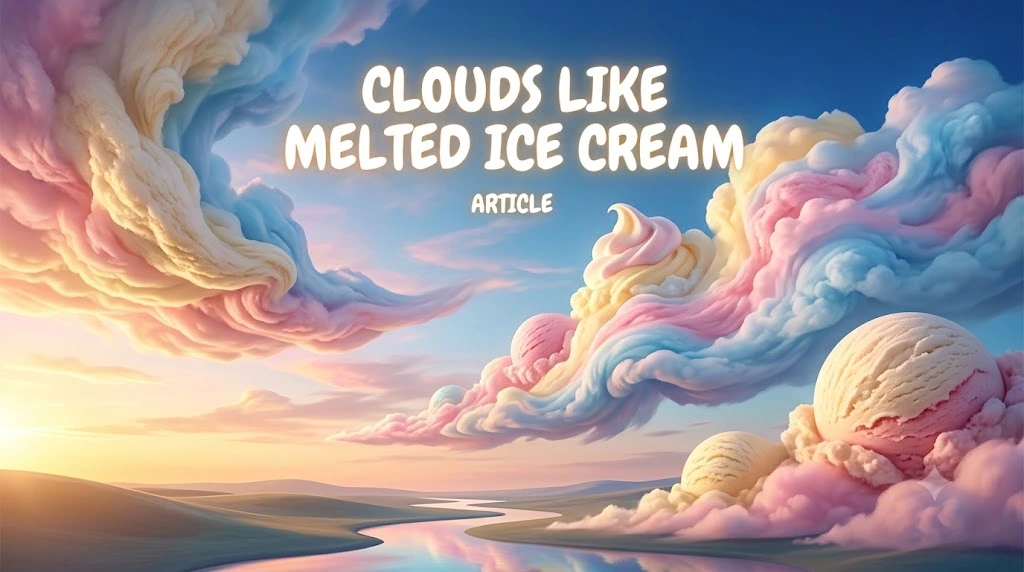
13. Clouds Like Melted Ice Cream
Meaning
Clouds appear soft, creamy, and slowly spreading through the sky.
Usage Insight
Adds playful imagery to casual or descriptive writing.
Examples
- The sunset clouds spread like melted ice cream across the horizon.
- Soft clouds drifted like melted ice cream in the warm evening sky.
14. Clouds Like Giant Mountains
Meaning
Towering storm clouds resemble huge mountains rising into the sky.
Usage Insight
Perfect for dramatic weather descriptions and adventure stories.
Examples
- Thunderclouds rose like giant mountains above the plains.
- The horizon filled with clouds like giant mountains before the storm.
15. Clouds Like Dreams
Meaning
Clouds are constantly changing shape, much like dreams that shift and fade.
Usage Insight
Excellent for reflective writing, poetry, and emotional storytelling.
Examples
- The clouds drifted like dreams, changing shape every minute.
- Evening clouds disappeared like dreams as darkness settled over the land.
How to Use Similes Effectively in Writing
Using similes well can make your writing more memorable and engaging. Here are a few practical tips:
- Choose comparisons that your readers can easily imagine.
- Match the simile to the mood of your writing. Soft comparisons suit peaceful scenes, while stronger comparisons fit storms or dramatic moments.
- Avoid overusing similes in one paragraph, as too many comparisons can distract readers.
- Use nature similes to create vivid settings in poems, stories, and descriptive essays.
- In songs and creative writing, use similes to express emotions in fresh and memorable ways.
- In academic writing, use similes sparingly unless the assignment encourages figurative language.
- Read your sentence aloud to ensure the simile sounds natural and flows smoothly.
FAQs
What are similes for clouds?
Similes for clouds are comparisons that describe clouds using “like” or “as.” Examples include like soft cotton, like floating ships, and like giant pillows.
What is the difference between a simile and a metaphor?
A simile compares two things using “like” or “as,” while a metaphor makes a direct comparison without those words.
Simile: The clouds were like cotton.
Metaphor: The clouds were cotton in the sky.
Why are cloud similes useful in creative writing?
Cloud similes create vivid imagery, set the mood, and help readers visualize scenes more clearly in poems, stories, songs, and descriptive passages.
Can I use cloud similes in academic writing?
Yes, but only when appropriate. Creative assignments and descriptive essays often benefit from similes, while formal research papers usually require more literal language.
How can I create my own similes for clouds?
Observe the clouds carefully and think about their shape, color, movement, or size. Then compare them to familiar objects using “like” or “as.” The best similes are original, clear, and easy for readers to picture.
Conclusion
Learning and using similes for clouds is a wonderful way to make your writing more expressive, colorful, and engaging. Whether you compare clouds to soft cotton, floating ships, wandering sheep, or painted brushstrokes, each simile helps readers visualize the sky with greater clarity and emotion. These comparisons enrich poems, stories, essays, songs, and everyday descriptions by transforming ordinary scenes into memorable experiences. As you continue practicing figurative language, experiment with your own original cloud similes inspired by nature and imagination. The more thoughtfully you use similes, the more vivid, meaningful, and emotionally powerful your writing will become.