
Joy is one of the brightest emotions we experience, and similes help us express that feeling in vivid and memorable ways. A simile compares one thing to another using the words “like” or “as,” making emotions easier to imagine. These comparisons are an important part of figurative language because they add color, meaning, and creativity to everyday writing. Writers, poets, and storytellers often use similes to help readers feel emotions instead of simply reading about them. Nature offers endless inspiration for beautiful comparisons, making nature similes especially powerful.
Trees, in particular, are timeless symbols of strength, growth, resilience, wisdom, and human emotion, reminding us that happiness can grow steadily through life’s changing seasons. Whether you’re writing a poem, story, speech, or school assignment, the right simile can make your words more engaging. In this guide, you’ll discover the best heartwarming similes for joy, along with practical examples and writing tips to help your language shine.
What Is a Simile?
A simile is a figure of speech that compares two different things using the words “like” or “as.” Similes create strong mental images, making descriptions more interesting and easier to understand.
Example:
Her smile was as bright as the morning sun.
This comparison helps readers instantly picture warmth, happiness, and positivity.
Like the First Rays of Sunrise
Meaning
Joy appears gently but transforms everything with warmth and hope.
When to Use It
This simile works beautifully when describing new beginnings, celebrations, or moments that bring fresh happiness.
Examples
- Her laughter spread through the room like the first rays of sunrise.
- His joyful news warmed everyone’s hearts like the first rays of sunrise.
As Cheerful as Birds Greeting the Dawn
Meaning
Describes someone who is naturally happy and full of positive energy.
When to Use It
Perfect for cheerful characters, children, or uplifting scenes in stories.
Examples
- The little girl skipped down the path as cheerful as birds greeting the dawn.
- He arrived at work as cheerful as birds greeting the dawn.
Like Blossoms Opening in Spring
Meaning
Joy unfolds naturally, bringing beauty and hope.
When to Use It
Ideal for describing emotional growth, love, or personal success.
Examples
- Happiness spread through her heart like blossoms opening in spring.
- Their friendship grew like blossoms opening in spring.
As Bright as a Rainbow After Rain
Meaning
Joy follows difficult moments and brings renewed hope.
When to Use It
Excellent for stories of recovery, achievement, or emotional healing.
Examples
- Her smile appeared as bright as a rainbow after rain.
- Graduation day felt as bright as a rainbow after rain.
Like a Gentle Breeze Through Tall Trees
Meaning
Joy feels calm, peaceful, and refreshing.
When to Use It
Works well in reflective writing or peaceful nature descriptions.
Examples
- Peace filled his heart like a gentle breeze through tall trees.
- Their laughter drifted across the garden like a gentle breeze through tall trees.
As Warm as Sunshine on a Winter Morning

Meaning
Describes comforting happiness that lifts the spirit.
When to Use It
Perfect for family moments, friendships, and acts of kindness.
Examples
- Her hug felt as warm as sunshine on a winter morning.
- His encouraging words were as warm as sunshine on a winter morning.
Like a River Dancing Over Smooth Stones
Meaning
Joy flows freely without effort.
When to Use It
Useful when describing carefree happiness or playful personalities.
Examples
- Their laughter flowed like a river dancing over smooth stones.
- The children played like a river dancing over smooth stones.
As Light as a Feather Floating in the Wind
Meaning
Joy removes worry and creates emotional freedom.
When to Use It
Ideal after solving problems or achieving long-awaited goals.
Examples
- She felt as light as a feather floating in the wind after hearing the good news.
- Winning the competition made him feel as light as a feather floating in the wind.
Like Stars Filling the Night Sky
Meaning
Joy spreads everywhere and brightens life’s darkest moments.
When to Use It
Excellent for emotional or poetic descriptions.
Examples
- Happy memories appeared like stars filling the night sky.
- Their smiles sparkled like stars filling the night sky.
As Sweet as Fresh Honey
Meaning
Joy feels pleasant, comforting, and deeply satisfying.
When to Use It
Great for describing treasured memories or heartfelt conversations.
Examples
- Her success tasted as sweet as fresh honey.
- Their reunion was as sweet as fresh honey.
Like Leaves Dancing in the Autumn Wind
Meaning
Joy is lively, playful, and full of movement.
When to Use It
Perfect for energetic celebrations or outdoor scenes.
Examples
- The children ran like leaves dancing in the autumn wind.
- Excitement spread through the crowd like leaves dancing in the autumn wind.
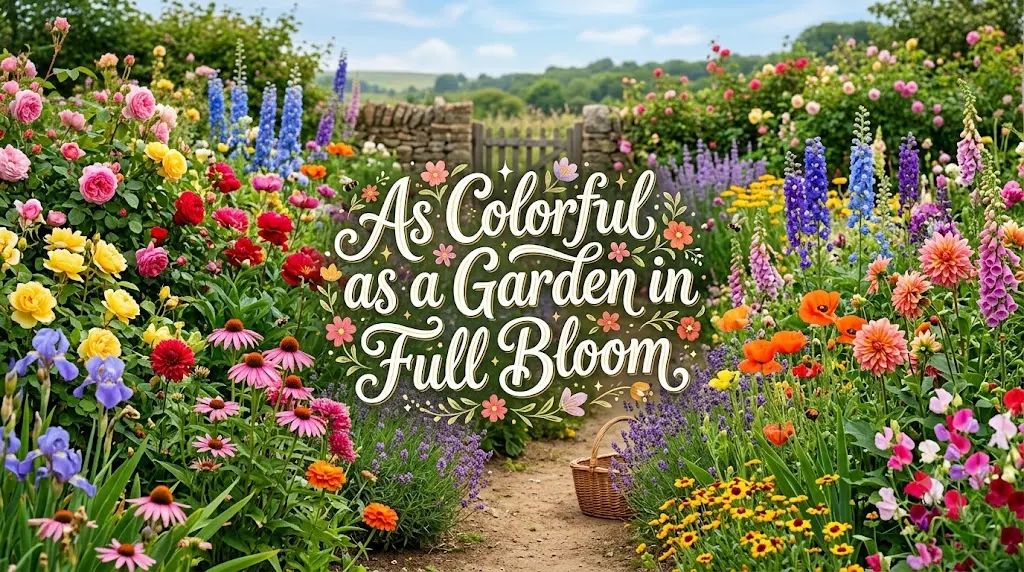
As Colorful as a Garden in Full Bloom
Meaning
Joy fills life with beauty and variety.
When to Use It
Ideal for festivals, weddings, birthdays, or joyful gatherings.
Examples
- The celebration became as colorful as a garden in full bloom.
- Her imagination was as colorful as a garden in full bloom.
Like a Tree Growing Stronger Every Season
Meaning
Joy grows deeper through life’s experiences.
When to Use It
Excellent for describing lasting happiness and personal development.
Examples
- Their love grew like a tree growing stronger every season.
- His confidence blossomed like a tree growing stronger every season.
As Gentle as Falling Snow
Meaning
Joy can be quiet, peaceful, and comforting.
When to Use It
Works well for emotional moments or reflective writing.
Examples
- Her happiness settled as gentle as falling snow.
- Peace entered the room as gentle as falling snow.
Like Fireflies Lighting a Summer Evening
Meaning
Joy shines in small but unforgettable moments.
When to Use It
Perfect for nostalgic writing, family memories, and childhood experiences.
Examples
- Their laughter sparkled like fireflies lighting a summer evening.
- Every happy memory returned like fireflies lighting a summer evening.
How to Use Similes Effectively in Writing
Using heartwarming similes for joy becomes even more effective when they fit naturally into your writing. Here are some practical tips:
- Choose comparisons your readers can easily imagine.
- Use nature similes to create vivid and emotional descriptions.
- Avoid overusing similes in every sentence to keep your writing balanced.
- Match the simile to the mood of your story, poem, or essay.
- Read your sentences aloud to ensure they sound smooth and natural.
- Study similes in literature to learn how skilled authors create memorable imagery.
- Combine figurative language examples with sensory details to make scenes feel more realistic.
- Use meaningful comparisons instead of complicated ones for stronger emotional impact.
- In songs and poetry, similes can strengthen rhythm while deepening emotion.
- In academic writing, use similes carefully to clarify ideas without making the text overly informal.
Frequently Asked Questions
What are heartwarming similes for joy?
Heartwarming similes for joy are comparisons that describe happiness through warm, positive, and vivid images using like or as. Examples include “as warm as sunshine on a winter morning” and “like blossoms opening in spring.”
What is the difference between a simile and a metaphor?
A simile compares two things using like or as, while a metaphor makes a direct comparison without those words.
Simile: She was as happy as a bird.
Metaphor: She was a bird soaring through life.
Why are similes important in creative writing?
Similes help readers picture emotions, settings, and characters more clearly. They make stories, poems, and songs more engaging by adding vivid imagery and emotional depth.
Can similes be used in academic writing?
Yes. While academic writing should remain formal, simple similes can explain complex ideas more clearly when used appropriately and sparingly.
How can I create original similes for joy?
Think about feelings of happiness, then compare them with familiar images from nature, everyday life, or personal experiences. The best comparisons feel natural, meaningful, and easy for readers to visualize.
Conclusion
Learning and using heartwarming similes for joy is a wonderful way to make your writing more expressive, memorable, and emotionally engaging. Whether inspired by blooming flowers, shining stars, flowing rivers, or strong trees, these comparisons transform simple descriptions into vivid experiences that readers can easily imagine. Similes enrich figurative language by creating powerful imagery, strengthening emotional connections, and making ideas easier to understand. From poems and stories to essays, speeches, and everyday conversations, thoughtful comparisons help your words leave a lasting impression. As you continue exploring similes, nature similes, figurative language examples, similes in literature, and creative comparisons, you’ll discover countless ways to bring happiness to life through language. With practice, your writing will become clearer, richer, and more inspiring, allowing every joyful moment to shine as brightly as the emotions you wish to share.