
Feeling alone is a universal human experience, and writers often look for vivid ways to describe it. One of the best tools for expressing loneliness or peaceful solitude is the simile. Similes compare one thing to another using the words “like” or “as,” helping readers picture emotions more clearly. They are an essential part of figurative language because they make writing more colorful, relatable, and memorable. From poetry to novels, similes in literature help readers connect with characters and emotions on a deeper level.
Nature similes are especially powerful because they draw inspiration from the natural world that everyone can recognize. Trees, in particular, are timeless symbols of strength, growth, resilience, wisdom, and human emotion, reminding us that standing alone does not always mean being weak. In this guide, you’ll discover powerful similes for alone that enrich your writing with meaningful comparisons and vivid imagery.
What Is a Simile?
A simile is a figure of speech that compares two different things using the words “like” or “as.” It helps readers understand ideas, emotions, or descriptions through familiar comparisons.
Example:
She stood alone like a lighthouse in a storm.
This simile paints a clear picture of someone who is isolated yet strong and dependable.
1. Alone Like a Lone Tree on a Hill
Meaning
This simile describes someone standing by themselves with quiet strength and dignity.
Usage Insight
Use this comparison when writing about independence, resilience, or peaceful solitude.
Examples
- He remained alone like a lone tree on a hill, refusing to give up despite the challenges.
- She watched the sunset alone like a lone tree on a hill, calm and thoughtful.
2. Alone Like a Star in the Dawn Sky
Meaning
It represents someone who stands apart while still shining with quiet beauty.
Usage Insight
Perfect for describing hopeful loneliness or unique individuality.
Examples
- She felt alone like a star in the dawn sky after her friends moved away.
- His ideas stood alone like a star in the dawn sky, bright and unforgettable.
3. Alone Like a Boat on a Silent Lake
Meaning
This simile expresses peaceful isolation rather than sadness.
Usage Insight
Great for reflective scenes, travel writing, or personal essays.
Examples
- He drifted through the weekend alone like a boat on a silent lake.
- Her thoughts floated alone like a boat on a silent lake.
4. Alone Like a Candle in an Empty Room
Meaning
It highlights both loneliness and quiet hope.
Usage Insight
Works beautifully in emotional stories and poems.
Examples
- She waited alone like a candle in an empty room.
- His kindness remained alone like a candle in an empty room.
5. Alone Like a Wolf Beneath the Moon
Meaning
This comparison suggests independence mixed with isolation.
Usage Insight
Ideal for adventurous characters or emotionally distant personalities.
Examples
- He wandered alone like a wolf beneath the moon.
- She faced every challenge alone like a wolf beneath the moon.
6. Alone Like a Feather in the Wind

Meaning
It conveys vulnerability and uncertainty.
Usage Insight
Best for describing emotional confusion or unexpected change.
Examples
- After graduation, she felt alone like a feather in the wind.
- He walked through the city alone like a feather in the wind.
7. Alone Like an Island in the Ocean
Meaning
This simile emphasizes complete separation from others.
Usage Insight
Excellent for essays about loneliness or emotional distance.
Examples
- He felt alone like an island in the ocean.
- She worked alone like an island in the ocean during the project.
8. Alone Like a Cloud Crossing the Sky
Meaning
It suggests gentle, temporary solitude.
Usage Insight
Perfect for descriptive writing and nature similes.
Examples
- She wandered alone like a cloud crossing the sky.
- His dreams drifted alone like a cloud crossing the sky.
9. Alone Like an Echo in a Canyon
Meaning
This comparison reflects loneliness with a sense of emptiness.
Usage Insight
Ideal for emotional storytelling and dramatic scenes.
Examples
- His voice sounded alone like an echo in a canyon.
- She laughed alone like an echo in a canyon.
10. Alone Like a Snowflake Before the Storm
Meaning
It symbolizes delicate isolation before change arrives.
Usage Insight
Useful in creative writing that builds suspense.
Examples
- She stood alone like a snowflake before the storm.
- He waited alone like a snowflake before the storm.
11. Alone Like a Desert Flower
Meaning
This simile represents beauty that survives despite isolation.
Usage Insight
Great for inspirational or motivational writing.
Examples
- She grew alone like a desert flower.
- His courage bloomed alone like a desert flower.
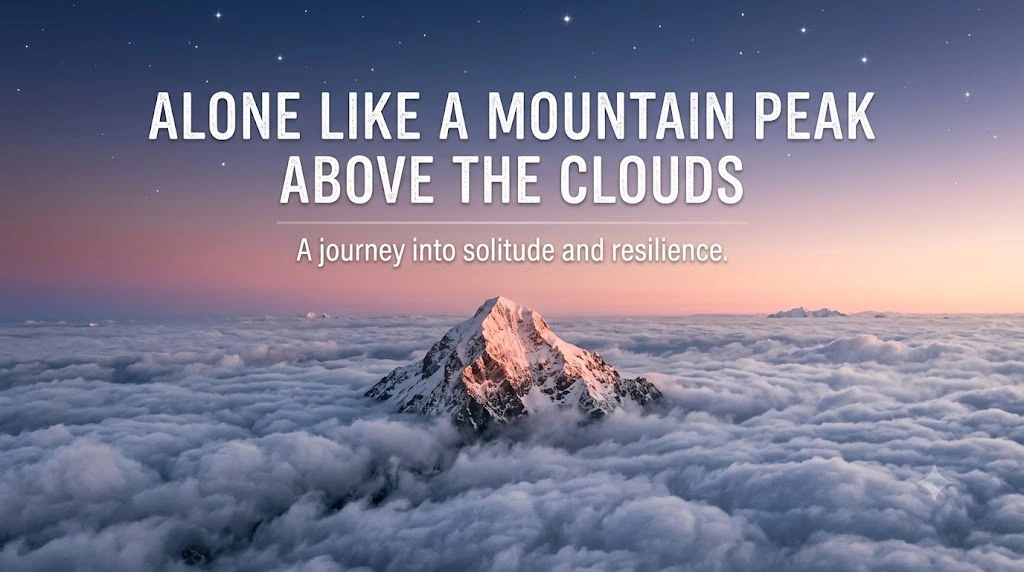
12. Alone Like a Mountain Peak Above the Clouds
Meaning
It combines solitude with greatness and strength.
Usage Insight
Perfect for describing leaders or determined individuals.
Examples
- He remained alone like a mountain peak above the clouds.
- Her confidence stood alone like a mountain peak above the clouds.
13. Alone Like the Last Leaf of Autumn
Meaning
This simile expresses sadness, endurance, and hope.
Usage Insight
Works especially well in poems and emotional narratives.
Examples
- She clung to hope alone like the last leaf of autumn.
- He waited alone like the last leaf of autumn.
14. Alone Like a Path Through the Forest
Meaning
It suggests a solitary journey with purpose.
Usage Insight
Ideal for stories about personal growth and self-discovery.
Examples
- She traveled alone like a path through the forest.
- His life unfolded alone like a path through the forest.
15. Alone Like the Moon Above Sleeping Fields
Meaning
This simile portrays peaceful solitude with quiet beauty.
Usage Insight
Excellent for romantic writing, poetry, and reflective passages.
Examples
- She stood alone like the moon above sleeping fields.
- He watched the night alone like the moon above sleeping fields.
How to Use Similes Effectively in Writing
Strong similes can transform ordinary sentences into memorable descriptions. Keep these tips in mind:
- Choose comparisons that readers can easily picture.
- Match the simile to the emotion or mood of your writing.
- Use nature similes to create timeless and relatable imagery.
- Avoid overusing similes in every sentence to keep them impactful.
- Make comparisons original instead of relying only on common expressions.
- Use similes in poems to create emotion and rhythm.
- Add similes to stories to develop characters and settings.
- Include them in essays when appropriate to explain complex ideas creatively.
- Songwriters can use similes to make lyrics more emotional and memorable.
- Revise your comparisons so they sound natural and fluent.
FAQs
What are powerful similes for alone?
Powerful similes for alone include comparisons such as alone like a lone tree on a hill, alone like an island in the ocean, alone like a candle in an empty room, and alone like the moon above sleeping fields. They help express loneliness, independence, resilience, or peaceful solitude.
What is the difference between a simile and a metaphor?
A simile compares two things using “like” or “as.” A metaphor makes a direct comparison without those words. For example, “She is like a lighthouse” is a simile, while “She is a lighthouse” is a metaphor.
Why are similes useful in creative writing?
Similes create vivid mental images, strengthen emotional impact, and make descriptions more engaging. They are widely used in poetry, fiction, songs, and similes in literature to help readers connect with ideas and feelings.
Can I use similes in academic writing?
Yes, but use them carefully. Similes can clarify difficult concepts or provide memorable comparisons, though formal academic writing usually requires them to be used sparingly.
What makes a good simile about being alone?
A good simile should be easy to visualize, emotionally meaningful, and relevant to the context. Original comparisons inspired by nature, people, or everyday experiences often leave the strongest impression.
Conclusion
Powerful similes for alone help writers transform simple descriptions into vivid, emotionally rich expressions that readers remember. Whether you compare solitude to a lone tree on a hill, a candle in an empty room, or the moon above sleeping fields, each comparison adds imagery, feeling, and depth to your writing. Thoughtfully chosen similes make poems more moving, stories more engaging, essays more expressive, and songs more memorable. By exploring original comparisons, nature similes, figurative language examples, and timeless techniques found in similes in literature, you can communicate loneliness, independence, resilience, or quiet reflection with greater clarity. Keep practicing, experiment with fresh comparisons, and let your words paint pictures that stay with your readers long after they finish reading.