
Imagine a classroom where everyone is quietly working on a difficult puzzle. Suddenly, one student confidently puts the final piece in completely the wrong place and proudly announces, “Done!” The whole room bursts into laughter. It is a silly moment, but instead of simply calling the mistake “stupid,” you could describe it in a more creative way: “He was as clueless as a fish trying to ride a bicycle.” Suddenly, the description becomes much more vivid and entertaining.
This is the power of similes for stupidity. They allow writers to describe foolish actions, poor decisions, confusion, or silly behavior through imaginative comparisons. A well-chosen simile can turn an ordinary description into something humorous that readers can easily picture.
Whether you are writing a funny story, creating a character, composing a poem, or adding personality to casual writing, similes can make descriptions more expressive. They can also soften criticism by making it playful rather than harsh. In this guide, you will discover creative and funny similes for stupidity that can bring humor, personality, and memorable imagery to your writing.
- What Are Funny Metaphors for Stupidity?
- What Are the Best Funny Metaphors for Stupidity?
- What Are Clever Funny Metaphors for Stupidity?
- What Are Creative Metaphors for Stupidity?
- What Are Humorous Metaphors for Stupidity?
- What Are Funny Metaphors to Describe a Stupid Person?
- What Are Funny Metaphors for Someone Who Is Not Smart?
- What Are Funny Metaphors for Lack of Intelligence?
- What Are Funny Metaphors for Doing Something Stupid?
- What Are Funny Metaphors for Silly Behavior?
- What Are Funny Metaphors for Foolish Mistakes?
- What Are Funny Metaphors for Bad Decisions?
- What Are Funny Metaphors for Confused Thinking?
- What Are Funny Metaphors for Poor Judgment?
- What Are Funny Metaphors for Someone Acting Foolish?
- What Are Funny Metaphors for a Slow Thinker?
- What Are Funny Metaphors for Forgetfulness and Stupidity?
- What Are Funny Metaphors for Stupidity in Everyday Life?
- How Can You Use Funny Metaphors for Stupidity in Writing?
- What Are the Most Creative Funny Metaphors for Stupidity?
What Is a Simile?
A simile is a figure of speech that compares two different things using the words “like” or “as.” Similes help readers understand an idea by relating it to something familiar.
Example:
“He was as brave as a lion.”
This simile compares a person’s courage to the bravery commonly associated with a lion, creating a stronger image than simply saying the person was brave.
As Clueless as a Compass Spinning in a Storm
Meaning: Describes someone who is completely confused and unable to find the right direction.
Usage Insight: This simile works well when portraying a person who lacks understanding or judgment in a chaotic situation.
Examples:
- He looked as clueless as a compass spinning in a storm when the teacher asked him a simple question.
- During the meeting, she seemed as clueless as a compass spinning in a storm.
Like a Fish Trying to Climb a Tree
Meaning: Refers to someone attempting something they clearly do not understand.
Usage Insight: Useful for highlighting poor judgment or a lack of basic knowledge.
Examples:
- His attempt to fix the computer was like a fish trying to climb a tree.
- The project failed because the team leader was like a fish trying to climb a tree.
As Lost as a Shadow at Midnight
Meaning: Describes a person who has no idea what is happening.
Usage Insight: Effective in humorous or dramatic descriptions of confusion.
Examples:
- He was as lost as a shadow at midnight during the science discussion.
- I felt as lost as a shadow at midnight when they started talking about advanced physics.
Like a Door Without a Handle
Meaning: Suggests someone who cannot grasp simple concepts or solutions.
Usage Insight: Works best when emphasizing a lack of practical understanding.
Examples:
- He was like a door without a handle when it came to solving basic problems.
- The instructions were simple, yet she seemed like a door without a handle.
As Empty as a Book with Blank Pages
Meaning: Represents a complete absence of knowledge or understanding.
Usage Insight: Often used for humorous exaggeration.
Examples:
- His explanation sounded as empty as a book with blank pages.
- She appeared as empty as a book with blank pages when the topic came up.
Like a Candle Trying to Light the Sun
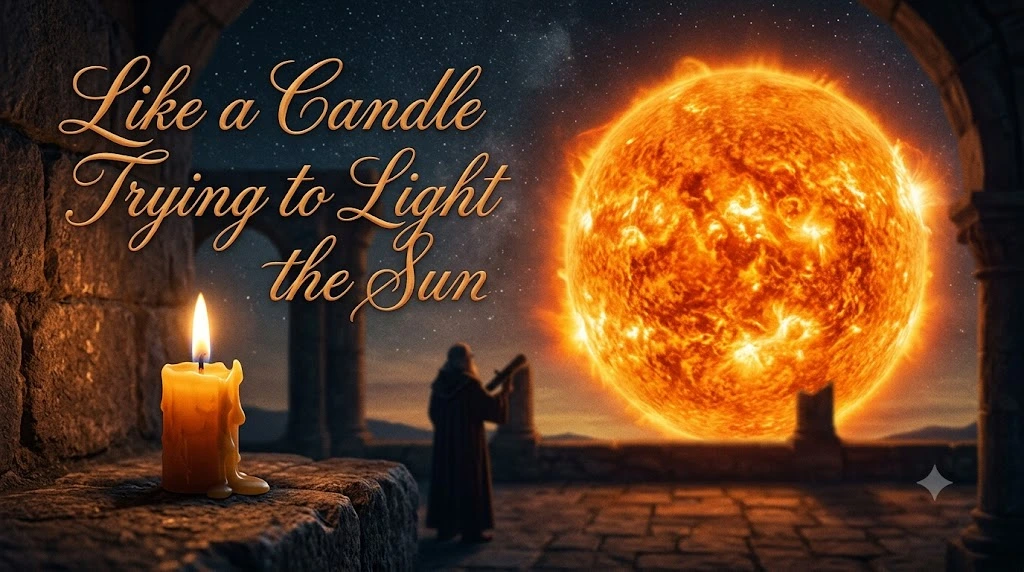
Meaning: Describes someone making an absurdly foolish attempt.
Usage Insight: Excellent for illustrating overconfidence mixed with poor judgment.
Examples:
- Challenging the expert without preparation was like a candle trying to light the sun.
- His plan was like a candle trying to light the sun from the beginning.
As Unaware as a Leaf Floating Downstream
Meaning: Refers to someone who simply follows events without understanding them.
Usage Insight: Useful when describing passive ignorance.
Examples:
- He was as unaware as a leaf floating downstream throughout the discussion.
- She drifted through the project as unaware as a leaf floating downstream.
Like a Rooster Teaching Eagles to Fly
Meaning: Describes a person who confidently offers advice despite lacking expertise.
Usage Insight: Perfect for showing foolish confidence.
Examples:
- His lecture on economics was like a rooster teaching eagles to fly.
- She sounded like a rooster teaching eagles to fly when advising the specialists.
As Slow as Ice Melting in Winter
Meaning: Suggests difficulty understanding even simple ideas.
Usage Insight: Commonly used to describe slow thinking in a gentle or humorous way.
Examples:
- He was as slow as ice melting in winter when solving the puzzle.
- Her response was as slow as ice melting in winter.
Like a Map Drawn Without Roads
Meaning: Represents thinking that lacks logic or direction.
Usage Insight: Useful in essays, stories, and character descriptions.
Examples:
- His reasoning was like a map drawn without roads.
- The proposal felt like a map drawn without roads and impossible to follow.
As Confused as a Sparrow in a Library
Meaning: Describes someone overwhelmed by information they do not understand.
Usage Insight: Adds a touch of humor while expressing confusion.
Examples:
- He looked as confused as a sparrow in a library during the lecture.
- I felt as confused as a sparrow in a library reading that technical manual.
Like a Clock Missing Its Hands
Meaning: Refers to someone who lacks the basic tools needed to think clearly.
Usage Insight: Effective for emphasizing missing knowledge or awareness.
Examples:
- Without understanding the basics, he was like a clock missing its hands.
- She approached the task like a clock missing its hands.
As Aimless as a Kite Without Wind
Meaning: Suggests poor decision-making and lack of direction.
Usage Insight: Works well in both creative and descriptive writing.
Examples:
- His choices were as aimless as a kite without wind.
- She wandered through the assignment as aimless as a kite without wind.
Like a Lantern with No Flame
Meaning: Indicates a lack of insight or intelligence.
Usage Insight: Useful for subtle descriptions rather than harsh criticism.
Examples:
- His contribution was like a lantern with no flame.
- She seemed like a lantern with no flame during the debate.
As Puzzled as a Rabbit Watching Chess
Meaning: Describes someone who cannot comprehend what is happening.
Usage Insight: A humorous simile suitable for stories and informal writing.
Examples:
- He looked as puzzled as a rabbit watching chess.
- The new employee seemed as puzzled as a rabbit watching chess during training.
Like a Boat Sailing in Circles
Meaning: Refers to someone repeatedly making poor decisions without learning.
Usage Insight: Excellent for discussing recurring mistakes.
Examples:
- His approach to business was like a boat sailing in circles.
- She kept repeating the same errors, like a boat sailing in circles.
How to Use Similes Effectively in Writing
Using similes effectively can make your writing more memorable and engaging. Here are some practical tips:
Choose Familiar Comparisons
Use images that readers can easily understand and visualize.
Match the Tone
Humorous similes work best in lighthearted writing, while serious comparisons suit essays and formal stories.
Avoid Overusing Similes
Too many comparisons can make writing feel cluttered. Use them strategically.
Create Original Images
Fresh similes capture attention better than overused expressions.
Use Similes in Different Forms of Writing
- Poems: Create emotional imagery.
- Stories: Develop characters and settings.
- Essays: Clarify abstract concepts.
- Songs: Add memorable lines.
- Creative Descriptions: Make scenes more vivid.
FAQs About Similes for Stupidity
What are similes for stupidity?
Similes for stupidity are comparisons that describe foolishness, confusion, poor judgment, or lack of understanding using the words “like” or “as.”
Are similes for stupidity appropriate in formal writing?
They are generally better suited for creative, descriptive, or informal writing. In formal writing, use them carefully and respectfully.
What is the difference between a simile and a metaphor?
A simile uses words such as “like” or “as” to compare two things, while a metaphor directly states that one thing is another.
Why do writers use similes in literature?
Writers use similes to create vivid imagery, strengthen descriptions, and help readers connect with ideas more easily.
Can similes improve academic writing?
Yes. When used appropriately, similes can clarify difficult concepts and make explanations more engaging and understandable.
Conclusion
Similes for stupidity can make descriptions of foolish actions, silly mistakes, and poor decisions much more creative and entertaining. Instead of directly calling someone stupid, a clever comparison can communicate the same idea through humor and imagination. A phrase like “as confused as a squirrel in a maze” gives readers a funny image while making the description more memorable.
The best similes are playful, easy to understand, and suitable for the situation. They can be especially useful when describing fictional characters, humorous scenes, awkward moments, or amusing mistakes. Writers can use them in stories, poems, essays, comedy, dialogue, and casual conversations to add personality and visual detail to their words.
However, context matters. A funny comparison should ideally make the writing entertaining without unnecessarily insulting a real person. When used thoughtfully, similes can turn a simple description into an image that readers can instantly imagine.
By exploring different similes for stupidity, you can discover fresh ways to describe foolishness while keeping your writing lively and expressive. Sometimes, the funniest comparison is the one that makes readers laugh while instantly understanding exactly what you mean.