
The English language becomes more vivid and expressive when writers use similes. Similes help readers picture people, places, and objects by comparing them to something familiar. These creative comparisons make descriptions more memorable and engaging. Figurative language is an important part of storytelling, poetry, essays, and everyday communication because it adds color and emotion to writing. A well-crafted simile can transform an ordinary description into something readers instantly visualize.
Just as trees symbolize strength, growth, resilience, wisdom, and human emotion in literature, physical features such as the nose can also be described through imaginative comparisons that reveal personality and appearance. Writers often use similes to create humor, elegance, or dramatic effect when describing facial features. In this guide, you’ll discover powerful similes for your nose that can enrich your writing and make your descriptions stand out.
What Is a Simile?
A simile is a figure of speech that compares two different things using the words “like” or “as.” Similes help readers understand a subject more clearly by connecting it to something familiar.
Example:
Her smile was as bright as the morning sun.
This comparison helps readers instantly imagine a cheerful and radiant smile.
As Sharp as a Hawk’s Beak
Meaning
Describes a nose that is narrow, pointed, and prominent.
Usage Insight
This simile works well when describing a strong facial profile or a distinctive appearance.
Examples
- His nose was as sharp as a hawk’s beak, giving him an authoritative look.
- The portrait captured her nose as sharp as a hawk’s beak against the evening light.
Like a Button on a Doll
Meaning
Refers to a small, cute, and rounded nose.
Usage Insight
Ideal for affectionate descriptions of children or youthful characters.
Examples
- Her nose looked like a button on a doll, perfectly matching her cheerful expression.
- The baby had a nose like a button on a doll and rosy cheeks.
As Straight as an Arrow
Meaning
Describes a perfectly straight nose.
Usage Insight
Useful in formal character descriptions and elegant portraits.
Examples
- His nose was as straight as an arrow, adding balance to his features.
- The sculptor carefully carved a nose as straight as an arrow.
Like a Mountain Ridge
Meaning
Refers to a prominent and strong nose.
Usage Insight
Works particularly well in descriptive and literary writing.
Examples
- Her nose rose like a mountain ridge above her delicate features.
- The old explorer’s nose looked like a mountain ridge shaped by time.
As Round as a Cherry
Meaning
Describes a small and rounded nose.
Usage Insight
Creates a playful and friendly image.
Examples
- His nose was as round as a cherry and often turned red in the cold.
- The cartoon character had a nose as round as a cherry.
Like the Curve of a Crescent Moon

Meaning
Describes a gently curved nose.
Usage Insight
Excellent for poetic and romantic descriptions.
Examples
- Her nose curved like the crescent moon in a graceful profile.
- The artist admired a nose like the curve of a crescent moon.
As Delicate as a Flower Petal
Meaning
Refers to a small, refined, and elegant nose.
Usage Insight
Best suited for graceful and soft character descriptions.
Examples
- Her nose was as delicate as a flower petal.
- The painting highlighted a nose as delicate as a flower petal.
Like a Carved Marble Statue
Meaning
Describes a perfectly shaped and symmetrical nose.
Usage Insight
Useful for emphasizing beauty and refinement.
Examples
- His nose looked like a carved marble statue, flawless and balanced.
- The model’s profile revealed a nose like a carved marble statue.
As Proud as an Eagle’s Beak
Meaning
Describes a prominent, curved nose associated with confidence.
Usage Insight
Works well in strong character portrayals.
Examples
- The general carried a nose as proud as an eagle’s beak.
- Her profile showed a nose as proud as an eagle’s beak.
Like a Gentle Hill
Meaning
Refers to a softly rounded nose bridge.
Usage Insight
Creates a natural and pleasant image.
Examples
- His nose rose like a gentle hill across his face.
- The sketch captured a nose like a gentle hill.
As Tiny as a Pebble
Meaning
Describes a very small nose.
Usage Insight
Suitable for cute or lighthearted descriptions.
Examples
- The puppy had a nose as tiny as a pebble.
- Her nose seemed as tiny as a pebble beneath her bright eyes.
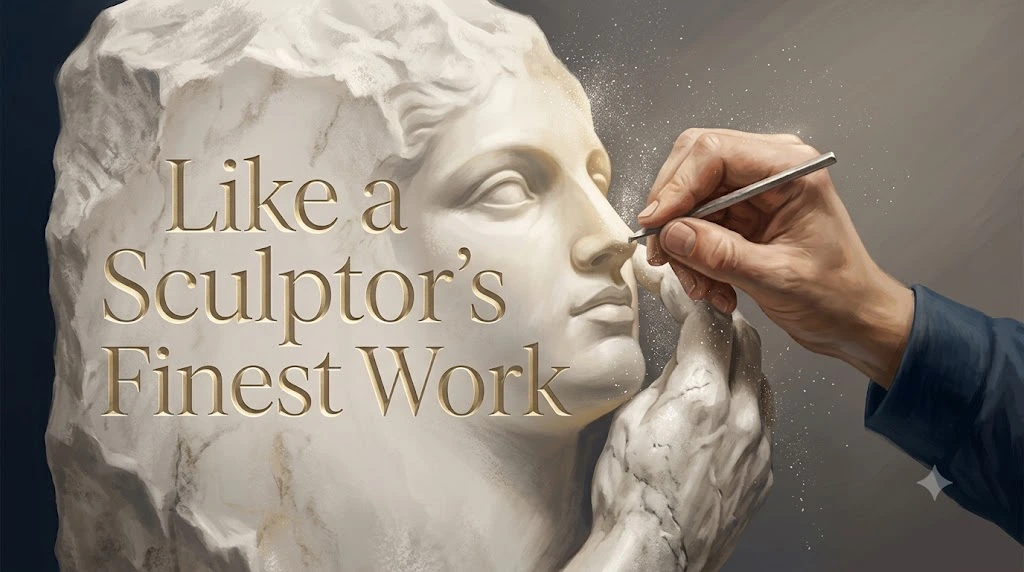
Like a Sculptor’s Finest Work
Meaning
Describes a beautifully shaped nose.
Usage Insight
Ideal for highlighting elegance and attractiveness.
Examples
- Her nose looked like a sculptor’s finest work.
- The photographer admired a nose like a sculptor’s finest work.
As Distinct as a Lighthouse
Meaning
Refers to a nose that stands out prominently.
Usage Insight
Great for memorable character descriptions.
Examples
- His nose was as distinct as a lighthouse among his features.
- The comedian’s nose stood as distinct as a lighthouse.
Like a Leaf’s Gentle Curve
Meaning
Describes a soft and natural curve in the nose.
Usage Insight
Useful for poetic and nature-inspired writing.
Examples
- Her nose followed the shape of a leaf’s gentle curve.
- The artist drew a nose like a leaf’s gentle curve.
As Refined as Fine Porcelain
Meaning
Describes a smooth, elegant, and delicate nose.
Usage Insight
Perfect for sophisticated character descriptions.
Examples
- Her nose was as refined as fine porcelain.
- The actress possessed a nose as refined as fine porcelain.
How to Use Similes Effectively in Writing
Similes are powerful tools that help readers visualize descriptions more clearly. Here are some practical ways to use them effectively:
Poetry
- Use similes to create vivid imagery and emotional depth.
- Connect physical descriptions to nature and emotions.
In Stories
- Reveal character traits through unique comparisons.
- Make characters more memorable and realistic.
Essays
- Use similes sparingly to clarify complex ideas.
- Ensure comparisons support your main point.
In Songs
- Create memorable lines that listeners can easily picture.
- Use fresh and original comparisons instead of clichés.
Creative Descriptions
- Match the simile to the mood and tone of the scene.
- Choose comparisons that feel natural and relevant.
FAQs About Similes for Your Nose
What are similes for your nose?
Similes for your nose are creative comparisons that describe a nose using “like” or “as,” such as “as straight as an arrow” or “like a button on a doll.”
Why do writers use similes when describing a nose?
Writers use similes to create vivid imagery, help readers visualize characters, and make descriptions more engaging.
What is the difference between a simile and a metaphor?
A simile uses words like “like” or “as” to make a comparison, while a metaphor directly states that one thing is another without using comparison words.
Can similes be used in academic writing?
Yes, but they should be used carefully. Similes can clarify ideas and improve readability when appropriate.
Are similes important in creative writing?
Absolutely. Similes add imagery, emotion, and originality, making stories, poems, and descriptions more memorable.
Conclusion
Powerful similes for your nose can transform simple descriptions into vivid, memorable images that capture a reader’s attention. Whether you’re writing poetry, fiction, essays, or personal descriptions, these creative comparisons help bring characters and scenes to life. Similes strengthen figurative language by making abstract impressions easier to visualize and understand. From a nose as sharp as a hawk’s beak to one as refined as fine porcelain, each comparison offers a unique way to express appearance and personality. By using similes thoughtfully and creatively, writers can add clarity, imagery, emotional depth, and lasting impact to their work.