
Life is full of moments that are difficult to explain with ordinary words, and that is where similes about life can make a powerful difference. A simile compares one thing to another using words such as “like” or “as” to create a clearer and more memorable picture. Similes are important in figurative language because they help readers understand feelings, experiences, and ideas through familiar images. When we compare life to a journey, a river, a sunrise, or a changing season, an abstract idea suddenly becomes easier to imagine.
Trees are especially powerful symbols because their roots represent stability, their branches suggest growth, and their ability to survive storms reflects resilience. They can also represent wisdom, patience, strength, and the many emotions people experience throughout life. Just as a tree changes with the seasons while remaining firmly connected to its roots, human life is shaped by change, challenges, relationships, and personal growth. In this article, you will discover creative similes about life, their meanings, and practical ways to use these comparisons in poems, stories, essays, songs, and everyday writing.
What Is a Simile?
A simile is a figure of speech that compares two different things using words such as “like” or “as.” Writers use similes to make ideas more vivid, emotional, and easier to understand.
Example:
Life is like a winding road, full of unexpected turns.
This comparison helps readers imagine life as a journey where the direction may change, obstacles can appear, and new destinations can be discovered.
1. Life Is Like a Winding Road
Meaning
This simile compares life to a winding road because neither always follows a straight or predictable path. A road can contain turns, hills, crossroads, and unexpected obstacles, just as life can include challenges, choices, successes, and surprises.
When to Use It
This comparison works especially well when writing about life choices, personal growth, uncertainty, or new beginnings. It can encourage readers to accept that not knowing what comes next is a natural part of living.
Examples
- Life is like a winding road, and every turn teaches us something new.
- She accepted that life was like a winding road rather than a perfectly planned journey.
2. Life Is Like a Tree Growing Through Storms
Meaning
This simile compares life to a tree that continues growing despite rain, wind, and storms. It represents strength, resilience, patience, and survival.
A tree does not avoid every storm, but it develops stronger roots and continues reaching toward the light. Similarly, difficult experiences can make people stronger and wiser.
When to Use It
Use this nature simile when discussing resilience, difficult experiences, emotional strength, or overcoming adversity.
Examples
- Life is like a tree growing through storms; every challenge can strengthen our roots.
- Her life was like a tree in a storm, bending under pressure but refusing to break.
3. Life Is Like a River Finding Its Way
Meaning
This simile compares life to a river because both are constantly moving and changing. A river may flow smoothly through open land or force its way around rocks and obstacles.
The comparison suggests that life does not always require us to control everything. Sometimes, adapting and continuing forward is the wiser choice.
When to Use It
This simile is effective in reflective writing, poetry, personal essays, and inspirational passages about change and acceptance.
Examples
- Life is like a river finding its way, always moving toward something beyond the horizon.
- Even when the path became difficult, he trusted life to flow like a river around every obstacle.
4. Life Is Like a Book With Unwritten Pages
Meaning
This simile presents life as a book whose future pages have not yet been written. It emphasizes possibility, choice, opportunity, and personal responsibility.
The image reminds readers that the past may already be recorded, but the future still offers opportunities to create new chapters.
When to Use It
Use this comparison when writing about fresh starts, dreams, second chances, or personal transformation.
Examples
- Life is like a book with unwritten pages, waiting for us to create the next chapter.
- After losing his job, he realized that life was still like an unfinished book.
5. Life Is Like a Sunrise After a Long Night
Meaning
This simile compares life to a sunrise that follows darkness. It represents hope, renewal, healing, and the possibility of better days.
Even when someone experiences a painful or difficult period, the sunrise suggests that darkness does not last forever.
When to Use It
This comparison works beautifully in motivational writing, poems, speeches, and personal reflections about hope after hardship.
Examples
- Life is like a sunrise after a long night, reminding us that difficult moments eventually pass.
- Her new beginning felt like life opening into a sunrise after years of darkness.
6. Life Is Like a Garden That Needs Care
Meaning
This simile compares life to a garden because both require attention, patience, effort, and nurturing. A garden cannot flourish without water, sunlight, and care, just as relationships, dreams, and personal development need consistent effort.
When to Use It
Use this simile when discussing relationships, self-improvement, happiness, success, or emotional well-being.
Examples
- Life is like a garden that needs care, because what we nurture is what eventually grows.
- She treated her friendships as carefully as a gardener tending a precious garden.
7. Life Is Like a Mountain With Many Trails

Meaning
This simile compares life to a mountain because reaching meaningful goals can require effort, patience, courage, and persistence. There may be several paths to the same destination, and some routes may be harder than others.
When to Use It
This comparison is useful for writing about ambition, achievement, challenges, and perseverance.
Examples
- Life is like a mountain with many trails, and success rarely comes from taking the easiest path.
- His journey through education felt like climbing a mountain one careful step at a time.
8. Life Is Like a Mirror That Reflects Our Choices
Meaning
This simile compares life to a mirror because our actions and decisions often produce consequences that reveal something about who we are.
The comparison emphasizes responsibility, self-awareness, decisions, and personal growth.
When to Use It
Use this simile in reflective essays, philosophical writing, speeches, and personal development content.
Examples
- Life is like a mirror that reflects the choices we make every day.
- She began to see life as a mirror, showing her the results of both her courage and hesitation.
9. Life Is Like a Puzzle With Missing Pieces
Meaning
This simile compares life to a puzzle because we do not always understand how every experience fits together. Some answers may appear only after time has passed.
It communicates the idea that confusion, uncertainty, relationships, setbacks, and discoveries can all become meaningful parts of a larger picture.
When to Use It
This comparison works well when writing about uncertainty, personal growth, difficult decisions, and finding meaning.
Examples
- Life is like a puzzle with missing pieces, and some answers arrive only with time.
- At first, the disappointment seemed meaningless, but life slowly revealed how it fit into the larger picture.
10. Life Is Like a Candle Burning in the Wind
Meaning
This simile compares life to a candle because life can be beautiful, fragile, temporary, and vulnerable to unexpected difficulties.
The flame represents existence, hope, or human spirit, while the wind represents the challenges that can threaten it.
When to Use It
Use this comparison in poetry, emotional essays, reflective writing, or passages about human fragility and courage.
Examples
- Life is like a candle burning in the wind, delicate yet determined to keep shining.
- His courage remained like a small flame protecting itself from a powerful wind.
11. Life Is Like a Changing Season
Meaning
This simile compares life to the seasons because both are constantly changing. Spring can represent beginnings, summer can symbolize joy, autumn can suggest maturity, and winter can reflect rest or hardship.
The comparison reminds us that change is natural and every stage has its own purpose.
When to Use It
This is one of the most versatile nature similes for writing about aging, emotional change, transitions, relationships, and personal development.
Examples
- Life is like a changing season, bringing moments of warmth, growth, loss, and renewal.
- Her priorities changed with time, just as naturally as one season gives way to another.
12. Life Is Like a Ship Crossing a Restless Sea
Meaning
This simile compares life to a ship traveling across the sea. Calm waters represent peaceful periods, while storms represent problems, uncertainty, and adversity.
The ship suggests that people cannot always control the sea, but they can learn how to navigate it.
When to Use It
This comparison is particularly effective in motivational writing, speeches, stories, and essays about resilience.
Examples
- Life is like a ship crossing a restless sea, requiring courage when the waves grow high.
- She learned that surviving difficult times was like steering a ship through a storm.
13. Life Is Like a Path Through a Forest
Meaning
This simile compares life to a forest path because the future may sometimes seem unclear. A forest can contain bright clearings, dark corners, unexpected obstacles, and hidden beauty.
It represents discovery, uncertainty, exploration, and personal growth.
When to Use It
Use this comparison when writing about new experiences, self-discovery, adventure, or uncertain futures.
Examples
- Life is like a path through a forest, revealing new possibilities beyond every bend.
- His early adulthood felt like walking through a forest without a map.
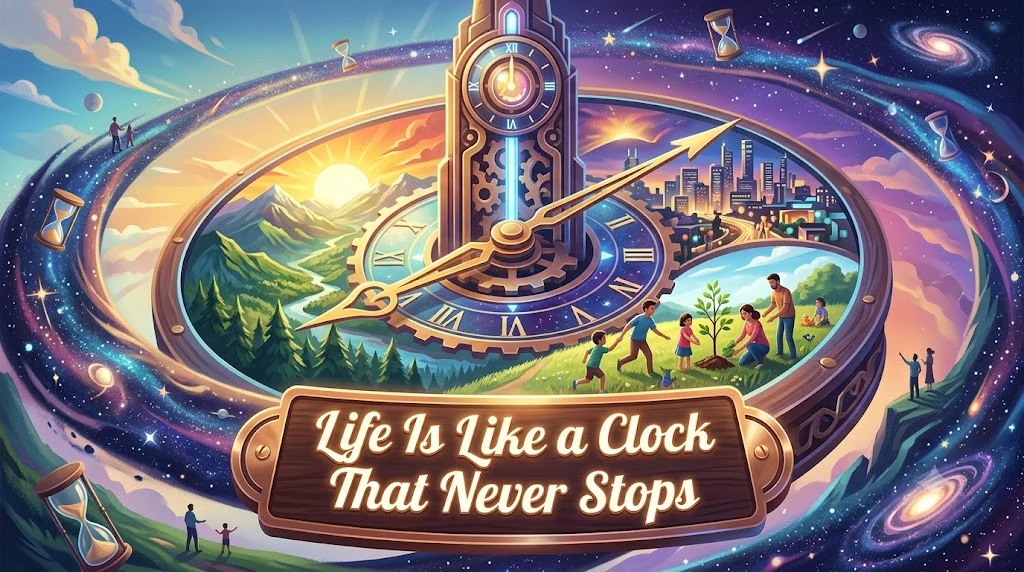
14. Life Is Like a Clock That Never Stops
Meaning
This simile compares life to a clock because time continues moving forward whether we are ready or not. It highlights the importance of time, change, aging, opportunity, and appreciating the present.
When to Use It
This comparison works well in philosophical writing, motivational essays, speeches, and reflections about time.
Examples
- Life is like a clock that never stops, reminding us to value the moments we have.
- She realized that life moves like a clock, so she stopped waiting for the perfect moment.
15. Life Is Like a Seed Becoming a Tree
Meaning
This simile compares life to the gradual growth of a seed into a tree. It represents potential, patience, development, strength, and transformation.
A seed does not become a tree overnight. In the same way, meaningful growth often requires time, care, struggle, and persistence.
When to Use It
This is an excellent simile for personal development, childhood, education, dreams, success, and overcoming challenges.
Examples
- Life is like a seed becoming a tree, growing stronger through patience and experience.
- His confidence developed slowly, like a seed finally pushing its way toward the sunlight.
How to Use Similes Effectively in Writing
Using similes about life effectively is not simply about adding comparisons to every paragraph. A strong simile should make an idea clearer, create an emotional response, or give readers an image they can easily remember.
1. Use Similes in Poems
Poetry benefits greatly from vivid comparisons. A simile can turn an abstract emotion such as hope, loneliness, love, or fear into something readers can see.
Example:
Hope is like a small lantern glowing through the darkness.
Choose comparisons that match the emotional atmosphere of your poem.
2. Use Similes in Stories
Similes can make characters, settings, and experiences more vivid. Instead of simply saying that a character is nervous, compare their feeling to something familiar.
Example:
His thoughts raced like birds startled from a quiet tree.
This creates a stronger image than simply writing, “He was nervous.”
3. Use Similes in Essays
In academic and personal essays, similes should support your point rather than distract from it. They can be particularly useful when explaining abstract concepts such as growth, education, resilience, society, or human experience.
Keep the comparison clear and relevant to the topic.
4. Use Similes in Songs
Songwriting often depends on emotional imagery. Similes can make lyrics more memorable by connecting feelings with familiar images.
For example:
Your memory stays like a song I cannot forget.
A simple comparison can communicate emotion without lengthy explanation.
5. Use Similes in Creative Descriptions
Similes are useful for describing people, places, nature, emotions, and experiences. Instead of relying on basic adjectives, create a comparison that gives readers something concrete to imagine.
Rather than:
The sunset was beautiful.
Try:
The sunset spread across the sky like golden paint.
6. Choose Fresh Comparisons
Avoid using the same familiar comparison repeatedly. Original comparisons can make your writing feel more personal and memorable.
7. Make the Comparison Relevant
A simile should have a meaningful connection between the two things being compared. If the relationship is unclear, readers may become confused instead of engaged.
8. Avoid Overusing Similes
Too many comparisons can make writing feel crowded. Select the strongest similes and allow them to stand out.
9. Match the Simile to Your Audience
Simple comparisons are often best for children and beginner readers, while more sophisticated imagery may suit literary essays, poetry, and advanced creative writing.
10. Connect Similes to Emotion
The most effective similes often do more than describe something visually. They make readers feel the experience. A comparison involving a storm, tree, river, fire, or sunrise can carry emotional meaning beyond its literal image.
Similes About Life in Literature and Creative Writing
Similes in literature are powerful because writers can use familiar objects and experiences to explore complicated human ideas. Life itself is abstract, but comparing it to a journey, tree, river, season, or book makes it easier for readers to understand.
Nature is especially valuable for creating meaningful comparisons. Nature similes connect human experiences to things readers can observe in the world around them. A tree can symbolize endurance, a river can represent change, a mountain can suggest challenges, and a sunrise can symbolize hope.
These figurative language examples can also create different emotional effects. A comparison between life and a storm may communicate struggle, while comparing life to a garden can communicate patience and nurturing. The best comparison depends on the writer’s purpose and the feeling they want readers to experience.
Why Similes About Life Are So Powerful
Life contains experiences that are often difficult to describe directly. Happiness, grief, uncertainty, hope, failure, love, ambition, and change are invisible concepts, but similes give them recognizable shapes.
For example, saying “life is like a river” suggests movement and change. Saying “life is like a tree growing through storms” suggests resilience. Saying “life is like a book with unwritten pages” suggests possibility.
This is why comparisons are so valuable in creative communication. They allow writers to transform ordinary statements into images that stay in a reader’s mind.
FAQs About Similes About Life
1. What are some good similes about life?
Some powerful similes about life include “Life is like a winding road,” “Life is like a river finding its way,” “Life is like a changing season,” and “Life is like a seed becoming a tree.” Each comparison communicates a different aspect of human experience.
2. What is a simile for life being difficult?
A strong example is: “Life is like a ship crossing a restless sea.” The restless sea represents challenges and uncertainty, while the ship represents a person’s ability to continue moving forward.
3. What is the difference between a simile and a metaphor?
A simile makes a comparison using words such as “like” or “as.” For example, “Life is like a journey.” A metaphor makes a direct comparison without those words: “Life is a journey.”
4. Can similes be used in academic writing?
Yes. Similes can be useful in academic writing when they clarify an abstract idea or explain a complicated concept. However, they should be used carefully and should support the main argument rather than replace evidence or reasoning.
5. Why are similes useful in creative writing?
Similes make creative writing more vivid by turning abstract thoughts and emotions into concrete images. They can help readers visualize scenes, understand characters, and connect emotionally with the writer’s message.
Conclusion: Let Your Words Paint a Picture of Life
Life cannot always be explained through simple statements because human experience is filled with change, emotion, uncertainty, struggle, and beauty. That is why similes about life are such valuable tools for writers, students, poets, storytellers, and anyone who wants to express an idea more vividly. Comparing life to a winding road can show its uncertainty, while comparing it to a tree can highlight strength, growth, wisdom, and resilience. A river can represent movement, a sunrise can represent hope, and a garden can remind us that meaningful things require patience and care. These comparisons add clarity, imagery, and emotional depth to language without making ideas unnecessarily complicated. They also help readers connect abstract experiences with familiar images from nature and everyday life. Whether you are writing a poem, story, essay, song, speech, or personal reflection, the right simile can turn an ordinary sentence into something memorable. The key is to choose comparisons that feel natural, meaningful, and connected to the emotion or message you want to communicate. When used thoughtfully, a simple “like” or “as” can open the door to an entire world of meaning and help your readers see life from a fresh perspective.