
One afternoon, a young student sat down to write a story about a bright, sunny day. She wrote, “The sun was hot, and the flowers were pretty,” but something felt missing. Her teacher smiled and showed her how a few creative words could transform an ordinary sentence into something exciting. . Then she added, “The garden was a colorful painting,” giving the flowers a whole new feeling. This simple lesson introduced the student to the magic of similes and metaphors for kids. Both forms of figurative language help children express ideas in creative and memorable ways. They can make stories funnier, poems more beautiful, and school writing more interesting. In this guide, kids will discover simple examples, learn the difference between similes and metaphors, and see how these creative comparisons can make everyday words come alive.
- What Are Similes and Metaphors Explained for Kids?
- What Is a Simile for Kids?
- What Is a Metaphor for Kids?
- What Is the Difference Between Similes and Metaphors for Kids?
- How Do You Explain Similes to Kids?
- How Do You Explain Metaphors to Kids?
- What Are Easy Simile Examples for Kids?
- What Are Easy Metaphor Examples for Kids?
- What Are Some Fun Similes and Metaphors for Kids?
- How Are Similes and Metaphors Used in Sentences?
- What Are Simple Similes for Elementary Students?
- What Are Simple Metaphors for Elementary Students?
- How Can Kids Identify a Simile?
- How Can Kids Identify a Metaphor?
- How Can Kids Tell Similes and Metaphors Apart?
- What Are Everyday Examples of Similes and Metaphors?
- Why Are Similes and Metaphors Important for Kids?
- How Can Kids Use Similes in Creative Writing?
- How Can Kids Use Metaphors in Creative Writing?
- What Are the Best Similes and Metaphors for Kids to Learn?
What Is a Simile?
A simile is a figure of speech that compares two different things using the words like or as. Similes make descriptions more vivid and help readers understand ideas through familiar comparisons.
Example:
The child was as cheerful as a bird singing at sunrise.
This comparison helps readers imagine the child’s happiness more clearly.
As Bright as a Shooting Star
Meaning: Extremely bright, talented, or impressive.
Usage Insight: This simile works well when describing intelligence, creativity, or outstanding achievements.
Examples:
- Her science project was as bright as a shooting star in the competition.
- The young musician’s talent shone as bright as a shooting star.
As Strong as an Oak Tree
Meaning: Very strong, dependable, and resilient.
Usage Insight: Ideal for describing physical strength or emotional courage.
Examples:
- Despite the challenges, she remained as strong as an oak tree.
- The team captain stood as strong as an oak tree during the final match.
As Busy as a Honeybee
Meaning: Extremely active and hardworking.
Usage Insight: Perfect for describing energetic children or productive people.
Examples:
- Emma was as busy as a honeybee preparing for the school fair.
- The classroom looked as busy as a honeybee’s hive before the event.
As Gentle as a Summer Breeze
Meaning: Kind, calm, and soothing.
Usage Insight: Useful for describing personalities, voices, or comforting actions.
Examples:
- His words were as gentle as a summer breeze.
- The teacher spoke as gentle as a summer breeze to the nervous student.
As Curious as a Squirrel
Meaning: Eager to learn and explore.
Usage Insight: Excellent for describing inquisitive children.
Examples:
- The young boy was as curious as a squirrel in a new forest.
- She asked questions all day, as curious as a squirrel searching for acorns.
As Happy as a Bird at Dawn
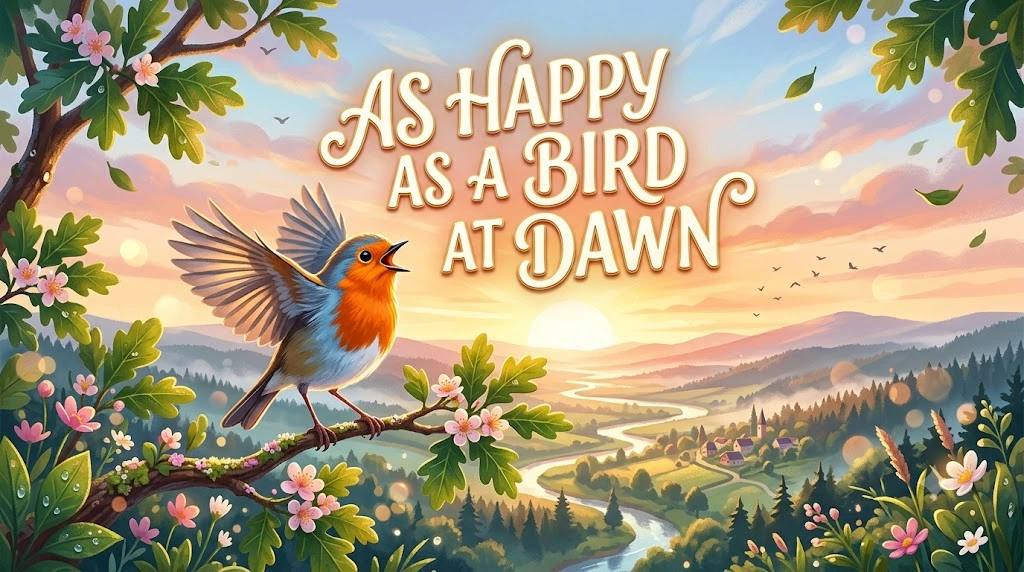
Meaning: Full of joy and excitement.
Usage Insight: Effective for expressing cheerful emotions.
Examples:
- He was as happy as a bird at dawn on his birthday.
- The children looked as happy as birds at dawn during the field trip.
As Calm as a Still Lake
Meaning: Peaceful and relaxed.
Usage Insight: Great for describing emotions, environments, or attitudes.
Examples:
- She remained as calm as a still lake before her presentation.
- The garden felt as calm as a still lake in the evening.
As Quick as a Flash of Lightning
Meaning: Extremely fast.
Usage Insight: Best used when describing speed or rapid movement.
Examples:
- The runner was as quick as a flash of lightning.
- He solved the puzzle as quick as a flash of lightning.
As Colorful as a Rainbow Garden
Meaning: Bright, lively, and full of variety.
Usage Insight: Perfect for describing artwork, clothing, or scenery.
Examples:
- Her painting was as colorful as a rainbow garden.
- The festival looked as colorful as a rainbow garden in bloom.
As Brave as a Mountain Climber
Meaning: Courageous and fearless.
Usage Insight: Useful for stories involving challenges and adventure.
Examples:
- The young hero was as brave as a mountain climber facing a steep peak.
- She felt as brave as a mountain climber when speaking on stage.
As Quiet as Falling Snow
Meaning: Very silent and peaceful.
Usage Insight: Excellent for creating calm imagery.
Examples:
- The library was as quiet as falling snow.
- The room became as quiet as falling snow after the announcement.
As Playful as a Dolphin

Meaning: Fun-loving and energetic.
Usage Insight: Great for describing joyful personalities.
Examples:
- The puppy was as playful as a dolphin.
- The children were as playful as dolphins during recess.
As Wise as an Ancient Tree
Meaning: Full of knowledge and experience.
Usage Insight: Works well when describing mentors, grandparents, or thoughtful characters.
Examples:
- Grandpa seemed as wise as an ancient tree.
- The old storyteller was as wise as an ancient tree.
As Determined as a River
Meaning: Persistent and unstoppable.
Usage Insight: Ideal for showing perseverance and focus.
Examples:
- She was as determined as a river finding its path.
- The athlete remained as determined as a river despite setbacks.
As Free as a Bird in the Sky
Meaning: Independent and unrestricted.
Usage Insight: Useful for describing freedom and happiness.
Examples:
- After finishing his exams, he felt as free as a bird in the sky.
- The travelers felt as free as birds in the sky.
As Steady as Tree Roots
Meaning: Stable, dependable, and grounded.
Usage Insight: Effective for describing trustworthy people and strong foundations.
Examples:
- Her friendship was as steady as tree roots.
- The leader remained as steady as tree roots during difficult times.
How to Use Similes Effectively in Writing
Using similes effectively can transform ordinary writing into something memorable and engaging.
In Poems
- Compare emotions to elements of nature.
- Use vivid imagery that appeals to the senses.
- Keep comparisons simple and meaningful.
Stories
- Use similes to describe characters and settings.
- Create stronger emotional connections with readers.
- Avoid overusing similes in every paragraph.
In Essays
- Use similes sparingly to clarify complex ideas.
- Choose comparisons that support the topic naturally.
Songs
- Create memorable images and emotions.
- Use rhythmic and relatable comparisons.
In Creative Descriptions
- Draw inspiration from nature, animals, weather, and everyday experiences.
- Focus on comparisons that help readers visualize scenes clearly.
FAQs About Similes and Metaphors for Kids
What are similes and metaphors for kids?
Similes and metaphors are figures of speech that compare things to make descriptions more vivid and interesting. Similes use like or as, while metaphors make direct comparisons.
What is the difference between a simile and a metaphor?
. A metaphor says one thing is another thing for creative effect.
Why are similes important in writing?
Similes help readers visualize ideas, understand emotions, and enjoy more engaging descriptions.
Can similes be used in academic writing?
Yes. While academic writing should remain clear and formal, carefully chosen similes can help explain difficult concepts.
Where are similes commonly found?
Similes appear in literature, poems, songs, speeches, storytelling, and everyday conversations.
Conclusion
Learning similes and metaphors for kids is a fun way to discover how powerful and creative language can be. A simple sentence can become much more exciting when children learn to compare ideas with familiar things.Similes and metaphors are also useful beyond the classroom because children can find them in stories, poems, songs, conversations, and everyday descriptions.
As kids practice using these forms of figurative language, they can develop stronger vocabulary, richer imagination, and greater confidence in creative writing. The key is to have fun with comparisons and choose images that make sense to the reader. Whether children are writing a short story, completing a school assignment, or creating a poem, these colorful expressions can make their words more memorable. With practice, similes and metaphors for kids can turn ordinary sentences into lively, imaginative, and meaningful writing.
Discover More Posts
- 250+ Powerful Similes for Stupidity
- 250+ Powerful Similes for Sleeping Well
- 250+ Powerful Similes for Effective