
Music has the amazing ability to express emotions that words alone often cannot. One of the best ways to describe music vividly is by using similes. Similes compare one thing to another using the words “like” or “as,” helping readers create clear mental images. They are an essential part of figurative language because they make writing more expressive, memorable, and engaging. Writers, poets, students, and songwriters often rely on similes to communicate feelings with greater impact.
Nature also inspires many beautiful comparisons, making nature similes especially popular in creative writing. Just as trees symbolize strength, growth, resilience, wisdom, and human emotion, music also reflects life’s deepest experiences and personal journeys. In this guide, you’ll discover powerful and creative similes for music that will enrich your writing with vivid imagery, meaningful comparisons, and timeless figurative language examples.
What Is a Simile?
A simile is a figure of speech that compares two different things using the words “like” or “as.” Similes help readers understand ideas by connecting them to something familiar, making descriptions more colorful and emotional.
Example:
Music flowed like a gentle river through the quiet room.
This comparison helps readers imagine smooth, calming music by relating it to the peaceful movement of a river.
1. Music Is Like a Flowing River
Meaning
This simile suggests that music moves naturally, continuously, and peacefully through the listener’s mind.
When to Use It
Use this comparison when describing calm melodies, relaxing performances, or soothing background music.
Examples
- Her piano music flowed like a peaceful river through the concert hall.
- The violin melody drifted like a flowing river beneath the evening sky.
2. Music Is Like Sunshine After Rain
Meaning
This simile shows how music can lift spirits and bring hope after difficult moments.
When to Use It
Perfect for writing about healing, encouragement, or emotional recovery.
Examples
- His favorite song felt like sunshine after rain during a difficult week.
- The choir’s voices were like sunshine after rain, filling everyone with hope.
3. Music Is Like Birds Singing at Dawn
Meaning
This comparison highlights freshness, beauty, and the joyful beginning of something new.
When to Use It
Ideal for describing cheerful or uplifting melodies.
Examples
- Her laughter blended with music like birds singing at dawn.
- The flute sounded like birds welcoming the morning.
4. Music Is Like a Warm Blanket
Meaning
This simile emphasizes comfort, security, and emotional warmth.
When to Use It
Use it when describing relaxing songs or comforting melodies.
Examples
- Soft jazz wrapped around the audience like a warm blanket.
- The lullaby covered the child like a cozy blanket.
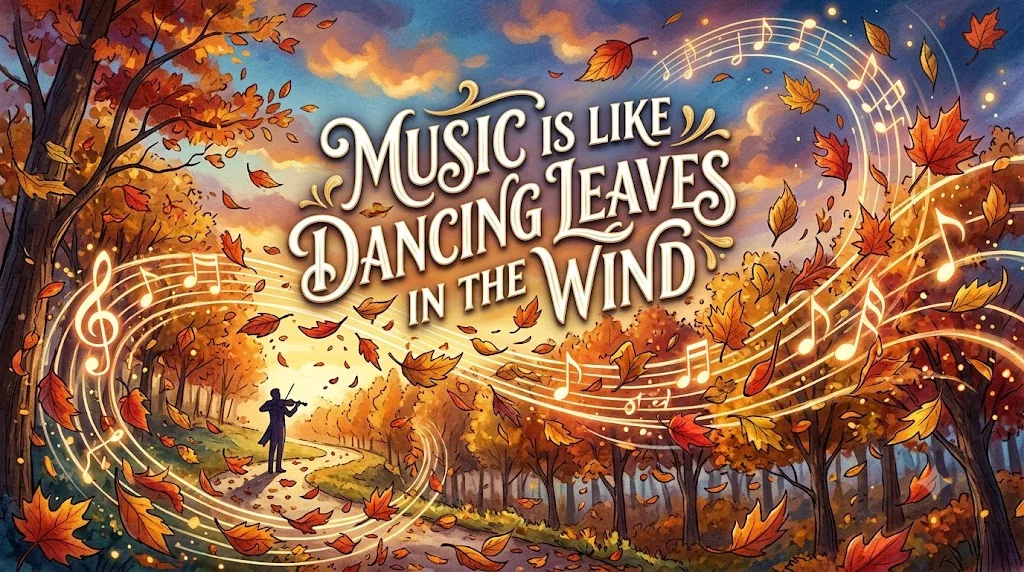
5. Music Is Like Dancing Leaves in the Wind
Meaning
This comparison expresses graceful movement, rhythm, and natural beauty.
When to Use It
Excellent for describing light, playful, or lively music.
Examples
- The guitar strings fluttered like dancing leaves in autumn.
- The melody skipped like leaves carried by a gentle breeze.
6. Music Is Like Ocean Waves
Meaning
This simile reflects rhythm, power, and constant motion.
When to Use It
Best for describing music with strong beats or emotional intensity.
Examples
- The orchestra rose like powerful ocean waves.
- The drums rolled like waves crashing against the shore.
7. Music Is Like a Heartbeat
Meaning
This comparison symbolizes life, emotion, and steady rhythm.
When to Use It
Great for emotional storytelling or discussions of rhythm.
Examples
- The bass pulsed like a strong heartbeat.
- The rhythm echoed like the heartbeat of the city.
8. Music Is Like Blooming Flowers
Meaning
This simile suggests beauty, growth, and gradual unfolding.
When to Use It
Use it when describing melodies that slowly become richer and fuller.
Examples
- The chorus opened like flowers in spring.
- Every note bloomed like colorful petals under sunlight.
9. Music Is Like Falling Snow
Meaning
This comparison creates an image of softness, silence, and elegance.
When to Use It
Perfect for quiet piano pieces or gentle instrumental music.
Examples
- The melody floated like falling snow.
- Each note landed like delicate snowflakes on the listener’s heart.
10. Music Is Like a Guiding Star
Meaning
This simile shows that music can inspire, comfort, and provide direction.
When to Use It
Ideal for motivational or inspirational writing.
Examples
- His favorite song became like a guiding star during uncertain times.
- The anthem shone like a star leading everyone forward.
11. Music Is Like Lightning Across the Sky
Meaning
This comparison represents excitement, surprise, and powerful energy.
When to Use It
Use it when describing energetic performances or dramatic musical moments.
Examples
- The guitar solo struck like lightning across the night sky.
- The chorus exploded like a flash of lightning.
12. Music Is Like a Gentle Breeze
Meaning
This simile emphasizes softness, freshness, and peaceful movement.
When to Use It
Perfect for acoustic songs and relaxing instrumental pieces.
Examples
- The harp sounded like a gentle breeze through tall grass.
- Soft melodies drifted like cool evening air.
13. Music Is Like a Roaring Fire
Meaning
This comparison symbolizes passion, strength, and unstoppable energy.
When to Use It
Best for rock music, powerful orchestras, or emotional performances.
Examples
- The band’s performance burned like a roaring fire.
- The chorus blazed like flames across the stage.
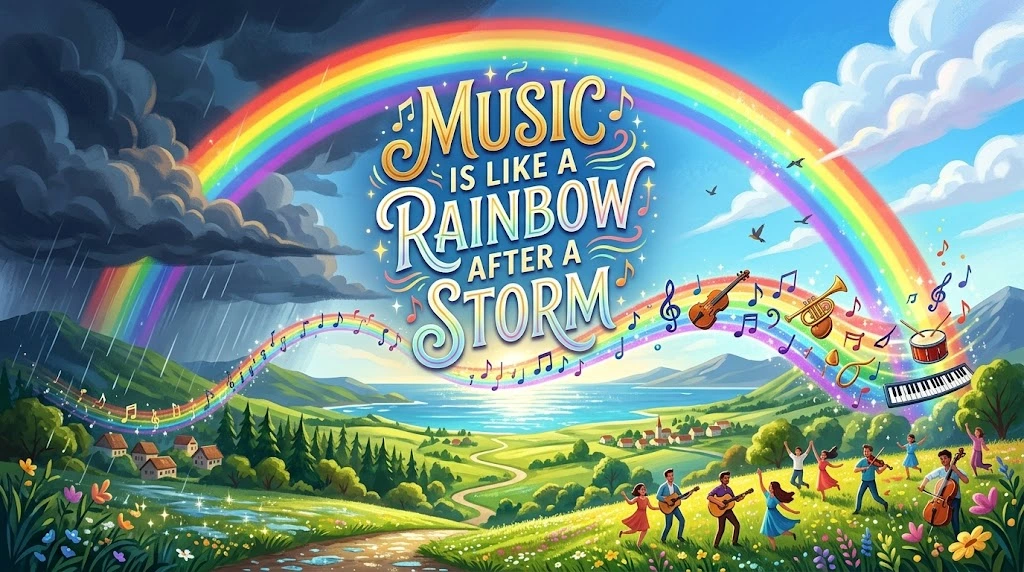
14. Music Is Like a Rainbow After a Storm
Meaning
This simile represents hope, beauty, and emotional renewal.
When to Use It
Useful for inspirational stories or uplifting songs.
Examples
- The final movement appeared like a rainbow after the storm.
- Her voice arrived like hope after endless rain.
15. Music Is Like a Whisper in the Forest
Meaning
This comparison suggests mystery, peace, and quiet beauty.
When to Use It
Ideal for nature-inspired writing, fantasy stories, or calming music.
Examples
- The distant flute sounded like a whisper in the forest.
- Gentle strings echoed like hidden voices among ancient trees.
How to Use Similes Effectively in Writing
Strong similes can transform ordinary writing into memorable storytelling. Here are a few practical tips:
- Choose comparisons your readers can easily imagine.
- Match the simile to the mood of your writing.
- Use nature similes to create vivid, emotional imagery.
- Avoid overusing similes; one powerful comparison often has greater impact than several weak ones.
- In poems, use similes to create rhythm and emotion.
- In stories, reveal characters’ feelings through meaningful comparisons.
- In essays, use similes sparingly to explain complex ideas more clearly.
- In songs, memorable similes help listeners connect emotionally with the lyrics.
- In creative descriptions, combine sensory details with original comparisons for stronger imagery.
FAQs About Powerful and Creative Similes for Music
What are powerful and creative similes for music?
Powerful and creative similes for music compare melodies, rhythms, or songs to familiar images such as rivers, sunshine, heartbeats, ocean waves, or blooming flowers. These comparisons make descriptions more vivid and emotionally engaging.
What is the difference between a simile and a metaphor?
A simile compares two things using “like” or “as,” while a metaphor directly states that one thing is another without using those words.
Simile: The music was like flowing water.
Metaphor: The music was flowing water.
Why are similes important in creative writing?
Similes make writing easier to imagine and understand. They add emotion, create stronger imagery, and help readers connect with the writer’s ideas.
Can similes be used in academic writing?
Yes. While academic writing should remain clear and professional, carefully chosen similes can simplify complex ideas and improve explanations without becoming overly decorative.
How do similes improve descriptions of music?
Similes allow readers to picture how music sounds, feels, or affects emotions by connecting it with familiar experiences, making descriptions richer and more memorable.
Conclusion
Using powerful and creative similes for music allows writers to transform ordinary descriptions into unforgettable experiences. Whether you compare music to a flowing river, a heartbeat, sunshine after rain, or whispering forests, each simile creates vivid imagery that resonates with readers. These figurative language examples strengthen poems, stories, essays, speeches, and song lyrics by adding clarity, emotion, and imagination. By practicing thoughtful comparisons and choosing fresh, meaningful similes, you can make your writing more expressive and engaging. Keep experimenting with different comparisons, draw inspiration from nature and everyday life, and let your words sing with creativity every time you write.