
Imagine walking through a quiet forest and noticing how every tree seems to tell its own story. One tree may stand as strong as a mountain, while another bends like a dancer in the wind. These comparisons make ordinary descriptions more vivid, which is exactly what similes do in language. A simile compares two different things using words such as “like” or “as” to create a clear mental picture. Similes are important because they make writing more colorful, emotional, memorable, and easier to understand.
Trees are especially powerful symbols because they can represent strength, growth, resilience, wisdom, and many forms of human emotion. In poems, stories, essays, and everyday speech, nature similes help readers connect abstract ideas with familiar images from the world around them. This similes quiz with answer will help you recognize, understand, and use figurative language examples with greater confidence.
What Is a Simile?
A simile is a figure of speech that compares two unlike things using words such as “like” or “as.” Writers use similes to make an idea easier to imagine or to give an emotion, person, object, or experience a stronger visual or emotional quality.
Example: The old oak tree stood as steady as a lighthouse during the storm.
Here, the tree is compared to a lighthouse to emphasize its stability and strength. Unlike a metaphor, a simile openly signals the comparison with words such as like or as.
The following questions work as a practical similes quiz with answers. Each one introduces an original simile and explains what it means, when it works best, and how it can be used naturally in writing.
1. “The Tree Stood as Strong as a Mountain.” What Does This Simile Mean?
Answer: It means the tree appeared extremely strong, stable, and difficult to move or damage.
Meaning: This simile compares the strength of a tree with the immense strength and stability of a mountain.
Usage Insight: Use this comparison when describing resilience, courage, or something that remains firm during difficult circumstances. It works especially well in stories and inspirational writing.
Examples:
- The ancient tree stood as strong as a mountain despite years of harsh weather.
- She remained as strong as a mountain when unexpected challenges appeared.
2. “The Leaves Danced Like Tiny Green Stars.” What Is Being Compared?
Answer: The movement and appearance of leaves are compared to tiny stars dancing in the sky.
Meaning: The simile creates a magical image of leaves moving gently in sunlight or wind.
Usage Insight: This comparison works beautifully in poetry, nature writing, and descriptive stories where you want to make an ordinary scene feel magical.
Examples:
- The leaves danced like tiny green stars above our heads.
- In the afternoon breeze, the branches shimmered like a sky filled with moving lights.
3. “Her Smile Was Like Sunshine After Rain.” What Does It Suggest?
Answer: It suggests that her smile brought happiness, warmth, comfort, or hope after a difficult time.
Meaning: The smile is compared to sunshine appearing after rain, creating a feeling of emotional relief and renewed happiness.
Usage Insight: This simile is useful for describing kindness, friendship, love, hope, or emotional recovery.
Examples:
- Her smile was like sunshine after rain, brightening the entire room.
- His cheerful greeting felt like sunshine after rain on a difficult morning.
4. “The River Moved as Smoothly as Silk.” What Does This Simile Describe?
Answer: It describes something moving gently, smoothly, and without sudden disturbance.
Meaning: The flowing river is compared to silk because both can appear soft, graceful, and smooth.
Usage Insight: Use this nature simile when describing peaceful landscapes, calm movement, or graceful actions.
Examples:
- The river moved as smoothly as silk beneath the morning light.
- Her voice flowed as smoothly as silk across the quiet room.
5. “His Heart Was Like a Locked Garden.” What Does This Mean?
Answer: It means he kept his feelings private and did not easily allow others to understand his emotions.
Meaning: A locked garden represents something beautiful but hidden and difficult to enter, making it an effective comparison for guarded emotions.
Usage Insight: This simile works well in character descriptions, emotional stories, poetry, and reflective writing.
Examples:
- His heart was like a locked garden that few people were allowed to enter.
- After years of disappointment, she treated her emotions like a garden behind a high wall.
6. “The Child Was as Curious as a Cat.” What Is the Comparison?
Answer: The child is described as extremely curious and eager to discover new things.
Meaning: Cats are commonly associated with curiosity, so the comparison quickly communicates the child’s strong desire to explore.
Usage Insight: This simple simile is useful for children’s stories, classroom writing, character descriptions, and informal creative writing.
Examples:
- The child was as curious as a cat when he discovered the mysterious box.
- She was as curious as a cat and asked questions about everything she saw.
7. “The Storm Roared Like an Angry Giant.” What Does This Simile Show?
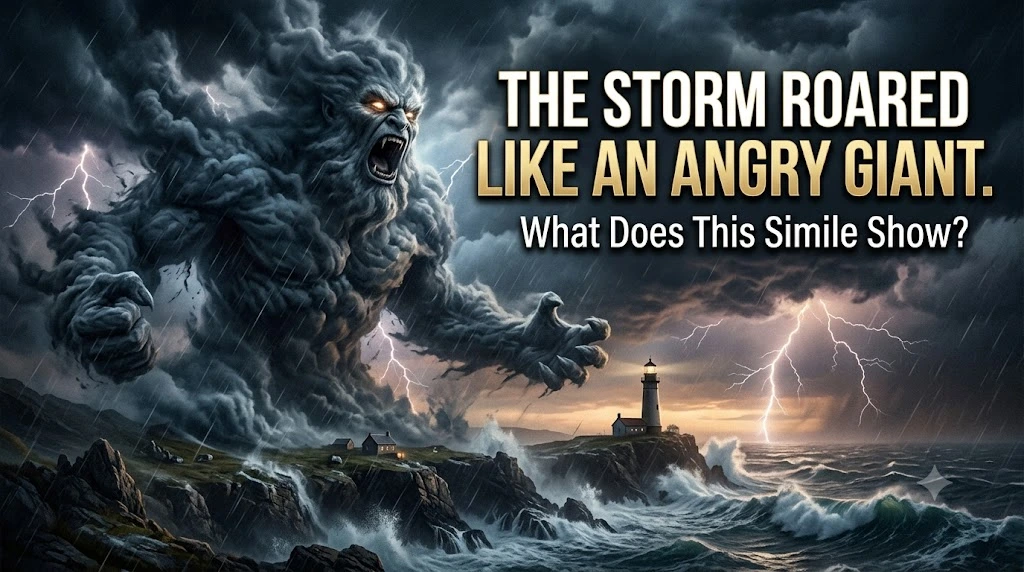
Answer: It shows that the storm was extremely loud, powerful, and frightening.
Meaning: The storm is compared to an angry giant to give it a sense of enormous strength and threatening energy.
Usage Insight: Use this comparison in adventure stories, dramatic descriptions, and creative writing when you want readers to feel the force of nature.
Examples:
- The storm roared like an angry giant outside the wooden cabin.
- Thunder rolled like an angry giant demanding attention from the sky.
8. “Her Voice Was as Gentle as a Summer Breeze.” What Does It Mean?
Answer: It means her voice sounded soft, calm, pleasant, and comforting.
Meaning: A summer breeze often creates a peaceful feeling, making it an effective comparison for a soothing voice.
Usage Insight: This simile is particularly useful for describing caring characters, peaceful moments, songs, or emotional conversations.
Examples:
- Her voice was as gentle as a summer breeze when she comforted the frightened child.
- The teacher spoke as gently as a summer breeze during the difficult conversation.
9. “The Old Man Was Wise Like an Ancient Oak.” What Does This Simile Suggest?
Answer: It suggests that the old man possessed deep wisdom gained through many years of experience.
Meaning: An ancient oak represents age, endurance, knowledge, and rootedness, making it a powerful nature comparison for wisdom.
Usage Insight: This simile works well in character descriptions, legends, novels, and stories about experience or mentorship.
Examples:
- The village elder was wise like an ancient oak, patient enough to listen before speaking.
- His advice carried the quiet wisdom of an ancient oak.
10. “The Runner Was as Fast as a Flash of Lightning.” What Is the Meaning?
Answer: It means the runner moved extremely quickly.
Meaning: Lightning appears suddenly and moves with extraordinary speed, so it provides a strong comparison for rapid movement.
Usage Insight: Use this simile in sports writing, action scenes, children’s stories, or descriptions of someone moving very quickly.
Examples:
- The runner was as fast as a flash of lightning during the final race.
- She moved like lightning when the starting signal sounded.
11. “The Classroom Was Quiet Like a Sleeping Forest.” What Does This Simile Describe?
Answer: It describes a classroom that was extremely still and silent.
Meaning: A sleeping forest creates an image of peaceful silence, making it a vivid comparison for a quiet classroom.
Usage Insight: This simile is helpful in descriptive writing when you want readers to visualize complete stillness rather than simply stating that something is quiet.
Examples:
- The classroom was quiet like a sleeping forest during the examination.
- After the teacher entered, the room became as silent as a sleeping forest.
12. “Her Laughter Sparkled Like Sunlight on Water.” What Does It Suggest?
Answer: It suggests that her laughter was bright, lively, joyful, and uplifting.
Meaning: Sunlight reflecting on water creates a sparkling, energetic image that mirrors the brightness of happy laughter.
Usage Insight: This comparison is ideal for poems, romantic writing, personal narratives, and descriptions of joyful characters.
Examples:
- Her laughter sparkled like sunlight on water as her friends gathered around her.
- The child’s laughter was like sunlight dancing across a quiet lake.
13. “His Anger Burned Like a Forest Fire.” What Does This Simile Mean?
Answer: It means his anger was intense, powerful, and difficult to control.
Meaning: A forest fire can spread quickly and become destructive, making it a strong comparison for overwhelming anger.
Usage Insight: Use this simile when writing about conflict, intense emotions, dramatic characters, or moments when anger grows rapidly.
Examples:
- His anger burned like a forest fire after he discovered the betrayal.
- Her frustration spread like a forest fire when nobody listened to her concerns.
14. “Hope Was Like a Small Seed in Her Heart.” What Does This Comparison Show?
Answer: It shows that hope was small at first but had the potential to grow into something powerful.
Meaning: A seed represents beginnings, growth, possibility, and renewal, making it a meaningful comparison for hope.
Usage Insight: This simile works especially well in inspirational writing, personal narratives, poems, and stories about overcoming hardship.
Examples:
- Hope was like a small seed in her heart, waiting for the right moment to grow.
- Even after the setback, a tiny sense of hope remained like a seed beneath the soil.
15. “The Moon Shone Like a Silver Lantern.” What Does This Simile Describe?
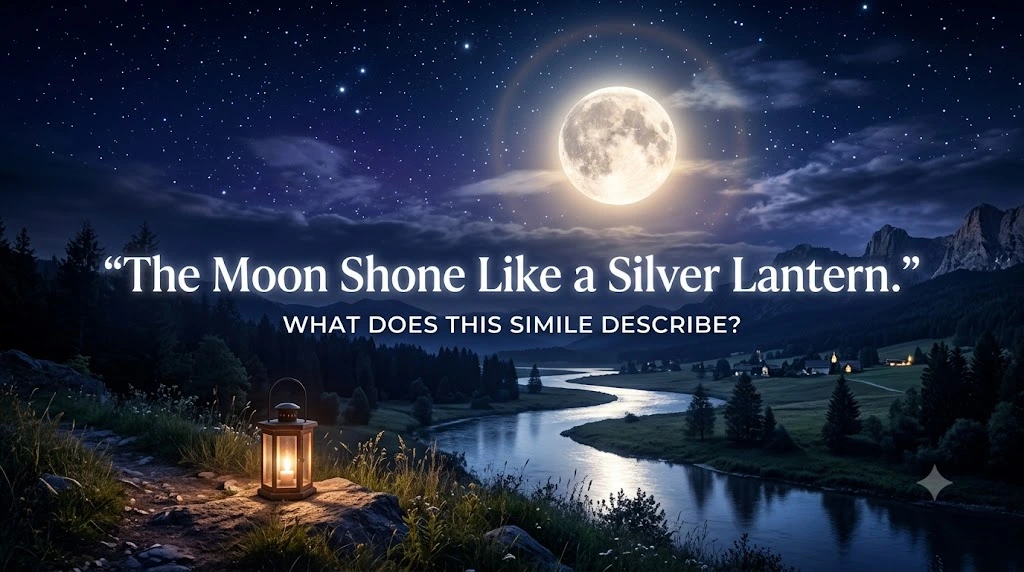
Answer: It describes the moon as bright, glowing, and illuminating the darkness.
Meaning: The moon is compared to a silver lantern because both provide light against a dark background.
Usage Insight: This nature simile is excellent for poetry, nighttime descriptions, fantasy stories, and creative writing that focuses on atmosphere.
Examples:
- The moon shone like a silver lantern above the sleeping village.
- A full moon glowed like a silver lantern over the quiet forest.
What Did You Learn From This Similes Quiz With Answer?
This quiz demonstrates that similes are more than simple comparisons. They help writers transform ordinary statements into vivid figurative language examples that readers can see, feel, and remember. For example, saying “She was hopeful” communicates an idea, but saying “Hope was like a small seed in her heart” gives that emotion a picture and a sense of future growth.
Nature is one of the richest sources of similes because trees, rivers, storms, sunlight, forests, flowers, and the moon are familiar to almost everyone. These images can represent human qualities such as strength, patience, wisdom, beauty, fear, happiness, resilience, and hope.
You may also notice similar techniques in similes in literature, where writers use comparisons to make characters, settings, and emotions more memorable.
How to Use Similes Effectively in Writing
Knowing a simile is useful, but knowing when and how to use it makes your writing stronger.
1. Use Similes in Poems
Poetry depends heavily on imagery and emotion. A well-chosen simile can make a short poem feel much more powerful.
Example: The moon floated like a silver boat across the night.
2. Use Similes in Stories
Similes can make characters and settings easier for readers to visualize. Instead of simply saying that a character is nervous, compare the feeling to something familiar.
Example: His hands shook like leaves in a winter wind.
3. Use Similes in Essays
Academic writing should remain clear and appropriate, but carefully selected comparisons can help explain difficult concepts.
For example, you could describe a strong foundation as being “like the roots of a tree.”
Avoid using too many decorative comparisons in formal academic writing. Choose similes that genuinely clarify your point.
4. Use Similes in Songs
Songwriters often use comparisons to communicate feelings quickly. A memorable simile can make lyrics easier to visualize and emotionally connect with.
Example: Your memory lingers like a song after midnight.
5. Use Similes in Creative Descriptions
When describing people, places, weather, objects, or emotions, choose a comparison that matches the exact quality you want to emphasize.
Instead of writing:
The forest was quiet.
Try:
The forest was quiet like a sleeping child.
The second sentence creates a stronger image in the reader’s mind.
6. Avoid Forced Comparisons
A simile should feel natural. If the comparison seems unrelated to the subject, it may confuse the reader.
7. Choose Fresh Images
Common similes can be useful, but original comparisons often make writing more memorable. Think about nature, movement, light, sound, texture, and everyday experiences for inspiration.
8. Make the Comparison Meaningful
The best similes do more than decorate a sentence. They should reveal something about the subject’s appearance, behavior, emotion, or significance.
Frequently Asked Questions About Similes
What Is a Simile According to This H1?
A simile is a figure of speech that compares two different things using words such as “like” or “as.” In this article, the similes quiz with answer uses practical examples to help readers identify and understand these comparisons.
What Is the Difference Between a Simile and a Metaphor?
A simile makes a direct comparison using “like” or “as.” A metaphor makes a direct comparison without these connecting words.
Simile: Her smile was like sunshine. Metaphor: Her smile was sunshine.
Both create imagery, but they structure the comparison differently.
Why Are Similes Important in Creative Writing?
Similes make writing more vivid by helping readers connect unfamiliar ideas with familiar images. They can add emotion, description, personality, atmosphere, and depth to poems, stories, songs, and other creative work.
Can Similes Be Used in Academic Writing?
Yes. Similes can be useful in academic writing when they clarify a difficult idea or make an explanation easier to understand. However, formal writing usually benefits from simple, precise comparisons rather than excessive figurative language.
Why Are Nature Similes So Effective?
Nature provides familiar images that carry strong associations. A mountain can suggest strength, a seed can represent growth, a storm can suggest anger, and sunlight can represent happiness or hope. These familiar connections allow writers to communicate complex ideas clearly.
Conclusion
Learning through a similes quiz with answer is an effective way to understand how comparisons make language stronger and more expressive. A good simile does more than place two things side by side; it gives readers a picture, feeling, or idea they can immediately understand. From a tree standing as strong as a mountain to hope growing like a small seed, these comparisons connect everyday experiences with deeper emotions and ideas. Similes can bring poems to life, make stories more vivid, strengthen descriptions, and clarify concepts in essays and educational writing. They also show why nature similes remain so powerful, as trees, rivers, storms, sunlight, and the moon provide endless inspiration for meaningful comparisons. As you continue exploring figurative language examples and similes in literature, pay attention to how carefully chosen comparisons influence your imagination. Most importantly, do not be afraid to create your own original similes. With practice, you can use them naturally to add clarity, imagery, personality, and emotional depth to almost any kind of writing.