
A smile can say what words sometimes cannot, carrying happiness, kindness, confidence, warmth, or even a quiet secret. Similes to describe a smile help writers turn that simple expression into a vivid image that readers can see and feel. A simile compares two different things using words such as “like” or “as,” making descriptions more colorful and memorable. Similes are an important part of figurative language because they allow writers to explain emotions and appearances through familiar images. Nature provides some of the most beautiful comparisons, and trees are powerful symbols of strength, growth, resilience, wisdom, and human emotion.
Their roots suggest stability, their branches represent reaching toward dreams, and their ability to survive storms reflects the resilience people develop through difficult experiences. In the same way, a smile can resemble sunlight, flowers, stars, or a gentle breeze, depending on the emotion and personality behind it. In this guide, you will discover creative similes to describe a smile, along with meanings, usage tips, and natural examples for poems, stories, essays, songs, and other forms of creative writing.
What Is a Simile?
A simile is a figure of speech that compares two different things using words such as “like” or “as.” Writers use similes to create strong mental pictures and communicate feelings more vividly.
Example:
Her smile was like sunshine breaking through the clouds.
This comparison suggests that her smile was warm, bright, cheerful, and capable of bringing happiness to others.
1. Her Smile Was Like Sunshine After Rain
Meaning
This simile compares a smile to sunlight appearing after rainfall. It suggests warmth, hope, happiness, relief, and emotional renewal.
When to Use It
Use this comparison when describing a smile that appears after sadness, difficulty, tension, or a long period of silence. It works especially well in emotional stories and reflective writing.
Examples
- Her smile was like sunshine after rain, instantly making the gloomy room feel brighter.
- When he finally smiled, it was like sunlight breaking through a sky full of clouds.
2. His Smile Sparkled Like Stars in a Clear Night Sky
Meaning
This comparison suggests a smile that is bright, captivating, lively, and full of wonder. The image of stars gives the smile a magical quality.
When to Use It
This simile works beautifully when describing a memorable smile in romantic writing, poetry, character descriptions, or emotional scenes.
Examples
- His smile sparkled like stars scattered across a clear night sky.
- Every time she laughed, her smile seemed to shine like distant stars.
3. Her Smile Was as Warm as a Cozy Fire
Meaning
This simile compares a smile to the comforting warmth of a fire. It represents kindness, comfort, friendliness, safety, and emotional warmth.
When to Use It
Use it for a person whose smile makes others feel welcome, relaxed, or cared for.
Examples
- Her smile was as warm as a cozy fire on a cold evening.
- The teacher greeted every student with a smile that felt like sitting beside a comforting fire.
4. His Smile Curved Like a Crescent Moon
Meaning
This comparison focuses on the shape and gentle beauty of a smile. A crescent moon creates an image of something elegant, soft, and quietly attractive.
When to Use It
This simile is ideal for poems, romantic descriptions, character introductions, and creative writing where appearance matters.
Examples
- His smile curved like a crescent moon beneath the evening sky.
- A soft smile shaped like a crescent moon appeared across her face.
5. Her Smile Bloomed Like a Rose at Dawn
Meaning
This simile compares a smile to a flower opening in the early morning. It suggests beauty, gentleness, freshness, and gradual happiness.
When to Use It
Use this nature simile when a smile slowly appears or when you want to describe someone’s beauty in a poetic way.
Examples
- Her smile bloomed like a rose at dawn when she saw her old friend.
- A shy smile opened across his face like a flower welcoming the morning light.
6. His Smile Was Like a Lantern in the Darkness
Meaning
This simile presents a smile as a source of hope, comfort, encouragement, and emotional light during a difficult moment.
When to Use It
It works particularly well in stories or essays about friendship, hardship, support, and emotional recovery.
Examples
- His smile was like a lantern in the darkness when everyone else had lost hope.
- During her hardest days, her mother’s smile became like a small lantern guiding her forward.
7. Her Smile Was as Bright as a Summer Morning
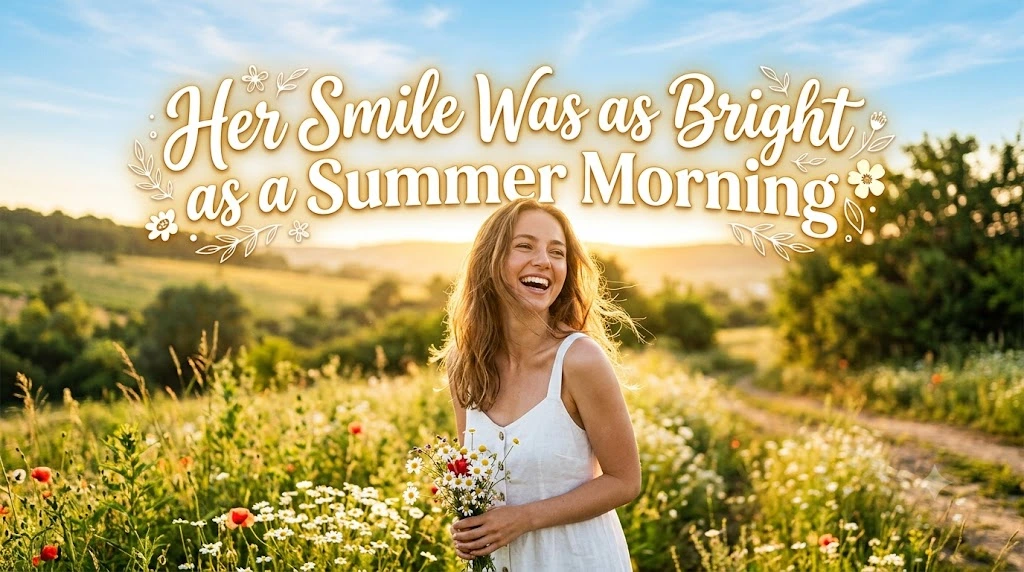
Meaning
This comparison suggests a smile that is cheerful, energetic, fresh, and full of positive emotion. A summer morning creates an image of brightness and possibility.
When to Use It
Use this simile for happy personalities, joyful moments, children’s descriptions, or scenes filled with optimism.
Examples
- Her smile was as bright as a summer morning.
- He welcomed every guest with a smile as cheerful as the first light of summer.
8. His Smile Flickered Like Candlelight in a Quiet Room
Meaning
This simile describes a soft, subtle, delicate, or slightly uncertain smile. Candlelight creates a gentle image rather than an intense burst of brightness.
When to Use It
This works well when describing shy smiles, emotional moments, quiet affection, or someone trying to hide their feelings.
Examples
- His smile flickered like candlelight when she mentioned their childhood memories.
- A small smile appeared on her face like candlelight glowing in an otherwise quiet room.
9. Her Smile Was Like a Garden Opening in Spring
Meaning
This comparison presents a smile as something that brings freshness, beauty, growth, and renewed happiness. Spring gardens symbolize new beginnings.
When to Use It
Use it when a person begins to feel happy again after sadness or when their smile seems to transform the atmosphere around them.
Examples
- Her smile was like a garden opening in spring after a long winter.
- When he heard the good news, his face brightened like a garden suddenly filled with spring flowers.
10. His Smile Was as Gentle as a Breeze Through the Trees
Meaning
This simile suggests a smile that feels soft, peaceful, natural, and comforting. The gentle movement of a breeze through trees creates a calm atmosphere.
When to Use It
This comparison works especially well for quiet personalities, peaceful scenes, romantic writing, and descriptions of subtle happiness.
Examples
- His smile was as gentle as a breeze moving through the trees.
- She offered a smile as soft as the wind passing through leaves on a summer afternoon.
11. Her Smile Lit Up the Room Like a Sunrise
Meaning
This simile describes a smile that immediately changes the atmosphere. It represents joy, warmth, positivity, and emotional brightness.
When to Use It
Use it for a particularly radiant smile that attracts attention or makes other people feel happier.
Examples
- Her smile lit up the room like a sunrise spreading across the horizon.
- The child’s smile brightened the waiting room like the first sunlight of morning.
12. His Smile Was Like a Hidden Treasure Finally Discovered
Meaning
This comparison suggests a smile that is rare, precious, unexpected, and deeply rewarding. It can also imply that someone does not smile often.
When to Use It
This is useful when describing a reserved character whose occasional smile feels especially meaningful.
Examples
- His rare smile was like a hidden treasure finally discovered.
- Seeing her smile after weeks of worry felt like finding a precious treasure.
13. Her Smile Shimmered Like Sunlight on Water
Meaning
This simile describes a smile that appears bright, lively, delicate, and constantly changing. Sunlight dancing across water creates a beautiful visual image.
When to Use It
Use this comparison for graceful smiles, romantic scenes, poetry, or descriptions emphasizing beauty and movement.
Examples
- Her smile shimmered like sunlight dancing across a quiet lake.
- His face softened with a smile that seemed to sparkle like sunlight on water.
14. His Smile Was as Contagious as a Child’s Laughter
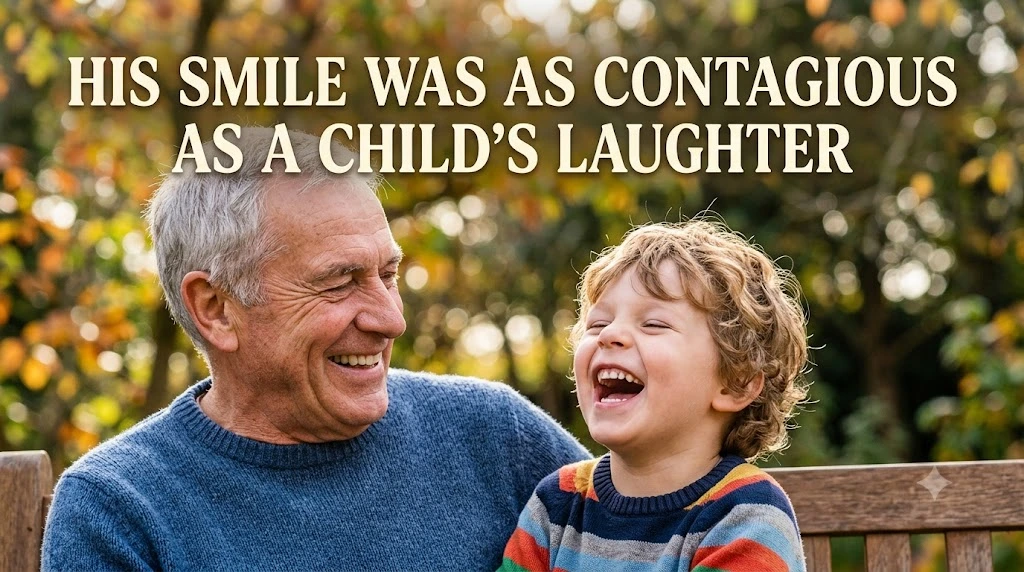
Meaning
This simile describes a smile that quickly makes other people smile too. It suggests joy, friendliness, energy, and emotional connection.
When to Use It
This comparison is excellent for describing cheerful people, social situations, friendships, family moments, or lively characters.
Examples
- His smile was as contagious as a child’s laughter.
- She had a cheerful smile that spread through the group like an infectious burst of happiness.
15. Her Smile Was Like a Door Opening to Warmth
Meaning
This original comparison presents a smile as an invitation into someone’s inner world. It suggests welcome, trust, kindness, openness, and emotional connection.
When to Use It
Use this simile when describing a person whose smile makes others feel accepted or comfortable.
Examples
- Her smile was like a door opening to warmth, making strangers feel like old friends.
- The quiet boy’s smile felt like a door slowly opening, revealing a gentle personality beneath his shyness.
How to Use Similes Effectively in Writing
Knowing similes to describe a smile is only the first step. The strongest writing comes from choosing a comparison that matches the emotion, setting, and personality you want to communicate.
1. Use Similes in Poems
Poetry benefits from vivid imagery, and a smile can become a powerful symbol of love, hope, happiness, or healing.
For example:
Her smile bloomed like a rose after winter.
The comparison creates an emotional image while keeping the language concise.
2. Use Similes in Stories
In fiction, a smile can reveal a character’s personality or feelings without directly explaining them. Instead of writing “She was happy,” show the emotion through a comparison.
For example:
Her smile appeared like sunlight through a window, revealing how relieved she felt.
This approach allows readers to experience the emotion rather than simply being told about it.
3. Use Similes in Essays
Similes can also be helpful in essays when they clarify an abstract idea or make an emotional observation easier to understand.
For example, when writing about kindness, you could describe a genuine smile as “like a small light in an uncertain moment.”
In academic writing, however, make sure the comparison supports the point and does not replace evidence or logical explanation.
4. Use Similes in Songs
Songs rely heavily on emotional and visual language. A smile can be compared to stars, sunlight, flowers, fire, or other images that communicate feelings quickly.
For example:
Your smile shines like a star I follow through the night.
The comparison creates an emotional image that can be memorable for listeners.
5. Use Similes in Creative Descriptions
Creative descriptions become more interesting when you move beyond basic adjectives.
Instead of:
She had a beautiful smile.
Try:
Her smile opened like a flower touched by the morning sun.
The second sentence gives readers something they can visualize.
6. Match the Comparison to the Emotion
Not every smile is cheerful. Some smiles are nervous, shy, mischievous, sad, confident, romantic, or comforting.
Choose imagery that fits the exact emotion you want to communicate.
7. Consider Nature Similes
Nature provides countless images for describing smiles. Sunlight can represent warmth, flowers can suggest beauty, stars can communicate wonder, and gentle breezes can suggest peace.
These nature similes often feel natural because readers can easily visualize them.
8. Avoid Overused Comparisons
Common similes can be effective, but fresh imagery makes your writing more memorable. Instead of repeatedly comparing a smile to sunshine, experiment with moonlight, candlelight, morning dew, blooming flowers, or reflections on water.
9. Keep Your Audience in Mind
A simple simile may work best for children’s writing, while a more sophisticated comparison may be appropriate for poetry, fiction, or literary analysis.
10. Don’t Overuse Figurative Language
A strong simile should stand out. If every sentence contains a comparison, the effect can become weaker. Use the most meaningful image and let it carry the emotion.
Similes to Describe a Smile in Literature
Similes in literature allow writers to reveal emotions without explaining everything directly. A character’s smile can communicate happiness, affection, nervousness, confidence, relief, sadness, or even hidden intentions.
For example, a smile compared to sunshine may suggest warmth and happiness, while a smile compared to candlelight may communicate softness or uncertainty. A smile that “blooms like a rose” can suggest beauty and gradual emotional opening.
These figurative language examples also demonstrate why comparisons are valuable. Instead of simply stating that a character is happy, the writer can create an image that allows readers to experience the emotion.
Nature is particularly useful because natural objects carry strong visual and emotional associations. Trees, flowers, sunlight, stars, rivers, seasons, and moonlight can all provide inspiration for creative descriptions.
Why Similes Make Smile Descriptions More Powerful
A smile is a small physical expression, but its meaning can be enormous. It may communicate affection without words, comfort someone during a difficult moment, or reveal happiness that a character is unable to express directly.
A plain description such as “She smiled warmly” tells readers what happened. A carefully chosen simile can show them what that warmth feels like:
Her smile was like sunlight entering a cold room.
Suddenly, the smile becomes more than an expression. It becomes an emotional experience.
This is the power of comparisons. They transform ordinary descriptions into images that readers can remember, helping writers communicate appearance, personality, mood, and emotion in a more engaging way.
FAQs About Similes to Describe a Smile
1. What are some good similes to describe a smile?
Some beautiful examples include “her smile was like sunshine after rain,” “his smile curved like a crescent moon,” “her smile bloomed like a rose at dawn,” and “his smile was like a lantern in the darkness.” Each creates a different emotional impression.
2. What is a simile for a beautiful smile?
A strong example is: “Her smile was like sunlight shimmering on clear water.” This comparison suggests beauty, brightness, elegance, and warmth.
3. What is the difference between a simile and a metaphor?
A simile compares two things using words such as “like” or “as.” For example, “Her smile was like sunshine.” A metaphor makes a direct comparison without those words, such as “Her smile was sunshine.”
4. Can similes be used in academic writing?
Yes. Similes can be used in academic writing when they help explain an abstract idea or make a difficult concept easier to understand. They should be relevant and used sparingly, especially in formal research.
5. Why are similes useful in creative writing?
Similes make descriptions more vivid by connecting an unfamiliar or abstract idea to something readers already understand. They can help writers communicate emotion, appearance, personality, atmosphere, and movement in memorable ways.
Conclusion: Let Every Smile Tell a Story
The right words can turn an ordinary smile into an unforgettable image, and similes to describe a smile give writers an easy yet powerful way to accomplish this. A smile can shine like sunlight, curve like a crescent moon, bloom like a flower, or glow like a lantern in darkness. Each comparison reveals something different about the person behind the expression. These similes, nature similes, and other forms of figurative language allow writers to communicate emotions with greater clarity and imagination. They are especially valuable in poems, stories, songs, essays, character descriptions, and other creative writing where emotional depth matters. Strong similes in literature do not merely make language decorative; they help readers visualize a moment and connect with it emotionally. The most effective comparison is one that feels natural and matches the mood, personality, and purpose of the writing. Whether you are describing a shy smile, a joyful grin, a romantic expression, or a comforting smile, the right comparison can make your words feel alive. Use these comparisons thoughtfully, experiment with fresh imagery, and remember that even the simplest smile can become a powerful story when described with the right words.