
Have you ever described an ordinary moment in a way that suddenly made everyone laugh? That is exactly where funny similes for adults can make language more colorful, memorable, and entertaining. A simile compares two different things using words such as “like” or “as” to create a vivid mental picture. Similes are an important part of figurative language because they help readers understand feelings, situations, and personalities through familiar comparisons. Even nature can inspire clever comparisons, and trees are powerful symbols of strength, growth, resilience, wisdom, and human emotion.
A tired person might be compared to a tree bending in a storm, while a stubborn person could be humorously described as a tree refusing to move in the wind. When humor enters these comparisons, everyday experiences can become surprisingly funny and relatable. Whether you are writing a story, social post, poem, essay, or casual message, the right simile can turn a plain sentence into something people remember.
What Is a Simile?
A simile is a figure of speech that compares two unlike things using words such as “like” or “as.” Writers use similes to create clearer images, stronger emotions, and more interesting descriptions.
Example: After three meetings, my brain was like a laptop with twenty-seven tabs open and no idea where the music was coming from.
The comparison is funny because it connects mental exhaustion with a familiar technology problem.
1. As Organized as a Junk Drawer
Meaning: This funny simile describes someone who appears completely disorganized despite having everything somewhere.
Usage insight: Use it for humorous descriptions of messy people, offices, schedules, bags, or even complicated thoughts.
Examples:
- His desk was as organized as a junk drawer after an earthquake.
- My weekend plans are as organized as a pile of socks thrown down the stairs.
2. Like a Smartphone at One Percent Battery
Meaning: This describes someone who is extremely tired, drained, or barely functioning.
Usage insight: It works especially well in conversations about work, parenting, social events, or long days.
Examples:
- By Friday afternoon, I was like a smartphone at one percent battery.
- She arrived at the party looking like a phone desperately searching for a charger.
3. As Graceful as a Penguin on Roller Skates
Meaning: This describes someone moving awkwardly or lacking physical coordination.
Usage insight: It is perfect for funny descriptions of dancing, sports, exercise, or embarrassing physical moments.
Examples:
- I was as graceful as a penguin on roller skates during my first dance lesson.
- He tried to impress everyone on the dance floor but looked like a penguin on roller skates.
4. Like a Cat Avoiding a Bath
Meaning: This describes someone strongly resisting something they do not want to do.
Usage insight: Use it when describing reluctance toward chores, meetings, responsibilities, or uncomfortable conversations.
Examples:
- He avoided the dentist like a cat avoiding a bath.
- She approached Monday morning like a cat being carried toward a bathtub.
5. As Confident as a Rooster in a Chicken Yard
Meaning: This refers to someone who has enormous confidence, sometimes without enough reason.
Usage insight: The comparison works well when gently teasing an overly confident friend, coworker, or character.
Examples:
- He walked into the interview as confident as a rooster in a chicken yard.
- She presented her questionable business idea as confidently as a rooster announcing sunrise.
6. Like a Wi-Fi Signal in a Basement
Meaning: This means someone is difficult to reach, mentally distracted, or barely responsive.
Usage insight: It is useful for modern, casual writing about distracted friends, tired coworkers, or people ignoring messages.
Examples:
- After his third cup of coffee, his attention was still like a Wi-Fi signal in a basement.
- My brain was like a Wi-Fi signal in a basement during that complicated meeting.
7. As Subtle as a Brass Band in a Library
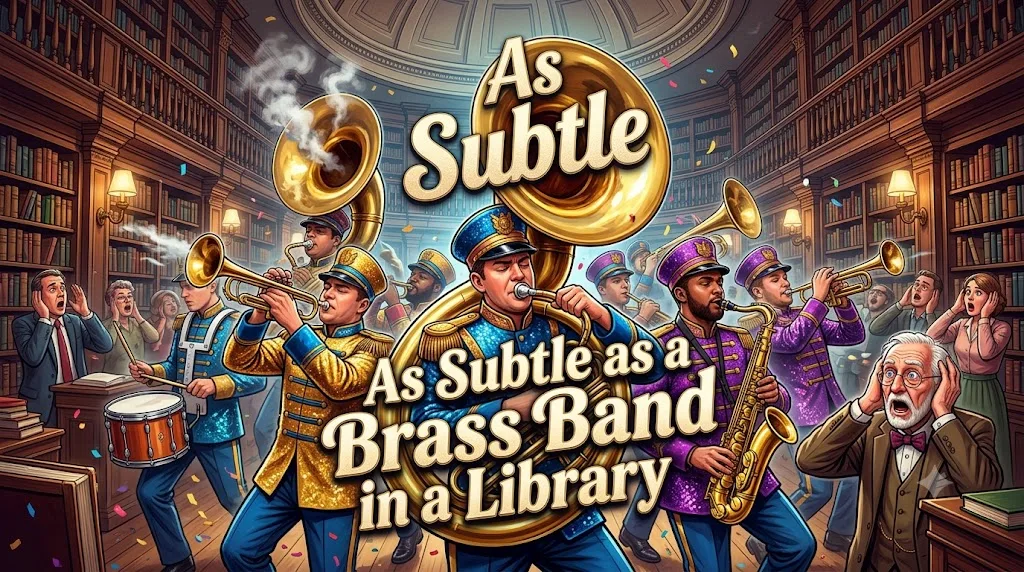
Meaning: This describes something extremely obvious, loud, or impossible to ignore.
Usage insight: Use it when someone makes an obvious comment, reveals a secret, or enters a situation without any subtlety.
Examples:
- His attempt to hide the surprise was as subtle as a brass band in a library.
- She announced her crush as subtly as a brass band performing during quiet reading hour.
8. Like a Squirrel That Found an Espresso Machine
Meaning: This describes someone who is extremely energetic, restless, or overexcited.
Usage insight: It is particularly effective for describing people after too much caffeine or unexpected excitement.
Examples:
- After two energy drinks, he was like a squirrel that found an espresso machine.
- She spent the entire morning bouncing around like a squirrel with unlimited coffee.
9. As Patient as a Toddler Waiting for Cake
Meaning: This describes someone who has almost no patience.
Usage insight: Use this comparison when someone is impatient about food, news, money, results, or anything they eagerly anticipate.
Examples:
- I was as patient as a toddler waiting for cake while the computer updated.
- He became as patient as a toddler waiting for dessert when the restaurant took too long.
10. Like a Tree Arguing with the Wind
Meaning: This describes someone stubbornly fighting against something they cannot control.
Usage insight: This is one of the nature-inspired similes that can add humor while also creating a memorable image.
Examples:
- Trying to change his mind was like watching a tree argue with the wind.
- She kept complaining about the weather like a tree arguing with every gust.
11. As Quiet as a Refrigerator at Midnight
Meaning: This humorous comparison describes an unexpectedly quiet environment or person.
Usage insight: It works well when describing awkward silence, empty rooms, or someone who suddenly stops talking.
Examples:
- The office became as quiet as a refrigerator at midnight after the manager walked in.
- Everyone was as quiet as a refrigerator at midnight when the embarrassing question appeared.
12. Like a Goldfish at a Business Conference
Meaning: This describes someone who feels completely confused or out of place.
Usage insight: It is ideal for workplace stories, complicated meetings, unfamiliar situations, and humorous personal experiences.
Examples:
- During my first corporate meeting, I felt like a goldfish at a business conference.
- He stared at the financial report like a goldfish attending an advanced economics lecture.
13. As Dramatic as a Soap Opera in a Thunderstorm
Meaning: This describes a person or situation that feels excessively emotional or dramatic.
Usage insight: Use it when exaggeration itself is part of the humor, especially in stories about minor problems becoming major events.
Examples:
- Her reaction to the missing cookie was as dramatic as a soap opera in a thunderstorm.
- He described the delayed delivery as though it were a disaster as dramatic as a soap opera in a thunderstorm.
14. Like a Rooster Who Discovered Motivational Quotes
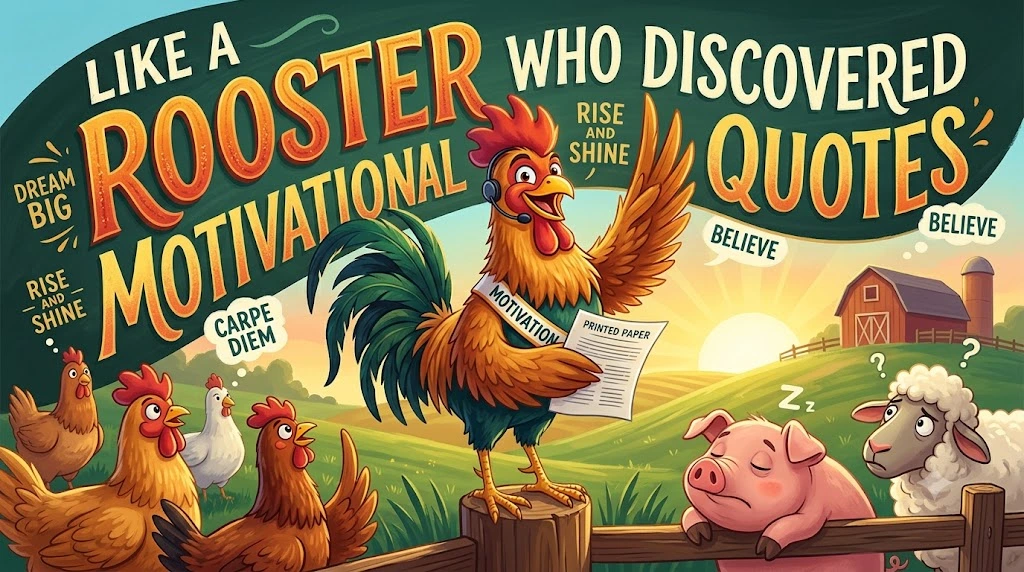
Meaning: This describes someone who is excessively enthusiastic, confident, or eager to inspire everyone.
Usage insight: It works especially well in humorous descriptions of motivational speakers, energetic coworkers, and overly positive friends.
Examples:
- He entered Monday’s meeting like a rooster who had discovered motivational quotes.
- My friend becomes like a motivational rooster every time someone mentions a new business idea.
15. As Relaxed as a Cat During a Fire Drill
Meaning: This describes someone who is obviously stressed despite pretending to be calm.
Usage insight: It is useful for humorous writing about nervous people who insist that everything is completely fine.
Examples:
- She claimed she was calm, but she looked as relaxed as a cat during a fire drill.
- I told everyone I had everything under control while feeling as relaxed as a cat during a fire drill.
More Funny Similes for Adults
The following quick figurative language examples can add humor to conversations, captions, stories, and creative writing:
- As confused as a GPS with no satellites.
- Like a pancake trying to solve a crossword.
- As useful as a screen door on a submarine.
- Like a turtle late for a marathon.
- As serious as a clown at a birthday party.
- Like a squirrel guarding a single peanut.
- As predictable as a dog hearing a food wrapper.
- Like a calculator trying to understand poetry.
- As graceful as a shopping cart with one bad wheel.
- Like a duck wearing business shoes.
- As focused as a fly at a picnic.
- Like a potato trying to win a spelling bee.
- As prepared as a tourist who forgot their luggage.
- Like a snail racing against a calendar.
- As awake as a person who just heard their alarm for the fifth time.
- Like a kangaroo in a formal interview.
- As useful as sunglasses at midnight.
- Like a printer that senses deadlines.
- As mysterious as a sock missing from the laundry.
- Like a squirrel with a five-year financial plan.
- As reliable as an umbrella with a hole in it.
- Like a penguin trying to give swimming lessons.
- As complicated as explaining Wi-Fi to a goldfish.
- Like a potato wearing a graduation cap.
- As calm as a bee inside a bedroom.
- Like a duck trying to keep a secret.
- As focused as a puppy in a room full of tennis balls.
- Like a calendar that forgot what month it was.
- As elegant as a giraffe doing yoga.
- Like a raccoon caught organizing a kitchen.
Why Funny Similes Work So Well
Funny similes succeed because they combine comparison, surprise, and recognition. A reader understands the basic idea quickly, but the unusual comparison creates the humor.
For example, saying:
“He was very nervous.”
is clear, but not particularly memorable.
Compare it with:
“He was as nervous as a squirrel carrying a cup of hot coffee.”
The second sentence gives the reader a visual scene. The image is exaggerated, unexpected, and easy to imagine.
This is why similes are valuable in creative writing, storytelling, poetry, humor, social media content, and everyday communication.
Nature Similes Can Add Extra Humor
Nature provides some of the strongest material for humorous comparisons. Animals, weather, plants, trees, oceans, and seasons are naturally visual, making them excellent sources for figurative language.
A tree, for example, can represent strength and resilience, but it can also become funny when placed in an unexpected situation:
- He stood there like a tree refusing to admit the wind had won.
- She was as stubborn as an old oak arguing with autumn.
- My motivation disappeared like leaves falling from a tree in November.
These nature similes balance humor with imagery, making them particularly useful in creative descriptions.
Similes in Literature and Everyday Writing
Similes in literature have long helped writers make characters, settings, emotions, and events more vivid. A well-chosen comparison can show a character’s personality without explaining everything directly.
For instance, instead of writing:
“She was extremely impatient.”
a writer might say:
“She waited like a child staring at a birthday cake.”
The comparison shows the emotion through an image.
In everyday writing, humorous similes can serve the same purpose. They can make emails less stiff, social posts more engaging, stories more entertaining, and personal observations more memorable.
The key is choosing a comparison that feels natural rather than forcing a joke into every sentence.
How to Use Similes Effectively in Writing
Using funny similes for adults effectively is more than adding random comparisons. The best similes support the meaning of the sentence while adding personality.
1. Match the Simile to the Situation
Choose a comparison that clearly connects with what you are describing. If someone is extremely tired, a comparison to a dying phone battery is instantly understandable.
2. Keep the Image Easy to Understand
A complicated comparison can distract readers. Strong similes usually create an image that people can understand immediately.
3. Use Humor Naturally
Do not force humor into every sentence. A funny simile works best when it appears naturally within the story or conversation.
4. Try Unexpected Comparisons
Unexpected images often create the strongest humor. Comparing someone to a squirrel with an espresso machine is funnier than simply saying they are energetic.
5. Use Similes in Poems
Poetry benefits from strong imagery. Similes can communicate emotions, nature, relationships, and abstract ideas in a compact way.
6. Add Personality to Stories
A character’s choice of comparisons can reveal their personality. A sarcastic character might use unusual or exaggerated similes, while a serious character may use more thoughtful comparisons.
7. Make Essays More Vivid
Academic writing should remain clear and appropriate, but carefully chosen comparisons can help explain complicated ideas. Avoid overly silly similes when writing formal academic work.
8. Use Them in Songs
Songs often depend on emotional imagery. A well-written simile can make an emotion easier for listeners to visualize and remember.
9. Improve Creative Descriptions
Similes are especially helpful when describing people, places, weather, sounds, emotions, and movement. They help readers experience a scene rather than simply receive information.
10. Avoid Overusing Them
Too many similes can make writing feel crowded. Choose your strongest comparisons and allow them to stand out.
Similes vs. Metaphors: What’s the Difference?
Both similes and metaphors make comparisons, but they do so differently.
A simile directly signals the comparison with words such as “like” or “as.”
Simile: His laugh was like a car horn at midnight.
A metaphor makes the comparison directly without “like” or “as.”
Metaphor: His laugh was a car horn at midnight.
Both create an image, but the simile makes the comparison more explicit.
FAQs About Funny Similes for Adults
1. What are funny similes for adults?
Funny similes for adults are humorous comparisons between two different things, usually using “like” or “as.” They make ordinary situations more entertaining and memorable.
2. What is a good example of a funny simile?
A simple example is: “He was as organized as a junk drawer.” It humorously compares someone’s lack of organization with the chaotic contents of a junk drawer.
3. Are similes and metaphors the same?
No. Both are forms of figurative language, but similes use comparison words such as “like” or “as,” while metaphors make a direct comparison without them.
4. Can adults use funny similes in creative writing?
Absolutely. Funny similes can make stories, poems, captions, scripts, personal essays, and descriptions more vivid and entertaining when they fit the context.
5. Can similes be used in academic writing?
Yes, but they should be used carefully. In academic writing, clear and relevant comparisons can explain difficult concepts, while overly humorous or exaggerated similes may be inappropriate in formal contexts.
Conclusion
Funny similes for adults prove that language does not have to be serious to be meaningful. A clever comparison can turn an ordinary observation into a memorable image, whether you are describing exhaustion, confusion, confidence, awkwardness, or everyday chaos. Similes add clarity, imagery, humor, and emotional depth because they allow readers to see an idea rather than simply read about it. From nature similes involving stubborn trees to modern comparisons involving smartphones and Wi-Fi, the possibilities are almost endless. The strongest figurative language examples feel natural, unexpected, and closely connected to the idea being described. When used thoughtfully, similes can make stories more vivid, poems more expressive, songs more emotional, and everyday communication more engaging. So the next time a normal sentence feels dull, add a surprising comparison and give your words some personality. After all, good writing should not merely communicate an idea—it should make the reader see it, feel it, and sometimes laugh at it.