
Dreams can feel mysterious, exciting, fragile, or powerful, and similes about dreams help us describe those feelings in a way readers can easily imagine. A simile compares one thing to another using words such as “like” or “as” to create a stronger picture in the reader’s mind. These comparisons are an important part of figurative language because they can turn an ordinary idea into something memorable and emotional. Dreams, in particular, are difficult to describe directly because they can exist somewhere between imagination, hope, memory, and reality. Nature gives us many beautiful images for describing dreams, from growing trees and glowing stars to drifting clouds and flowing rivers.
Trees are especially powerful symbols of strength, growth, resilience, wisdom, and human emotion, making them useful comparisons for dreams that continue to grow through difficult times. Whether you are writing poetry, fiction, an essay, a song, or a personal reflection, the right simile can make your description more expressive. In this collection, you will discover original similes about dreams, useful figurative language examples, and creative comparisons that can bring your writing to life.
What Is a Simile?
A simile is a figure of speech that compares two different things using words such as “like” or “as.” Writers use similes to make an idea easier to visualize, understand, or feel.
Example: Her dream was like a tiny seed, waiting patiently for the right season to grow.
This comparison connects a dream with a seed, showing that dreams may begin small but can develop with patience, care, and time.
1. A Dream Like a Seed Waiting for Spring
Simile: A dream is like a seed waiting for spring.
Meaning: This simile suggests that a dream may remain hidden for a while before finding the right conditions to grow.
Usage Insight: Use this comparison when writing about patience, hope, personal development, or goals that have not yet become reality.
Examples:
- His dream was like a seed waiting for spring beneath the frozen ground.
- She protected her ambition like a seed until the moment came to let it grow.
2. A Dream Like a Star in the Dark
Simile: A dream is like a star shining in the dark.
Meaning: This comparison shows how dreams can provide hope when life feels uncertain or difficult.
Usage Insight: It works especially well in inspirational writing, poetry, personal stories, and descriptions of overcoming challenges.
Examples:
- Her dream was like a star in the dark, guiding her through uncertain years.
- Even during his hardest days, his ambition remained like a distant star.
3. A Dream Like a Bird Learning to Fly
Simile: A dream is like a young bird learning to fly.
Meaning: Dreams often require courage, practice, failure, and persistence before they can become reality.
Usage Insight: Use this simile when describing new ambitions, personal growth, or someone learning to believe in themselves.
Examples:
- His dream was like a young bird learning to fly, uncertain but determined.
- Her first attempt felt like a bird leaving the nest for the first time.
4. A Dream Like a River Finding Its Way
Simile: A dream is like a river finding its way through the land.
Meaning: This comparison suggests that dreams may change direction while still moving toward a meaningful destination.
Usage Insight: This is useful when discussing unexpected journeys, changing goals, or persistence through obstacles.
Examples:
- Her dream moved like a river, bending around every obstacle in its path.
- His career ambition was like a river that kept flowing despite the rocky terrain.
5. A Dream Like a Tree Reaching for the Sky
Simile: A dream is like a tree reaching for the sky.
Meaning: The image represents steady growth, ambition, strength, and the desire to achieve something greater.
Usage Insight: This is one of the strongest nature similes for describing long-term goals and dreams that become stronger with time.
Examples:
- His dream grew like a tree reaching steadily toward the sky.
- She nurtured her ambition until it stood like a strong tree above her doubts.
6. A Dream Like a Cloud Drifting Across the Sky

Simile: A dream is like a cloud drifting across the sky.
Meaning: Some dreams are temporary, uncertain, or constantly changing.
Usage Insight: Use this comparison when describing fleeting thoughts, childhood dreams, imagination, or ambitions that have not yet taken a definite shape.
Examples:
- Her childhood dream floated like a cloud across the summer sky.
- His thoughts about the future drifted like clouds, changing with every passing year.
7. A Dream Like a Flame in the Wind
Simile: A dream is like a flame flickering in the wind.
Meaning: This simile suggests that dreams can be fragile but can survive difficulties when protected by determination.
Usage Insight: It is especially effective for stories about resilience, setbacks, or refusing to give up.
Examples:
- His dream burned like a small flame against the cold wind of failure.
- She guarded her ambition like a flame whenever doubt threatened to extinguish it.
8. A Dream Like a Compass in an Unknown Land
Simile: A dream is like a compass in an unknown land.
Meaning: A dream can give someone direction when they are unsure about where life is taking them.
Usage Insight: This comparison works well in motivational essays, speeches, biographies, and personal reflections.
Examples:
- Her dream became like a compass when every road ahead seemed uncertain.
- His ambition acted like a compass, helping him choose his next step.
9. A Dream Like a Moonlit Path
Simile: A dream is like a moonlit path through the night.
Meaning: This image suggests that a dream may not reveal the entire journey but can provide enough light to keep moving.
Usage Insight: Use it when writing about hope, uncertainty, courage, and pursuing a goal without knowing exactly what lies ahead.
Examples:
- Her dream was like a moonlit path through a forest of uncertainty.
- His ambition illuminated the future like a narrow path beneath the moon.
10. A Dream Like a Hidden Garden
Simile: A dream is like a hidden garden waiting to be discovered.
Meaning: This comparison presents dreams as beautiful possibilities that may remain concealed until someone has the courage to explore them.
Usage Insight: It works particularly well in creative writing, poetry, and descriptions of imagination or unexplored potential.
Examples:
- His imagination was like a hidden garden filled with possibilities.
- Her dream waited like a secret garden behind years of self-doubt.
11. A Dream Like a Sunrise After a Long Night
Simile: A dream is like a sunrise after a long night.
Meaning: This comparison connects dreams with renewal, hope, and the possibility of a better future.
Usage Insight: Use this simile when describing recovery, fresh beginnings, or hope after difficult experiences.
Examples:
- Her dream arrived like a sunrise after years of darkness.
- The opportunity felt like morning light breaking after a long night.
12. A Dream Like a Kite Against the Wind
Simile: A dream is like a kite rising against the wind.
Meaning: This simile shows that challenges do not always prevent dreams from succeeding; sometimes resistance can make them rise higher.
Usage Insight: This is ideal for writing about perseverance, ambition, competition, and overcoming adversity.
Examples:
- His dream rose like a kite against the strongest wind.
- She discovered that obstacles could lift her ambition like wind beneath a kite.
13. A Dream Like a Whisper in the Heart
Simile: A dream is like a quiet whisper in the heart.
Meaning: Some dreams are deeply personal and may begin as a subtle feeling rather than a clear plan.
Usage Insight: This simile works beautifully in emotional writing, personal narratives, love stories, and reflective essays.
Examples:
- Her dream began like a whisper in her heart and slowly became a clear purpose.
- He followed the quiet ambition that had lived like a whisper inside him for years.
14. A Dream Like a Lighthouse on a Distant Shore
Simile: A dream is like a lighthouse shining from a distant shore.
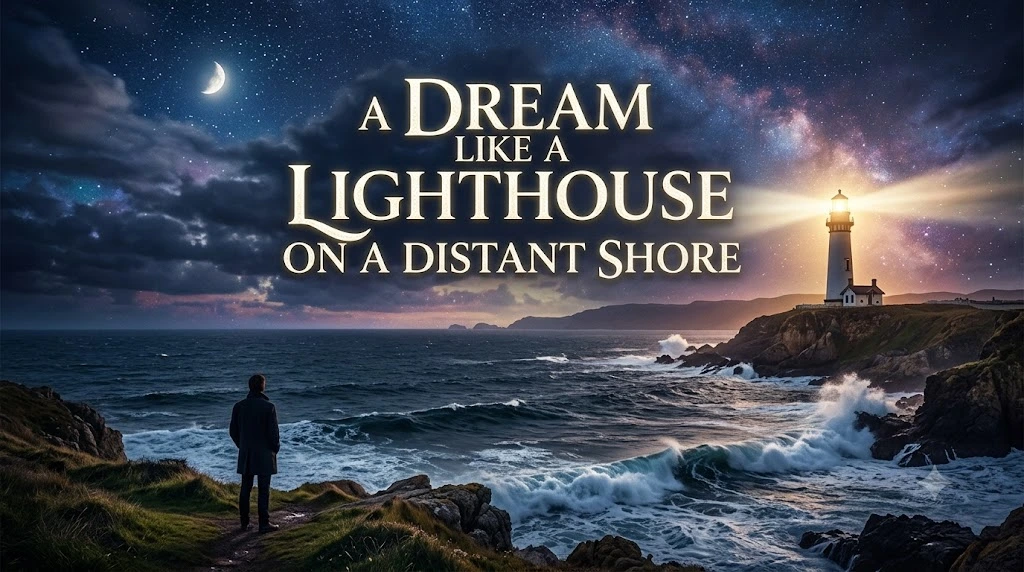
Meaning: A dream can offer direction and hope even when the destination still feels far away.
Usage Insight: Use this comparison when writing about long-term goals, difficult journeys, leadership, or perseverance.
Examples:
- Her dream stood like a lighthouse beyond the waves of uncertainty.
- His goal remained like a distant beacon, reminding him where he wanted to go.
15. A Dream Like a Door Waiting to Open
Simile: A dream is like a door waiting to open.
Meaning: This comparison suggests that opportunities may exist, but action and courage are needed to discover what lies beyond them.
Usage Insight: It works well when writing about new opportunities, career goals, personal transformation, and taking risks.
Examples:
- Her dream was like a door waiting for her courage to turn the handle.
- The opportunity stood before him like an unopened door to a new life.
More Creative Similes About Dreams
Here are additional original comparisons you can use in stories, poems, essays, speeches, and creative descriptions:
- A dream is like a lantern glowing through fog.
- A dream is like a butterfly escaping its cocoon.
- A dream is like a wave reaching toward the shore.
- A dream is like a mountain peak beyond the clouds.
- A dream is like a candle refusing to go dark.
- A dream is like a rainbow after a storm.
- A dream is like a compass needle pointing north.
- A dream is like a flower opening at dawn.
- A dream is like a snowflake melting in sunlight.
- A dream is like a path through an unexplored forest.
- A dream is like a fire hidden beneath ashes.
- A dream is like a feather carried by a warm breeze.
- A dream is like a seed buried beneath winter soil.
- A dream is like a ship sailing toward an unseen horizon.
- A dream is like a window opening onto a new world.
- A dream is like a bell ringing across a quiet valley.
- A dream is like a drop of rain nourishing dry earth.
- A dream is like a golden thread through a dark tapestry.
- A dream is like a sunbeam entering a silent room.
- A dream is like a bridge connecting today with tomorrow.
These comparisons can add variety to your figurative language examples while keeping your descriptions natural and meaningful.
Similes About Dreams for Poetry
Poetry often depends on imagery and emotion, making dreams an excellent subject for creative comparisons. A poet might describe a dream as “like a silver bird crossing the midnight sky” to create an image of freedom and mystery.
Other poetic examples include:
- My dream was like a candle glowing beneath the moon.
- Her hope floated like a leaf upon a quiet stream.
- His ambition rose like dawn above the sleeping hills.
- The dream remained like a song trapped inside his heart.
- Our hopes were like stars scattered across an endless sky.
The strongest poetic similes do more than decorate a line. They help readers see, hear, touch, or emotionally experience an abstract idea.
Similes About Dreams for Stories
Stories need vivid descriptions because readers imagine characters, settings, and emotions as they move through a narrative. Similes about dreams can reveal what a character wants, fears, or hopes to become.
For example:
- Her dream was like a small flame she refused to let the storm extinguish.
- His childhood ambition returned like an old song he had almost forgotten.
- The dream stood before him like a mountain demanding courage.
- Her hope spread through the family like sunlight through an open window.
These comparisons can make a character’s internal world easier for readers to understand.
Similes About Dreams for Essays
Similes are also useful in essays when they clarify an abstract idea without making the writing overly complicated. Academic writing generally benefits from precise language, so choose comparisons that genuinely explain the concept.
For example:
- A long-term goal can be like a map that helps a person organize difficult decisions.
- Ambition can grow like a tree when it receives consistent effort and attention.
- A shared vision can function like a bridge between individuals with different perspectives.
In academic writing, avoid adding similes simply for decoration. The comparison should support your argument or make a difficult idea easier to understand.
How to Use Similes Effectively in Writing
Using a simile effectively is about more than adding the words “like” or “as.” The comparison should strengthen the idea you are trying to communicate.
1. Choose a Familiar Image
Compare your dream to something readers already understand, such as a tree, river, star, flame, bird, or sunrise.
2. Match the Image to the Emotion
A dream described as a flickering flame can suggest vulnerability, while a dream described as a rising tree can suggest strength and growth.
3. Avoid Overused Comparisons
Common similes can work, but fresh comparisons often make your writing more memorable. Try creating an image that feels specific to your character or situation.
4. Use Nature Similes for Strong Imagery
Nature provides endless possibilities. Trees, rivers, clouds, stars, flowers, oceans, storms, mountains, and seasons can all represent different aspects of dreams.
5. Keep the Comparison Relevant
A simile should have a clear connection to the subject. If the comparison feels random, it can confuse the reader rather than improve the writing.
6. Use Similes in Poetry
Poetry welcomes imaginative comparisons. A dream can become a bird, flame, river, star, or flower depending on the emotion you want to express.
7. Use Them Carefully in Essays
In academic writing, choose clear and purposeful comparisons. A well-selected simile can explain an abstract concept without making your argument sound informal.
8. Use Them to Develop Characters
A character’s dream can reveal personality. Someone who describes their dream as a mountain may see success as a challenge, while someone who sees it as a garden may value patience and growth.
9. Avoid Too Many Similes Together
One powerful comparison is usually better than several weak ones. Give your strongest image enough space to make an impression.
10. Make the Simile Support Your Message
Always ask yourself: What does this comparison help the reader understand? If it adds clarity, emotion, imagery, or meaning, it is probably doing its job.
Similes in Literature and Creative Writing
Similes in literature have long helped writers turn abstract emotions and ideas into concrete images. Dreams are especially suitable for this technique because they are difficult to hold, measure, or describe literally.
A dream can be compared with a seed to represent growth, a star to represent hope, a river to represent movement, or a tree to represent strength and resilience. These comparisons allow readers to understand an invisible idea through something they can picture.
When studying figurative language, look beyond the word “like.” Consider what the comparison reveals about the speaker, character, setting, or emotional situation. A strong simile does not merely make writing sound beautiful; it adds another layer of meaning.
FAQs About Similes About Dreams
1. What are some good similes about dreams?
Good similes about dreams include “a dream is like a seed waiting for spring,” “a dream is like a star in the dark,” and “a dream is like a tree reaching for the sky.” Each comparison gives the abstract idea of a dream a clear visual image.
2. What is the difference between a simile and a metaphor?
A simile makes a comparison using words such as “like” or “as.” A metaphor makes a direct comparison without those words. For example, “Her dream is like a star” is a simile, while “Her dream is a star” is a metaphor.
3. Can I use similes about dreams in creative writing?
Yes. Similes are especially effective in poems, short stories, novels, songs, personal narratives, and creative descriptions because they help readers visualize emotions and abstract ideas.
4. Are similes appropriate for academic writing?
Yes, when used carefully. A clear simile can make a complicated concept easier to understand, but academic writing should prioritize accuracy and clarity rather than using figurative language simply for decoration.
5. Why are nature similes useful for describing dreams?
Nature provides familiar images of growth, change, strength, movement, light, and renewal. A tree can symbolize growth, a river can represent a journey, and a sunrise can suggest a fresh beginning, making nature similes powerful tools for describing dreams.
Conclusion
Similes about dreams give writers a powerful way to transform invisible hopes and ambitions into images readers can see and feel. A dream can become a growing tree, a distant star, a flowing river, a flickering flame, or a sunrise after darkness. These comparisons add clarity, imagery, and emotional depth to language while helping readers connect with ideas that may otherwise feel difficult to describe. Whether you are writing poetry, fiction, songs, essays, or personal reflections, a well-chosen simile can make your words more memorable and meaningful. The best comparisons are not complicated; they are simple images that reveal something deeper about the dream itself. As you experiment with figurative language, think about what your dream represents and choose an image that naturally carries that meaning. Like a tree that grows stronger through changing seasons, a well-crafted idea can develop from a small thought into something powerful. Let your comparisons give your dreams roots, direction, and a voice that readers can remember.