
Last Friday, the classroom was unusually quiet until Ali walked in wearing two different shoes. Everyone stared for a second, and then the room exploded with laughter. His walk was like a penguin trying to dance on ice, and suddenly an ordinary morning became a funny memory. Moments like this show why humor becomes even more entertaining when we describe it with creative comparisons. Similes for funny situations can turn simple jokes, silly actions, awkward moments, and hilarious characters into pictures that readers can easily imagine. Instead of simply saying someone was very funny, you can compare their behavior to a clown losing his balance, a monkey stealing a banana, or a balloon bouncing around a room. These comparisons make writing lively, playful, and memorable. Whether you are writing a funny story, school assignment, poem, speech, or social media caption, a well-chosen simile can make readers smile instantly. In this guide, you will discover creative similes for funny moments that add personality, humor, and imagination to everyday writing.
What Is a Simile?
A simile is a figure of speech that compares two different things using the words “like” or “as.” Similes help readers better understand ideas, emotions, and descriptions by connecting them to something familiar.
Example:
“He was as funny as a clown juggling watermelons.”
This simile helps readers immediately imagine someone who is extremely entertaining and amusing.
As Funny as a Monkey Wearing Sunglasses
Meaning: Extremely amusing and silly.
Usage Insight: This simile works well when describing playful behavior that makes people laugh instantly.
Examples:
- The comedian was as funny as a monkey wearing sunglasses at a beach party.
- My little cousin looked as funny as a monkey wearing sunglasses in that oversized hat.
As Funny as a Duck Trying to Dance
Meaning: Awkwardly hilarious and entertaining.
Usage Insight: Perfect for describing clumsy yet lovable actions.
Examples:
- He was as funny as a duck trying to dance during the talent show.
- The puppy looked as funny as a duck trying to dance across the kitchen floor.
As Funny as Popcorn Popping in Slow Motion
Meaning: Constantly amusing and full of surprises.
Usage Insight: Use this simile when humor appears unexpectedly and repeatedly.
Examples:
- Her jokes were as funny as popcorn popping in slow motion.
- The conversation became as funny as popcorn popping in slow motion.
As Funny as a Penguin on Roller Skates
Meaning: Comically unusual and entertaining.
Usage Insight: Great for describing strange situations that spark laughter.
Examples:
- The costume made him look as funny as a penguin on roller skates.
- The cartoon character was as funny as a penguin on roller skates.
As Funny as a Goat Singing Opera
Meaning: Ridiculously amusing and unexpected.
Usage Insight: Ideal for exaggerated humor and imaginative storytelling.
Examples:
- His imitation was as funny as a goat singing opera.
- The sketch became as funny as a goat singing opera by the end.
As Funny as a Squirrel Hiding Acorns in Shoes
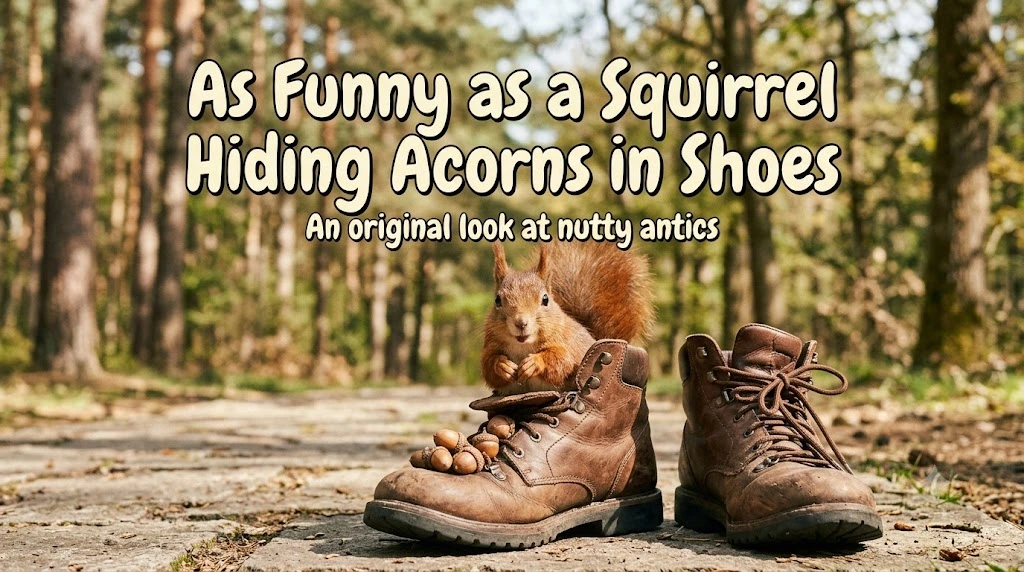
Meaning: Quirky and delightfully odd.
Usage Insight: Works best when describing unusual habits or behaviors.
Examples:
- Her sense of humor was as funny as a squirrel hiding acorns in shoes.
- The movie scene was as funny as a squirrel hiding acorns in shoes.
As Funny as a Windmill Wearing a Hat
Meaning: Absurdly humorous and imaginative.
Usage Insight: Effective in creative writing and whimsical descriptions.
Examples:
- The dream was as funny as a windmill wearing a hat.
- The illustration looked as funny as a windmill wearing a hat.
As Funny as a Frog at a Fashion Show
Meaning: Unexpectedly entertaining.
Usage Insight: Use when describing humor that comes from unusual contrasts.
Examples:
- The actor appeared as funny as a frog at a fashion show.
- The commercial was as funny as a frog at a fashion show.
As Funny as a Cloud Telling Jokes
Meaning: Lighthearted and cheerful.
Usage Insight: Excellent for describing gentle, family-friendly humor.
Examples:
- Her stories were as funny as a cloud telling jokes.
- The children’s book was as funny as a cloud telling jokes.
As Funny as a Cat Chasing Its Own Shadow
Meaning: Naturally amusing and playful.
Usage Insight: Works well for spontaneous humor.
Examples:
- The kitten was as funny as a cat chasing its own shadow.
- His reactions were as funny as a cat chasing its own shadow.
As Funny as a Tree Trying to Tiptoe
Meaning: Endearingly impossible and amusing.
Usage Insight: Great for imaginative and humorous descriptions.
Examples:
- The animation looked as funny as a tree trying to tiptoe.
- His exaggerated walk was as funny as a tree trying to tiptoe.
As Funny as a Bee Doing Ballet
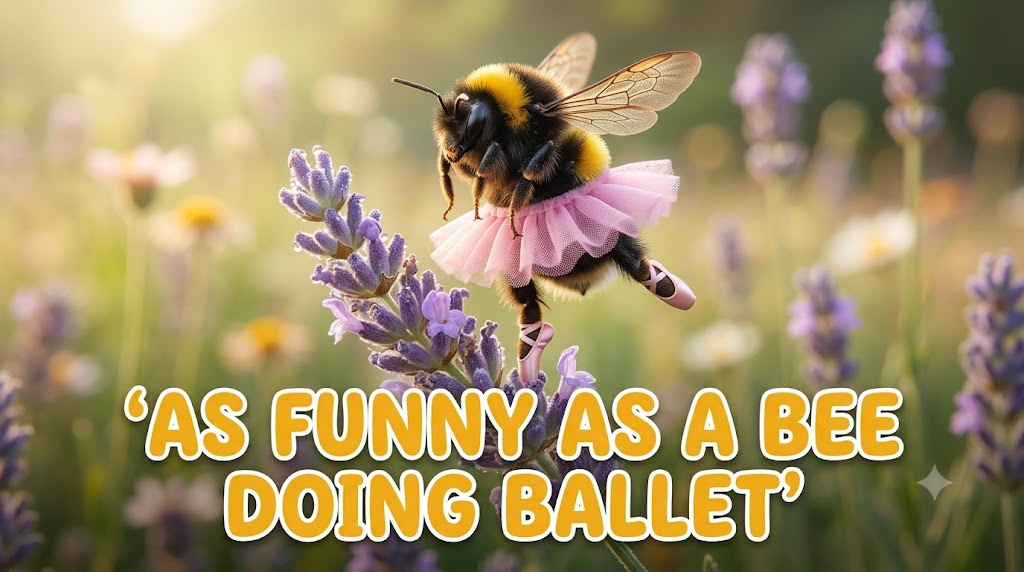
Meaning: Surprisingly entertaining despite seeming unlikely.
Usage Insight: Useful for describing amusing performances.
Examples:
- The routine was as funny as a bee doing ballet.
- The cartoon sequence became as funny as a bee doing ballet.
As Funny as a Fish Riding a Bicycle
Meaning: Completely absurd and hilarious.
Usage Insight: Best used when highlighting impossibility or silliness.
Examples:
- The story was as funny as a fish riding a bicycle.
- Their prank looked as funny as a fish riding a bicycle.
As Funny as a Snowman on Vacation
Meaning: Humorously out of place.
Usage Insight: Effective when describing situations that don’t quite fit.
Examples:
- He seemed as funny as a snowman on vacation at the beach.
- The advertisement was as funny as a snowman on vacation.
As Funny as a Peacock Practicing Karate
Meaning: Flashy, unexpected, and amusing.
Usage Insight: Great for colorful descriptions and humorous imagery.
Examples:
- The performance was as funny as a peacock practicing karate.
- The character acted as funny as a peacock practicing karate.
How to Use Similes Effectively in Writing
Similes can strengthen your writing when used thoughtfully. Here are some practical tips:
Poems
- Use vivid and sensory comparisons.
- Connect emotions with nature and everyday experiences.
- Avoid overusing familiar clichés.
For Stories
- Match the simile to the character’s personality and setting.
- Use humorous similes to reveal character traits.
- Keep comparisons clear and easy to imagine.
Essays
- Use similes sparingly to illustrate complex ideas.
- Ensure comparisons support your main argument.
- Maintain a balance between creativity and clarity.
Songs
- Create memorable images that listeners can visualize.
- Use rhythmic and emotionally powerful comparisons.
- Choose similes that fit the mood of the lyrics.
For Creative Descriptions
- Draw inspiration from animals, weather, objects, and nature.
- Focus on unique comparisons that surprise readers.
- Make sure the image enhances understanding rather than causing confusion.
FAQs About Similes for Funny
What are similes for funny?
Similes for funny are comparisons that describe humor by using “like” or “as.” They help create vivid and entertaining images that make writing more engaging.
What is the difference between a simile and a metaphor?
A simile compares two things using “like” or “as,” while a metaphor directly states that one thing is another without using comparison words.
Why are funny similes useful in writing?
Funny similes make descriptions more memorable, entertaining, and relatable while helping readers visualize humorous situations.
Can similes be used in academic writing?
Yes. Although academic writing should remain professional, similes can occasionally help explain complex concepts more clearly.
How can I create my own funny similes?
Think about unusual combinations of people, animals, objects, or situations. The more imaginative and easy to visualize the comparison, the more effective it will be.
Conclusion
Humor has a special way of turning ordinary moments into unforgettable memories, and similes for funny situations make those moments even more enjoyable. A clever comparison can transform a simple description into something vivid, playful, and easy to imagine. Instead of merely saying that someone was funny, you can compare them to a clown slipping on a banana peel, a monkey causing mischief, or a puppy chasing its own tail. These imaginative comparisons give your writing energy and help readers picture the humor for themselves. Whether you are describing a hilarious character, a silly mistake, an awkward situation, or an amusing event, the right simile can make your words more expressive and entertaining. Similes for funny moments are especially useful in stories, poems, speeches, classroom assignments, and creative writing because they add personality without making the description complicated. The key is to choose comparisons that naturally match the situation and create a clear humorous image. With a little creativity, even an ordinary sentence can become surprisingly funny. So, keep experimenting with playful comparisons and let your writing bring a smile to every reader’s face.