
The afternoon had started like any other, but one unexpected moment changed everything. A sharp pain suddenly ran through me, and for a few seconds, it was difficult to think about anything else. Saying simply “it hurt” felt far too small to describe what I was experiencing. I needed words that could show the intensity of that moment and help someone else understand it. This is where similes for pain can make writing more vivid and emotionally powerful. Pain can feel like a needle piercing the skin, a heavy stone pressing against the chest, or a sudden wave crashing over the body. These comparisons give an invisible feeling a shape that readers can imagine. Whether you are describing physical discomfort, emotional heartbreak, grief, or a difficult experience, a carefully chosen simile can communicate the feeling more clearly. In this guide, we’ll explore creative similes for pain that can add depth, emotion, and realism to poems, stories, essays, character descriptions, and personal writing.
What Is a Simile?
A simile is a figure of speech that compares two different things using the words “like” or “as.” It helps readers visualize emotions, actions, and experiences more clearly.
Example:
“The pain was like a knife twisting in his chest.”
This comparison helps readers imagine the intensity and sharpness of the pain in a vivid way.
Like a Knife Twisting in a Wound
Meaning
Describes intense, sharp, and worsening pain.
Usage Insight
This simile works well when portraying severe physical or emotional suffering that seems to grow stronger over time.
Examples
- The memory of their argument felt like a knife twisting in a wound.
- Every step was like a knife twisting in his injured ankle.
Like Thunder Crashing Through a Quiet Sky
Meaning
Represents sudden and overwhelming pain.
Usage Insight
Use this simile when pain arrives unexpectedly and disrupts normal life.
Examples
- The news struck her like thunder crashing through a quiet sky.
- A sharp cramp hit him like thunder crashing through a quiet sky.
Like Walking Barefoot on Broken Glass
Meaning
Describes painful experiences that continue with every step.
Usage Insight
Perfect for situations where pain persists and cannot be easily avoided.
Examples
- Recovering from the betrayal felt like walking barefoot on broken glass.
- Each movement was like walking barefoot on broken glass.
Like Fire Crawling Beneath the Skin
Meaning
Suggests burning, spreading pain.
Usage Insight
Ideal for describing physical discomfort or emotional anguish that gradually intensifies.
Examples
- The infection felt like fire crawling beneath the skin.
- Anger burned inside him like fire crawling beneath the skin.
Like a Storm Tearing Through Ancient Trees
Meaning
Represents powerful pain that shakes even the strongest person.
Usage Insight
Use this comparison to highlight emotional devastation.
Examples
- Grief swept through her like a storm tearing through ancient trees.
- The loss hit him like a storm tearing through ancient trees.
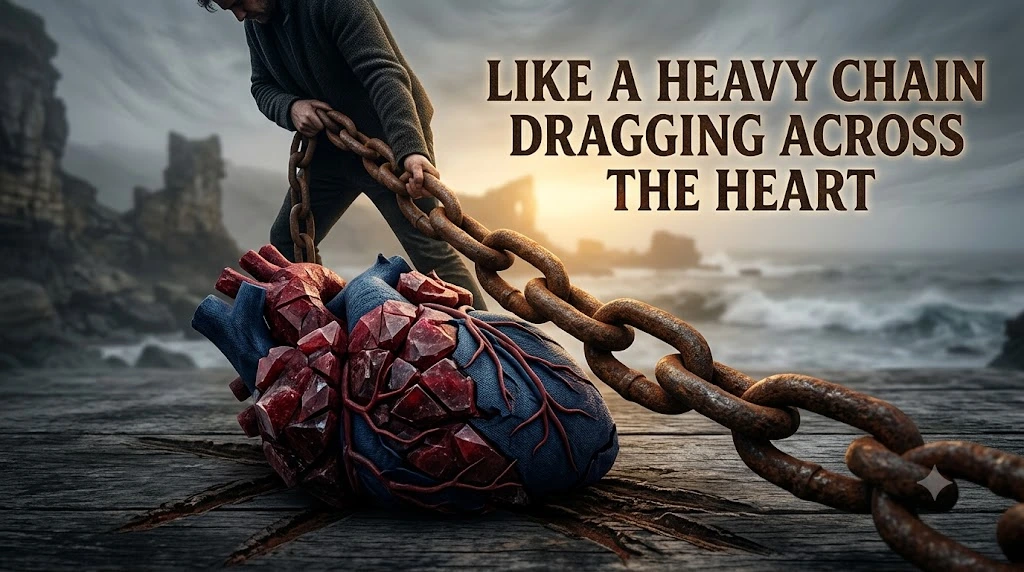
Like a Heavy Chain Dragging Across the Heart
Meaning
Describes emotional pain that feels burdensome and exhausting.
Usage Insight
Works especially well for sadness, regret, and heartbreak.
Examples
- Guilt hung over him like a heavy chain dragging across the heart.
- Her loneliness felt like a heavy chain dragging across the heart.
Like Ice Needles Piercing the Flesh
Meaning
Refers to sharp, cold, stabbing pain.
Usage Insight
Excellent for describing physical pain or emotional rejection.
Examples
- The winter wind felt like ice needles piercing the flesh.
- His harsh words were like ice needles piercing the flesh.
Like a Tree Splitting During a Lightning Strike
Meaning
Represents sudden and devastating pain.
Usage Insight
Use when describing life-changing events or shocking emotional wounds.
Examples
- The tragic news hit her like a tree splitting during a lightning strike.
- His confidence shattered like a tree splitting during a lightning strike.
Like Waves Crashing Against a Rocky Shore
Meaning
Describes pain that comes repeatedly in strong bursts.
Usage Insight
Useful for chronic pain or recurring emotional struggles.
Examples
- Sadness returned like waves crashing against a rocky shore.
- The headaches came like waves crashing against a rocky shore.
Like a Thorn Buried Deep in the Soul
Meaning
Represents lingering emotional pain.
Usage Insight
Best used for memories or experiences that continue to hurt over time.
Examples
- The betrayal remained like a thorn buried deep in the soul.
- His regret felt like a thorn buried deep in the soul.
Like a River Carving Through Stone
Meaning
Suggests slow but relentless pain.
Usage Insight
Effective for describing suffering that gradually wears someone down.
Examples
- Stress affected her like a river carving through stone.
- The long illness worked like a river carving through stone.
Like an Anchor Pulling Toward the Ocean Floor

Meaning
Represents overwhelming emotional weight.
Usage Insight
Ideal for depression, sorrow, or hopelessness.
Examples
- Grief felt like an anchor pulling toward the ocean floor.
- The burden of failure weighed on him like an anchor pulling toward the ocean floor.
Like Sandpaper Scraping an Open Wound
Meaning
Describes irritation that makes pain worse.
Usage Insight
Use when something repeatedly aggravates an existing hurt.
Examples
- Their criticism felt like sandpaper scraping an open wound.
- Hearing the story again was like sandpaper scraping an open wound.
Like a Wolf Trapped in a Snare
Meaning
Represents desperate and painful struggle.
Usage Insight
Works well when describing helplessness mixed with suffering.
Examples
- He felt like a wolf trapped in a snare after losing everything.
- The pain left her struggling like a wolf trapped in a snare.
Like Shadows Stretching Across a Setting Sun
Meaning
Suggests sadness that slowly grows and spreads.
Usage Insight
Ideal for emotional pain that develops gradually over time.
Examples
- Loneliness spread through him like shadows stretching across a setting sun.
- Her disappointment lingered like shadows stretching across a setting sun.
How to Use Similes Effectively in Writing
Similes can make your writing more vivid and emotionally powerful when used thoughtfully. Here are some practical tips:
Match the Simile to the Emotion
Choose comparisons that accurately reflect the intensity and nature of the pain you want to describe.
Avoid Overusing Similes
Too many comparisons can overwhelm readers. Use them where they create the strongest impact.
Draw Inspiration from Nature
Nature provides rich imagery for pain, healing, growth, and resilience.
Make Comparisons Relatable
Readers connect more easily with familiar images and experiences.
Use Similes in Different Forms of Writing
- Poetry: Create emotional and sensory imagery.
- Stories: Deepen character emotions and experiences.
- Essays: Add descriptive power when appropriate.
- Songs: Enhance lyrical expression.
- Creative Descriptions: Paint memorable pictures for readers.
FAQs About Similes for Pain
What are similes for pain?
Similes for pain are comparisons that help describe physical or emotional suffering using familiar images and experiences.
What is an example of a simile for pain?
An example is: “The pain was like a knife twisting in a wound.”
What is the difference between a simile and a metaphor?
A simile uses words such as “like” or “as” to make a comparison, while a metaphor directly states that one thing is another.
Why are similes useful in creative writing?
They help readers visualize emotions, understand experiences, and connect more deeply with the text.
Can similes be used in academic writing?
Yes, but they should be used carefully and only when they improve clarity or illustrate a concept effectively.
Conclusion
Pain can be one of the hardest experiences to describe because it is deeply personal and often difficult to put into ordinary words. This is why similes for pain can make writing more expressive, vivid, and emotionally meaningful. Instead of simply saying that something hurts, a powerful comparison can help readers imagine the intensity and feeling behind the experience. Physical pain might be described as sharp as a needle, heavy like a stone, or sudden like a lightning strike. Emotional pain can be compared to a storm, a deep wound, or an empty room, giving invisible feelings a clearer image.
Using similes for pain allows writers to communicate different types and levels of suffering without relying on repetitive descriptions. They can be especially effective in poems, stories, essays, personal reflections, and character descriptions. The best simile should fit the situation and express the emotion naturally. A gentle comparison may communicate sadness, while a stronger image can show intense suffering or heartbreak. Ultimately, similes help turn difficult feelings into words that readers can understand and connect with. With thoughtful comparisons, descriptions of pain become more than simple statements—they become vivid experiences that can create empathy, emotional depth, and lasting impact in your writing.
Discover More Posts
- 250+ Powerful Similes to Describe Strength
- 250+ Similes Worksheet With Answer
- 250+ Similes to Describe Love